
-
-
Sort through our administrative resume examples to see what works best for you.
-
Our sales resume examples can help you write the best possible resume.
-
Explore our food service resume examples to show your skills effectively.
-
Start crafting your job-winning resume with our teaching resume examples.
-
-
-
Use our administrative cover letter examples for ideas on writing your own.
-
Use our sales cover letter examples to effectively show your sales accumen.
-
Write your job-winning cover letter following our nursing cover letter examples.
-
Learn to tell your story in education using our teaching cover letter examples.
-





- Our customers have been hired by*


Entry-Level Dispatch Officer Resume
This resume example demonstrates the essential skills and achievements of career changers, making it a strong choice for those transitioning into dispatch officer roles in logistics.

Why this resume works:
A strong academic foundation shows the candidate is well-prepared to transition into this role.

Mid-Career Dispatch Officer Resume
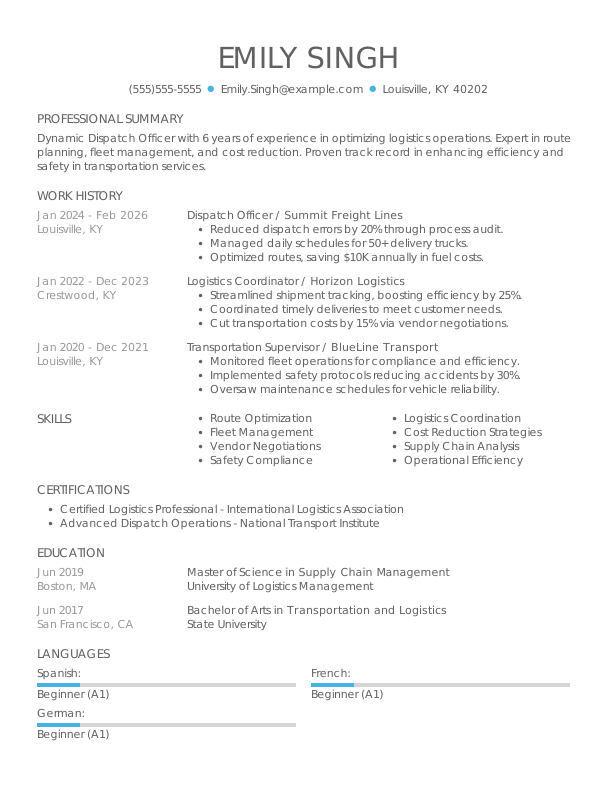
This resume example is perfect for dispatch officers with considerable experience seeking to improve their career by demonstrating proven skills in logistics management and operational efficiency.
Why this resume works:
This applicant highlights a track record of improving outcomes across multiple settings.

Experienced Dispatch Officer Resume
This dispatch officer resume is perfect for experienced professionals aiming to leverage their logistics expertise into advanced leadership opportunities.
Why this resume works:
Leadership roles and advanced certifications underscore the ability to manage complex scenarios.

Looking for something else?
Create Your Standout Resume Today
Use our resume examples for inspiration on organization, color, and design—and learn how to effectively summarize your dispatch officer skills and experience with confidence.
How to Write a Dispatch Officer Resume
Learning how to write a resume is important for a dispatch officer, as it helps showcase your unique value beyond listing credentials. Highlighting skills like communication, organization, and crisis management can make you stand out from other job seekers.
In the following sections, we will provide resume tips and guide you through each step of creating a resume tailored for dispatch positions. You’ll find essential advice and examples to help craft a strong resume that grabs attention.
Start with your contact info
The header section contains all your contact information, prominently displayed at the top of your resume. Start with your name in a bold and larger font to ensure it captures attention immediately. You might also use a subtle color or design element that aligns with your overall resume layout, making it visually appealing while remaining professional.
Next, include essential contact details such as your email address, phone number, and location; city and state are sufficient. This information is vital for recruiters to reach you promptly and helps applicant tracking systems recognize relevant applicants based on geographical preferences or availability.
Lastly, consider adding links to any relevant certifications or training programs you have completed, along with a personal website or online portfolio if applicable. These additional links can improve your profile by showcasing your qualifications and experience in the field of dispatch operations, helping you stand out among other applicants.
Write a strong professional summary
A professional summary serves as a key introduction on your dispatch officer resume, positioned right below your contact details. This section is the first glimpse recruiters get of you, making it important to capture their attention.
In this summary, highlight your relevant skills and qualifications while showcasing your passion for the dispatch officer role. Tailoring this section to align with the specific job description improves its effectiveness and shows employers that you're a strong match.
To refine your own summary, look at resume summary examples tailored for similar positions. These can provide valuable insights on structuring your content and emphasizing what matters most to hiring managers.
Strong vs weak dispatch officer summary
Strong

"Dynamic dispatch officer with over seven years of experience in emergency response coordination. Proven ability to efficiently manage high-pressure situations, ensuring rapid and effective communication between field units and control centers. Skilled in resource allocation, incident prioritization, and crisis management, holding certifications in emergency operations and public safety communications. Recognized for improving response times and improving team collaboration during critical incidents."
Why this example works: This summary effectively describes the applicant’s extensive experience, highlights measurable achievements like improved response times, emphasizes key skills specific to dispatch roles, and incorporates relevant keywords commonly found in job descriptions for dispatch officers.
Weak

"Dispatch officer seeking a position to use my skills and assist in daily operations. I have experience in coordinating logistics and like working with others."
Why this example doesn't work: This summary is generic and lacks specific details about the applicant's skills, achievements, or relevant experience in dispatch operations.

Craft a personal mission statement that emphasizes your dedication to safety and efficiency in dispatch operations while aligning with your employer's core values of reliability and teamwork. This method highlights your operational skills and reflects your commitment to promoting a collaborative work environment.
Share your work history
Your work history is a vital component of your resume. Listing your experience in reverse-chronological order allows hiring managers to quickly identify your most recent and relevant roles. This format effectively showcases your career trajectory and highlights the skills you've gained over time.
When detailing your work history, ensure you include:
- Job title and agency name
- Dates of employment (month and year)
- Daily responsibilities (What tasks were you responsible for?)
- Key achievements (Did you improve operational efficiency or improve response times?)
- Quantitative results (For instance, "reduced dispatch delays by 30%.")
Finally, be sure to use action verbs to create dynamic descriptions of your professional accomplishments.
Strong vs weak dispatch officer work history
Strong
Dispatch Officer, Citywide Emergency Services
2018–2023
- Managed over 1,500 emergency calls yearly, ensuring prompt and accurate dispatch of resources.
- Implemented a new tracking system that improved response times by 25%, improving overall service efficiency.
- Trained a team of eight new dispatch personnel, achieving a 100% pass rate on the certification exam.
Why this example works: A strong work history for a Dispatch Officer highlights specific tasks and achievements. Including quantifiable data shows your impact on operations and demonstrates both communication skills and leadership capabilities.
Weak
Dispatch Officer
Metro Transit Authority
- Managed communications and dispatched vehicles.
- Coordinated with team members to ensure operations ran smoothly.
Why this example doesn't work: This entry is ineffective because it lacks specific details about the dispatch role, such as types of vehicles managed or metrics for performance.
Add your resume to LinkedIn to improve visibility in the dispatch field. Incorporate strong action verbs and relevant keywords into your profile summary, and join industry-specific groups to network with potential employers actively seeking skilled dispatch officers.
Highlight your key skills
The skills section of your resume is essential for demonstrating your capabilities as a dispatch officer. Here's a rundown of different skill types and why they matter in improving your qualifications for the role:
- Soft skills are personal attributes that shape how you collaborate with others, including communication, problem-solving, and multitasking. For dispatch officers, qualities like quick decision-making and active listening play a important role in ensuring efficient operations and effective coordination in high-pressure situations.
- Specific abilities acquired through training or experience, known as hard skills, are essential for a dispatch officer. Examples include call triaging, emergency communication protocols, GPS navigation, and incident reporting software skill.
- Technical skills for a dispatch officer include skill in communication systems, computer-aided dispatch software like CAD, and GPS tracking technologies. Being familiar with tools such as Zetron or Motorola solutions improves operational efficiency and ensures effective response coordination.
For dispatch officers starting out, place your skills section near the top of your resume to highlight your abilities despite limited experience. If you have a wealth of experience, position it after your work history to showcase how your background demonstrates those skills.
Top 15 skills for your dispatch officer resume
When creating your resume as a dispatch officer, it's best to highlight skills that align with the demands of the role. Focus on showcasing a mix of soft skills like problem-solving and communication, paired with hard skills such as map reading and emergency response. Additionally, incorporating transferable skills can demonstrate your flexibility and adaptability in various situations.
Below is a list of the top 15 skills for dispatch officers, based on insights from JobHero users. These skills are essential in ensuring effective communication and coordination during emergencies, making them important for your resume's impact.
Build your education section
The education section's relevance varies with experience and industry requirements. For seasoned dispatch officers, extensive work history should take precedence over academic credentials. If your roles did not necessitate specific degrees, consider placing your education toward the bottom or even omitting it to emphasize practical skills.
Conversely, recent graduates or those shifting into specialized dispatch roles should showcase their educational achievements prominently. Position this section near the top of your resume and highlight any relevant coursework, internships, or certifications that demonstrate your preparedness for the role.
In fields demanding continual learning or specific qualifications, such as emergency response training, including relevant educational details is important. This approach can set you apart from other job seekers by illustrating both foundational knowledge and a commitment to professional development.
20 action verbs to add to your resume
A resume for a dispatch officer becomes more powerful when action verbs are used to detail responsibilities and achievements. These verbs clarify experience, making the document engaging and dynamic.
Choose action verbs that align with dispatch roles, such as "coordinate" or "manage," which resonate with essential skills in job postings, ensuring relevance and effectiveness in your application.
- Managed
- Coordinated
- Oversaw
- Executed
- Facilitated
- Organized
- Directed
- Communicated
- Analyzed
- Supported
- Evaluated
- Provided
- Monitored
- Assisted
- Documented
- Resolved
- Implemented
- Ensured
- Advised
- Optimized
Consider additional resume sections
While your core resume provides the most critical information, adding targeted sections can showcase your unique qualifications. These sections help hiring managers quickly identify your communication skills, certifications, and achievements beyond standard resume sections.
Here are optional sections we tend to see on dispatch officer resumes:
- Communication strengths: Highlight your skill in radio, phone systems, and other communication tools essential for coordinating with field personnel.
- Certifications and licenses: List any relevant certifications such as emergency dispatch certification or CPR/AED training.
- Technical skills: Detail your experience with dispatch software systems and other relevant technology used in operations.
- Operational achievements: Describe improvements in response times or efficiency metrics that you've contributed to within your role.
- Professional affiliations: Include memberships in organizations like the National Emergency Number Association (NENA) or similar groups.
5 Tips for Formatting Your Resume
Proper resume formatting is important for job seekers as it improves readability and keeps recruiters engaged. Using ATS-friendly resume templates not only increases your chances of passing automated screening but also showcases your professionalism, making a strong impression on potential employers.
1. Watch your line spacing and margins
Proper spacing helps your resume look clean and organized, making it easier for hiring managers to read. Adequate spacing allows your accomplishments to shine without overwhelming the reader. Here's what works best:
- Set margins between 0.5″ to 1.0″ for a balanced layout.
- Use single spacing within paragraphs and bullet points for clarity.
- Increase space to 1.5″ or double-space between sections to create clear separations.
2. Use a professional font
Choosing the right resume font can greatly affect how your resume is perceived. Opt for clean, professional fonts such as:
- Helvetica
- Verdana
- Cambria
- Garamond
- Trebuchet MS
- Lucida Sans
Consider using a slightly larger or more distinctive font for your name at the top to create a memorable impression.
3. Organize your resume sections
A resume for a dispatch officer should be clear and easy to navigate. Use bullet points to highlight your roles and responsibilities in a straightforward manner. Start each bullet with a strong action verb, focusing on what you accomplished. For example, "Coordinated emergency response efforts, leading to a 20% reduction in response time," showcases both your initiative and the positive impact of your work.
Emphasizing measurable achievements helps differentiate you from other applicants. Consider stating, "Managed communications for over 100 incidents daily, ensuring efficient resource allocation," which quantifies your workload and shows your organizational skills.
To improve ATS compatibility, run your resume through an ATS resume checker. This tool will help identify any formatting problems or missing keywords that are essential for passing automated screenings.
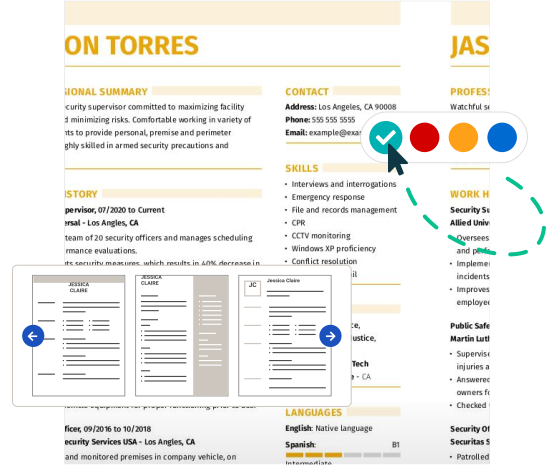
4. Use colors and design
When crafting your resume as a dispatch officer, incorporating color and design elements can make your application stand out while communicating your qualifications. A visually appealing resume not only draws attention but also helps guide the reader's focus to essential details.
Begin by selecting a pre-made resume template that resonates with the professional image you want to project. The combination resume format is particularly effective for this role, as it allows for a dedicated section where you can highlight your skills alongside work history, giving potential employers a clear picture of your capabilities.
Next, choose a professional color scheme. Opt for colors that exude professionalism, such as deep blues or greens, which can convey reliability and authority. These shades work well when used for headings or borders without overwhelming the content.
It's best to avoid bright or flashy colors that may detract from the readability of your resume. Additionally, be mindful of any colors associated with competitors or those that could negatively affect perception. A balanced approach to color will improve your resume’s presentation and ensure it reflects your professionalism in the dispatch field.
5. Keep your resume length to 1-2 pages
Resumes are most effective when concise and easy to read. Typically, a one-page resume is ideal for ensuring recruiters quickly spot your key achievements and skills. Focus on including only the most relevant experiences, highlighting significant accomplishments rather than listing every task performed in previous roles. This keeps your resume sharp and targeted.
For those with extensive experience or applying for senior-level positions, such as director roles, a two-page resume might be appropriate to fully showcase your career impact and breadth of expertise. Alternatively, academic professionals may opt for a CV format that allows more space to highlight publications and research contributions. Always tailor the length according to the role you're pursuing while keeping clarity and relevance at the forefront.
FAQ
Do I need to include a cover letter with my resume?
Yes, including a cover letter along with you resume is always a good idea. Writing a cover letter is often overlooked, but it can greatly improve your job application. Even when it's not mandatory, a cover letter allows you to elaborate on your skills and experiences, helping you stand out in the competitive job market. By providing context about your qualifications, you give potential employers more insight into who you're as an applicant.
If you need inspiration, check out our collection of cover letter examples tailored for various industries. Once you're ready to craft your own, our Cover Letter Builder offers easy-to-follow steps to create a document that showcases your strengths.
What is the best resume format?
Choosing the right resume format is important and largely depends on your individual circumstances. The three primary formats are chronological, functional, and combination, each designed to showcase your strengths in different ways.
The chronological format is ideal for those with extensive work experience, as it emphasizes a clear employment history. The functional format focuses on skills and qualifications, making it suitable for recent graduates or career changers. Meanwhile, for mid-career professionals who want to highlight both their skills and relevant experience, the combination format offers a hybrid approach that works well.
How long should my dispatch officer resume be?
As a dispatch officer, your resume should ideally be one page. Hiring managers often sift through numerous resumes quickly, so a concise document helps highlight your key qualifications effectively. Focus on relevant experience in emergency response and communication skills that are important for this role.
Prioritize recent positions and any specialized training or certifications that demonstrate your readiness for the job. Remove outdated skills or detailed descriptions of unrelated work to keep your resume sharp.
Consider extending to two pages only if you have significant experience, such as leadership roles in emergency services or substantial achievements worth detailing. In those cases, additional space can help showcase your expertise without overwhelming the reader.
Do I need to include references on my resume?
Including references on your resume is typically not required. However, if you have exceptional references that could improve your application, consider adding them. It's best to prepare a separate reference list to provide upon request rather than cluttering your resume with this information.
Build a custom resume in minutes with our professional templates and expert tips.
More Resources

By Natalia Merced | CPRW, Career Writer

By Gabriela Barcenas | CPRW, Career Writer

By Natalia Merced | CPRW, Career Writer

By Natalia Merced | CPRW, Career Writer

By Natalia Merced | CPRW, Career Writer

