-
-
Sort through our administrative resume examples to see what works best for you.
-
Our sales resume examples can help you write the best possible resume.
-
Explore our food service resume examples to show your skills effectively.
-
Start crafting your job-winning resume with our teaching resume examples.
-
-
-
Use our administrative cover letter examples for ideas on writing your own.
-
Use our sales cover letter examples to effectively show your sales accumen.
-
Write your job-winning cover letter following our nursing cover letter examples.
-
Learn to tell your story in education using our teaching cover letter examples.
-





- Our customers have been hired by*


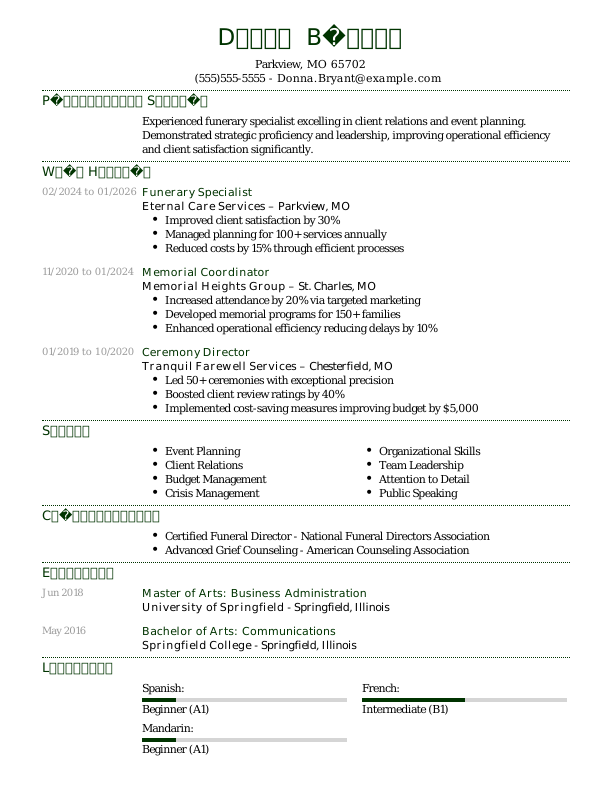
Entry-Level Funerary Resume
This resume example effectively showcases the skills and experience necessary for career changers entering the funerary field, making it a valuable resource for those seeking to transition into this profession.

Why this resume works:
A strong academic foundation shows the candidate is well-prepared to transition into this role.

Mid-Career Funerary Resume
This funerary resume example is perfect for professionals who have developed strong management skills and are eager to take on more responsibility in a specialized role within the industry.
Why this resume works:
This applicant highlights a track record of improving outcomes across multiple settings.

Experienced Funerary Resume
This funerary resume example is tailored for experienced professionals ready to elevate their careers into leadership roles within the industry.
Why this resume works:
Leadership roles and advanced certifications underscore the ability to manage complex scenarios.

Looking for something else?
Create Your Standout Resume Today
Use our resume examples for inspiration on organization, color, and design—and learn how to effectively summarize your funerary skills and experience with confidence.
How to Write a Funerary Resume
Learning how to write a resume is important for showcasing your unique value in the funerary profession, going beyond just listing your credentials. By emphasizing your compassion and attention to detail, you can effectively communicate what sets you apart.
In the following sections, we will outline step-by-step guidance with resume tips specific to funerary roles. You’ll discover essential advice on organizing your information and highlighting your relevant skills and experiences.
Start with your contact info
The header section contains all your contact information, prominently placed at the top of your resume. Begin with your name in a bold, larger font to ensure it catches the eye of potential employers. A tasteful use of color or font variation can further improve visibility while maintaining professionalism.
Next, include essential contact details such as your email address, phone number, and location—city and state are typically sufficient. This information is vital for recruiters to easily reach you and ensures that your application aligns with regional hiring needs, which can be especially relevant in the funerary industry.
Lastly, consider adding links to any relevant certifications or training programs you have completed, along with a personal website or online portfolio if applicable. These additional resources can provide deeper insights into your qualifications and experience in the funerary field, helping you stand out among other job seekers by showcasing your expertise and commitment to the profession.
Write a strong professional summary
A professional summary serves as your introduction on a funerary resume, appearing directly under your contact information. This brief statement is important because it sets the tone for your application.
In your summary, include key qualifications, relevant skills, and demonstrate your passion for the role. Tailoring this section to fit the specific position and company can significantly improve your appeal to potential employers.
Look for resume summary examples that highlight effective strategies and formats. These resources can guide you in crafting a compelling narrative that reflects your unique strengths in the funerary field.
Strong vs weak funerary summary
Strong

"Empathetic and detail-oriented funerary professional with over seven years of experience in providing compassionate care to grieving families. Proven ability to manage all aspects of funeral services, including pre-planning and aftercare, while maintaining high levels of client satisfaction. Skilled in grief counseling, documentation management, and regulatory compliance, holding certifications in funeral directing and embalming. Recognized for creating personalized memorial experiences that honor the lives of loved ones."
Why this example works: This summary effectively captures the job seeker’s extensive experience, highlights measurable achievements like high client satisfaction, showcases role-specific skills such as grief counseling and compliance, and integrates relevant keywords associated with funerary services.
Weak

"Funeral director seeking a position to use my abilities and care for families. I have some experience in the field and appreciate working with others."
Why this example doesn't work: This professional summary is weak because it is vague, lacking specific details about the individual's qualifications, relevant experience, or particular skills related to the role of a funeral director.

Create a personal mission statement that demonstrates your dedication to compassionate care and the dignity of every individual. Emphasize how your values align with the organization's vision, illustrating how your unique perspective improves their mission beyond just professional expertise.
Share your work history
Your work history is, arguably, the central and most important part of your resume. List your most recent roles in reverse-chronological order. If you’ve held numerous positions, select the ones most relevant to the job you’re applying for.
When listing your work history, focus on:
- Job title and company name
- Dates of employment (month and year)
- Key responsibilities (What did you do on a daily basis?)
- Achievements and contributions (What did you accomplish? Did you improve processes, reduce costs, or increase efficiency?)
- Measurable results (Use numbers when possible, such as "reduced patient wait times by 15%.")
Finally, when describing your achievements, use action verbs to make your work history come alive.
Strong vs weak funerary work history
Strong
Funeral Director, Peaceful Rest Funeral Home
2018–2023
- Coordinated over 150 funeral services, ensuring each was tailored to meet the unique needs of families.
- Implemented a new grief support program that increased family satisfaction ratings by 40%.
- Supervised a team of five staff members, improving service delivery through effective training and mentorship.
Why this example works: Highlights specific achievements and responsibilities, offering insight into skills and experience. It showcases measurable outcomes and specialized knowledge that reflect both operational expertise and leadership qualities.
Weak
Funeral Director
Peaceful Rest Funeral Home
- Handled arrangements for services and supported families.
- Managed paperwork for the deceased.
Why this example doesn't work: This entry is ineffective because it lacks specific details about the types of services provided or any unique aspects of the role.
Highlight your leadership skills on your resume by providing concrete examples such as "Managed memorial service planning for families" or "Trained staff on compassionate care protocols." These specifics demonstrate your capability to lead with empathy and organization in the funerary profession.
Highlight your key skills
The skills section of your resume is essential for demonstrating your strengths in the funerary profession. Here's a rundown of key skill types and their significance in improving your application:
- Soft skills are personal attributes that illustrate how you connect with others: such as compassion, active listening, and patience. In the funerary profession, qualities like emotional support and attention to detail are important because they help create a respectful environment for grieving families during difficult times.
- Hard skills in the funerary profession are specific abilities developed through training and experience. Examples include embalming techniques, body preparation, grief counseling, and knowledge of funeral service regulations.
- Technical skills in the funerary profession involve skill with specific tools and systems. Examples include embalming equipment, cremation machines like the Athenas 2000, and software for funeral arrangements such as Funeral Home Software by FrontRunner.
For those entering the funerary profession, position your skills section at the top of your resume to spotlight your abilities despite limited experience. If you have significant experience, place this section after your work history, allowing your practical knowledge to showcase your skills effectively.
Top 15 skills for your funerary resume
When creating a resume for a career in the funerary industry, it’s important to select skills that reflect both your emotional intelligence and technical abilities. Highlighting soft skills like compassion and communication is essential, along with hard skills such as embalming or funeral service planning. Including transferable skills can show your adaptability across various roles within the field.
Here are the top 15 most popular skills for funerary professionals, based on insights from JobHero users. These skills focus on what employers value in job seekers and can help improve your resume's appeal during the job search.
Build your education section
The education section's prominence on a resume varies significantly by experience level and industry norms. For seasoned professionals with extensive work history, the focus should shift toward practical experience, placing education further down or even omitting it if not relevant to the position sought.
Conversely, recent graduates or those transitioning into specialized roles should highlight their educational accomplishments prominently. This can mean positioning the education section at the top of the resume and detailing any relevant coursework, certifications, or honors that showcase their qualifications.
In summary, understanding when to emphasize or minimize your education is important. Tailoring this section appropriately not only reflects your knowledge but aligns with what hiring managers seek in job seekers across different stages of their careers.
20 action verbs to add to your resume
Using action verbs in resumes for funerary roles improves clarity and engagement by clearly articulating your experience. These verbs create a dynamic tone that captures attention, making your qualifications stand out.
Select action verbs that resonate with the essential skills needed in funeral services, aligning with key requirements highlighted in job postings to effectively demonstrate your suitability.
- Arranged
- Facilitated
- Oversaw
- Conducted
- Executed
- Supported
- Guided
- Informed
- Planned
- Researched
- Coordinated
- Administered
- Cultivated
- Improved
- Promoted
- Sustained
- Trained
- Presented
- Directed
- Developed
Consider additional resume sections
While your core resume provides the most critical information, adding targeted sections can showcase your unique qualifications. These sections help hiring managers quickly identify your skills in the funerary profession and experiences beyond standard resume sections.
Here are optional sections we tend to see on funerary resumes:
- Specialized training: Highlight specific coursework or certifications related to embalming, restorative art, or grief counseling.
- Licensure and certifications: Detail your funeral director license, state registrations, and any additional certifications such as crematory operator.
- Continuing education: Showcase recent workshops or seminars attended that reflect ongoing professional development in funerary practices.
- Community service involvement: Describe participation in community outreach programs or events that support grieving families.
- Professional memberships: Include affiliations with organizations like the National Funeral Directors Association or local funeral societies.
5 Tips for Formatting Your Resume
Proper resume formatting is important for job seekers as it improves visibility and engagement from recruiters. Using ATS-friendly resume templates ensures your application not only captures attention but also successfully navigates through automated screening processes.
1. Watch your line spacing and margins
Proper spacing helps your resume look clean and organized, making it easier for hiring managers to read. A well-spaced resume conveys professionalism and attention to detail. Here's what works best:
- Keep margins between 0.5″ to 1.0″, depending on how much space you need.
- Use single spacing between paragraphs and bullet points.
- Raise the space to 1.5″ or double-space between sections.
2. Use a professional font
Choosing the right resume font is important because it affects both readability and professionalism. Consider these reliable fonts:
- Helvetica
- Garamond
- Verdana
- Tahoma
- Trebuchet MS
- Book Antiqua
Consider using a slightly bolder or larger font for your name at the top of your resume to give it prominence.
3. Organize your resume sections
A resume in the funerary industry should be clear and straightforward. Use bullet points to effectively convey your experiences and achievements. Start each bullet with a strong action verb, such as "Coordinated memorial services for families," which specifies your role and dedication.
Highlighting measurable accomplishments is important in this sensitive field. For instance, "Increased client satisfaction scores by 25% through personalized service offerings" showcases the impact of your work on families during difficult times.
To ensure your resume is ATS-friendly, use an ATS resume checker. This will help identify any formatting issues or missing keywords that could prevent your application from being seen by hiring managers. A well-optimized resume increases your chances of standing out in this competitive field.
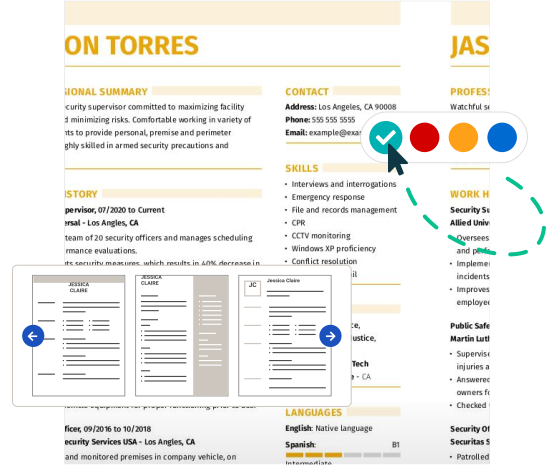
4. Use colors and design
In the funerary profession, your resume should convey a sense of compassion and professionalism through its design. Using color and layout thoughtfully can help communicate your values and experience effectively.
Begin by selecting a suitable resume template that aligns with the solemnity of the industry. The combination resume format is ideal for showcasing both your skills and work history clearly. This format often uses a colored sidebar for emphasis.
Next, choose a color scheme that reflects respect and dignity. Soft, muted colors like sage green or deep gray can create a calming effect while maintaining professionalism. These hues might be used for section headers or subtle accents throughout your resume.
Avoid bright colors or overly bold patterns that could detract from the content's seriousness. Additionally, stay away from colors associated with competing firms or those that may evoke negative emotions. Focus on creating a serene yet polished representation of your qualifications in this sensitive field.
5. Keep your resume length to 1-2 pages
Resumes should typically be one page long. This length is ideal because hiring managers often spend mere seconds reviewing each resume. Clarity and brevity are important for making a lasting impression. Focus on your most relevant experiences and accomplishments, and avoid listing similar duties across different jobs. Highlight the qualifications that align closely with the position you're pursuing.
In certain situations, extending your resume to two pages makes sense. For instance, if you have extensive experience or are applying for higher-level positions such as executives, more space may be necessary to outline your achievements. Additionally, academic roles often require a CV instead of a traditional resume since they demand detailed information about research, publications, and teaching experiences.
FAQ
Do I need to include a cover letter with my resume?
Writing a cover letter is an essential step in your job application, even if it’s not mandatory. It allows you to express your enthusiasm and provide deeper insights into your skills and experiences. This personal touch can help differentiate you from other job seekers.
If you're unsure how to craft yours, explore our collection of cover letter examples for inspiration tailored to various industries. Once you're ready to create your own, use our cover letter builder that offers easy guidance through the writing process.
What is the best resume format?
Choosing the right resume format depends on your specific career situation. The three main formats are chronological, functional, and combination. Each is tailored to serve a unique purpose for different job seekers based on their experience and goals.
The chronological format works best for those with extensive work history, as it highlights past positions. For recent graduates or individuals transitioning careers, the functional format focuses on skills and achievements. On the other hand, the combination format is a great choice for mid-career professionals aiming to showcase both their experience and skill set effectively.
How long should my funerary resume be?
For funerary professionals, your resume should ideally be one page long. Hiring managers often sift through numerous resumes quickly, so keeping it concise helps highlight your essential qualifications effectively. Focus on your relevant experience in the funeral industry, including any certifications and specialized skills that showcase your expertise.
Emphasize positions that reflect your most recent work and contributions to the field. Remove less relevant experiences or outdated information that doesn’t relate directly to funerary services.
Consider a two-page resume only if you have extensive experience in various roles or are seeking senior positions, such as a funeral director managing multiple locations. In these cases, showcasing your comprehensive background makes sense and justifies the extra length.
How far back should my work history go?
When preparing your resume, aim to include work history from the past 10 years. This guideline helps maintain focus on relevant experience. If you have extensive roles in the funerary field or specialized skills, consider including earlier positions that showcase relevant expertise. However, omit those jobs that don’t directly support your current career goals to keep your resume concise and powerful.
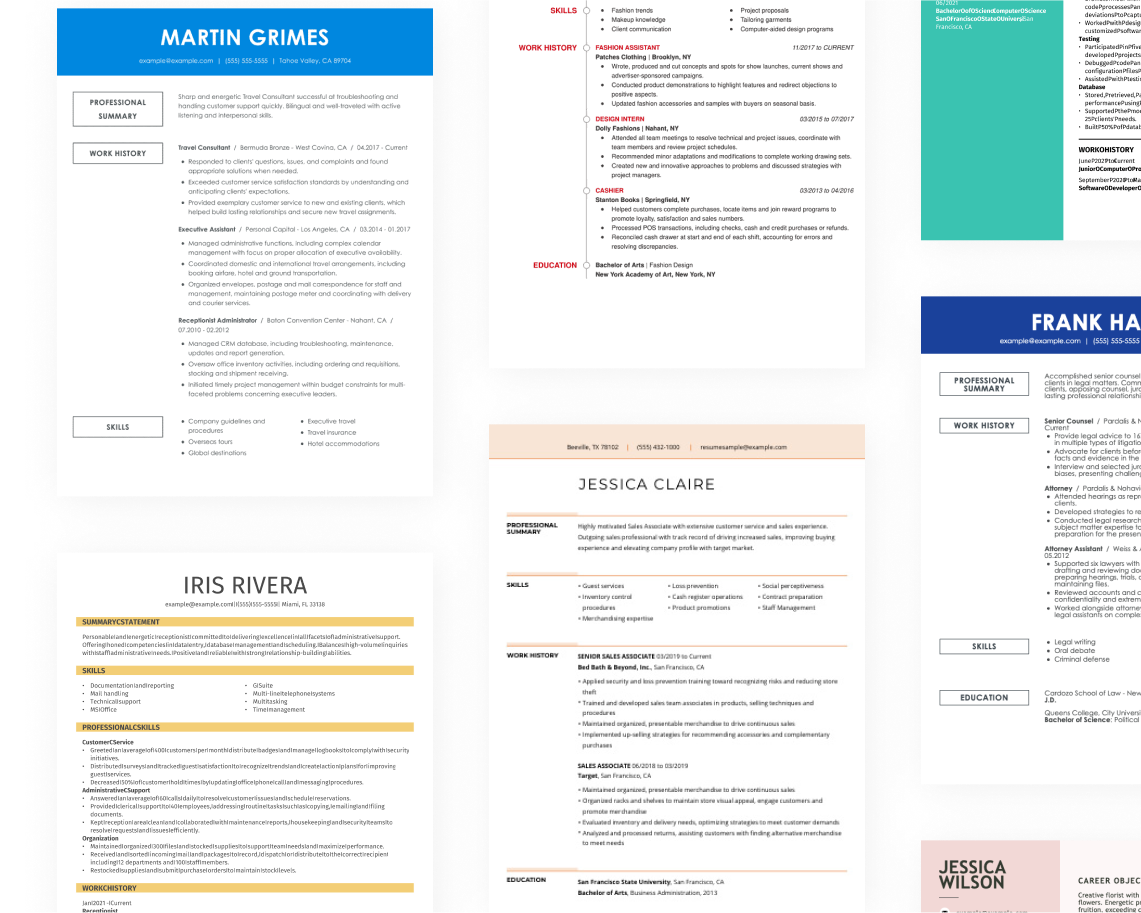
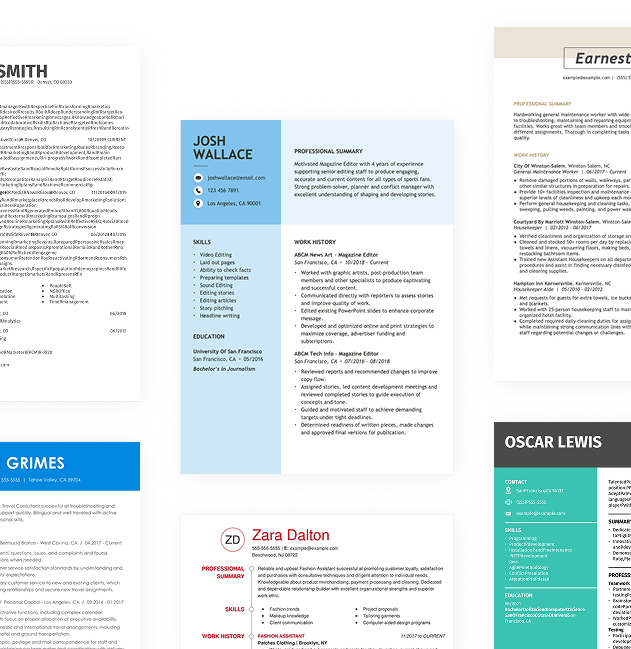
Build a custom resume in minutes with our professional templates and expert tips.
More Resources


By Gabriela Barcenas | CPRW, Career Writer


By Natalia Merced | CPRW, Career Writer



By Gabriela Barcenas | CPRW, Career Writer