-
-
Sort through our administrative resume examples to see what works best for you.
-
Our sales resume examples can help you write the best possible resume.
-
Explore our food service resume examples to show your skills effectively.
-
Start crafting your job-winning resume with our teaching resume examples.
-
-
-
Use our administrative cover letter examples for ideas on writing your own.
-
Use our sales cover letter examples to effectively show your sales accumen.
-
Write your job-winning cover letter following our nursing cover letter examples.
-
Learn to tell your story in education using our teaching cover letter examples.
-





- Our customers have been hired by*


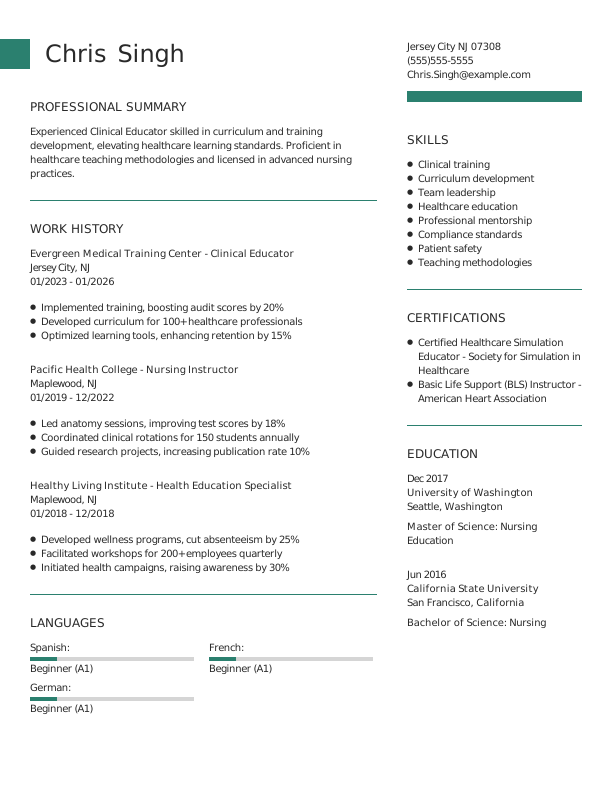
Entry-Level Clinical Educator Resume
This resume example effectively demonstrates the strong training experience and innovative skills of career changers, making it an excellent fit for those transitioning into clinical educator roles.

Why this resume works:
A skills-focused resume format is particularly beneficial for new clinical educators, those re-entering the workforce, or transitioning from other fields. This format allows applicants to spotlight key skills such as curriculum development and staff mentoring instead of dwelling on any gaps in experience. Highlighting these competencies can effectively demonstrate their value.

Mid-Career Clinical Educator Resume
This clinical educator resume example is perfect for professionals with experience who aim to improve their skills and take on leadership roles in healthcare education.
Why this resume works:
Mid-career clinical educators can highlight their impact by stating they developed training modules that increased clinician skill skill by 20% or led workshops that improved patient care feedback scores by 25%. They may also note initiatives that reduced onboarding time for new staff by 15%, improving overall efficiency.

Experienced Clinical Educator Resume
This clinical educator resume example is perfect for experienced professionals aiming to elevate their career into senior education roles or leadership positions.
Why this resume works:
Leadership roles and advanced certifications underscore the ability to manage complex scenarios.

Looking for something else?
Create Your Standout Resume Today
Use our resume examples for inspiration on organization, color, and design—and learn how to effectively summarize your clinical educator skills and experience with confidence.
How to Write a Clinical Educator Resume
Learning how to write a resume is important for highlighting your unique value as a clinical educator, rather than just listing your qualifications. By effectively showcasing your teaching skills and experience, you can create a strong impression on potential employers.
In the upcoming sections, we’ll guide you through each step of writing a resume tailored for clinical education roles. You’ll discover essential resume tips and strategies to present your expertise in a compelling way.
Start with your contact info
The header section contains all your contact information, prominently displayed at the top of your resume. Your name should be featured in a large, bold font to draw attention immediately. Consider using a clean and professional design that improves readability while standing out from the rest of your application.
Include essential contact details such as your email address, phone number, and location; city and state are sufficient for recruiters. This information is vital for facilitating communication and ensuring you meet any local job requirements, which can also assist applicant tracking systems in identifying suitable job seekers.
Additionally, think about incorporating links to relevant certifications or educational credentials as well as an online portfolio if applicable. These links provide valuable insights into your qualifications and teaching experience, helping paint a clearer picture of your expertise and commitment to ongoing professional development in the clinical education field.
Write a strong professional summary
A professional summary serves as an overview of your qualifications and skills, positioned just below your contact details on your resume. This section is important as it forms the first impression for potential employers, providing a snapshot of who you are as a job seeker.
In crafting your summary, focus on highlighting key achievements and relevant experiences that align with the clinical educator role. Customizing this section for each application improves its impact, making it more relatable to the specific employer and position.
To gain inspiration, review various resume summary examples tailored for clinical educators. These can guide you in structuring your own summary effectively while ensuring that it communicates your unique strengths.
Strong vs weak clinical educator summary
Strong

"Dynamic clinical educator with over eight years of experience in nursing and healthcare training. Proven track record in developing and implementing educational programs that improve staff competencies and improve patient care outcomes. Skilled in curriculum design, mentoring, and assessment strategies, holding certifications in nursing education and BLS. Recognized for fostering a culture of continuous learning within multidisciplinary teams."
Why this example works: This summary effectively outlines the job seeker's extensive experience, showcases measurable accomplishments such as improved patient care outcomes, emphasizes key skills like curriculum design and mentoring, and incorporates relevant keywords associated with clinical education.
Weak

"Clinical educator seeking a position to use my teaching skills and support healthcare professionals. I have experience in training staff and enjoy working with diverse teams."
Why this example doesn't work: This professional summary is generic and lacks specific details about the applicant's unique qualifications, measurable achievements, or relevant teaching methodologies applicable to the role of a clinical educator.

Develop a personal mission statement that reflects your commitment to education and collaboration in healthcare. Highlight how your teaching philosophy aligns with the organization's values, showcasing your ability to improve patient outcomes through effective learning and mentorship.
Share your work history
Listing your work history in reverse chronological order is essential for showcasing your most relevant experiences first. This format allows hiring managers to quickly see your career trajectory and the skills that you have developed over time. Prioritizing recent positions highlights your current capabilities and keeps your resume fresh.
When listing your work history, focus on:
- Job title and organization name
- Employment dates (month and year)
- Key responsibilities (What tasks did you perform regularly?)
- Achievements and contributions (What successes did you achieve? Did you improve training programs or improve staff retention?)
- Quantifiable results (For instance, "increased training program effectiveness by 30%.")
Finally, ensure to use effective action verbs to energize your descriptions.
Strong vs weak clinical educator work history
Strong
Clinical Educator, Health Innovations Inc.
2018–2023
- Developed and implemented training programs for over 150 healthcare professionals, improving clinical competencies by 40%.
- Conducted quarterly assessments that resulted in a 25% increase in staff satisfaction scores regarding educational resources.
- Collaborated with interdisciplinary teams to create simulation-based learning experiences, improving practical skills evaluation for new hires.
Why this example works: A strong work history section includes detailed descriptions of accomplishments that highlight your impact on the organization. By providing specific metrics and outcomes, you showcase your expertise and ability to lead effectively in an educational setting.
Weak
Clinical Educator
Health Services Center
- Conducted training sessions and shared knowledge.
- Supported staff with educational needs.
Why this example doesn't work: This entry is weak due to vague descriptions of responsibilities, lacking specific details about the types of training or subjects taught.
To add your resume to LinkedIn and improve your visibility as a clinical educator, emphasize your teaching experience and certifications in the profile summary. Share relevant articles or insights to demonstrate your expertise, attracting the attention of recruiters in healthcare education.
Highlight your key skills
The skills section of your resume is essential for demonstrating your qualifications as a clinical educator. Here's a rundown of various skill types and their significance in improving your candidacy:
- Soft skills are personal attributes that demonstrate how you collaborate with others—such as mentorship, patience, and effective communication. For clinical educators, these qualities facilitate teaching, improve team dynamics, and ensure the successful transfer of knowledge in educational settings.
- Hard skills are specialized competencies acquired through training or hands-on experience in the clinical field. A clinical educator may develop skills such as curriculum development, assessment design, patient education strategies, and program evaluation.
- Technical skills for a clinical educator include skill in learning management systems (LMS) like Moodle or Canvas, as well as familiarity with simulation equipment such as Laerdal manikins. These abilities increase the effectiveness of training programs and improve learner engagement.
New clinical educators should highlight their skills section right after the summary to showcase strengths. For seasoned professionals, position skills after work history to leverage extensive experience.
Top 15 skills for your clinical educator resume
When creating a resume for a clinical educator position, it’s essential to choose skills that align with the demands of the role. Focus on showcasing a mix of soft skills, such as leadership and communication, along with hard skills like curriculum development and assessment techniques. Including transferable skills will also demonstrate your adaptability in various educational settings.
Here’s a list of the 15 most popular skills for clinical educators, based on input from JobHero users. These skills highlight what employers look for and can help you stand out as a strong applicant in this specialized field.
Build your education section
The education section's importance varies with experience and industry. For seasoned clinical educators, extensive work history often takes precedence over educational details. If your qualifications are well-established through years of practice, you may consider placing the education section towards the end or even omitting it if applicable.
Conversely, recent graduates or those transitioning into specialized areas should emphasize their educational background. Highlighting degrees, relevant coursework, and certifications can significantly bolster your profile when lacking extensive work experience.
For professionals entering niche fields, make sure to detail any specialized training or workshops that set you apart. This focus on education can help demonstrate your commitment to ongoing learning and expertise in specific methodologies or practices relevant to the role.
20 action verbs to add to your resume
Using action verbs in your resume as a clinical educator significantly improves its impact. These verbs clearly articulate your experiences and contributions, making your professional narrative more engaging and persuasive.
When selecting action verbs, prioritize those that resonate with the healthcare field and align with the skills highlighted in job postings. This targeted approach demonstrates your relevance to potential employers effectively.
- Facilitated
- Trained
- Guided
- Designed
- Evaluated
- Coached
- Presented
- Spearheaded
- Collaborated
- Developed
- Oversaw
- Directed
- Improved
- Promoted
- Reviewed
- Implemented
- Supported
- Assured
- Streamlined
- Championed
Consider additional resume sections
While your core resume provides the most critical information, adding targeted sections can showcase your unique qualifications. These sections help hiring managers quickly identify your clinical expertise, certifications, and achievements beyond standard resume sections.
Here are optional sections we tend to see on clinical educator resumes:
- Teaching experience: Outline previous roles where you've taught or mentored nursing staff or students, highlighting specific outcomes.
- Curriculum development: Detail any involvement in creating educational programs or materials that improve nursing education.
- Professional development: Highlight workshops, conferences, or courses attended that relate to clinical education or nursing leadership.
- Research contributions: Mention any research projects you've been involved in that contributed to nursing practices or education.
- Certifications and licenses: Include relevant certifications like Nurse Educator Certification (CNE) and other advanced qualifications.
5 Tips for Formatting Your Resume
Proper resume formatting is important for job seekers as it improves both recruiter engagement and the likelihood of passing ATS filters. Using ATS-friendly resume templates ensures that your information is presented clearly, making it easier for recruiters to recognize your qualifications.
1. Watch your line spacing and margins
Proper spacing helps your resume look clean and organized, making it easier for hiring managers to read. It conveys professionalism and ensures that your key information stands out. Here's what works best:
- Keep margins between 0.5″ to 1.0″ for a balanced look.
- Use single spacing between paragraphs and bullet points to maintain clarity.
- Increase the space to 1.5″ or double-space between sections for better separation.
2. Use a professional font
Choosing resume font wisely for your resume is important because it affects both readability and professionalism. You should consider using these trusted fonts:
- Arial
- Helvetica
- Verdana
- Garamond
- Trebuchet MS
- Book Antiqua
To improve your name at the top of your resume, opt for a font that is slightly bolder or larger to create a focal point.
3. Organize your resume sections
A resume for a clinical educator should be clear and accessible, employing bullet points to highlight your expertise. Begin each point with a dynamic action verb to underline your achievements and skills. For example, "Developed comprehensive training modules that improved staff competency rates by 25%," showcases both innovation and measurable impact.
Quantifying your accomplishments is important in distinguishing yourself from other job seekers. Whenever possible, use metrics to emphasize the effectiveness of your work. An example could be, "Implemented new educational strategies that increased course completion rates by 40%."
To ensure compatibility with applicant tracking systems (ATS), use an ATS resume checker. This tool helps identify potential formatting issues or missing keywords, ensuring your resume successfully navigates through digital filters and reaches hiring managers effectively.
4. Use colors and design
Using color and design elements in your resume can significantly improve its effectiveness and visual appeal. A thoughtfully designed resume not only attracts attention but also helps highlight your most relevant qualifications.
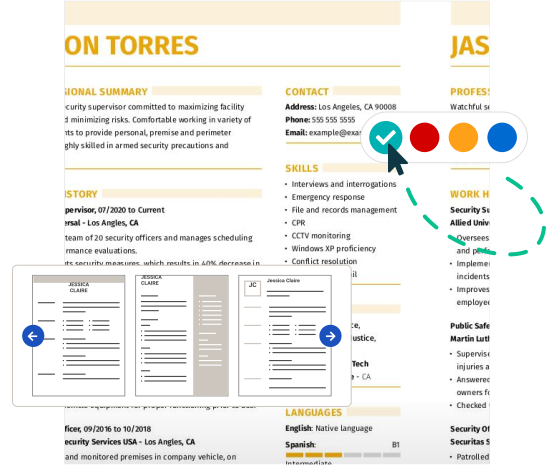
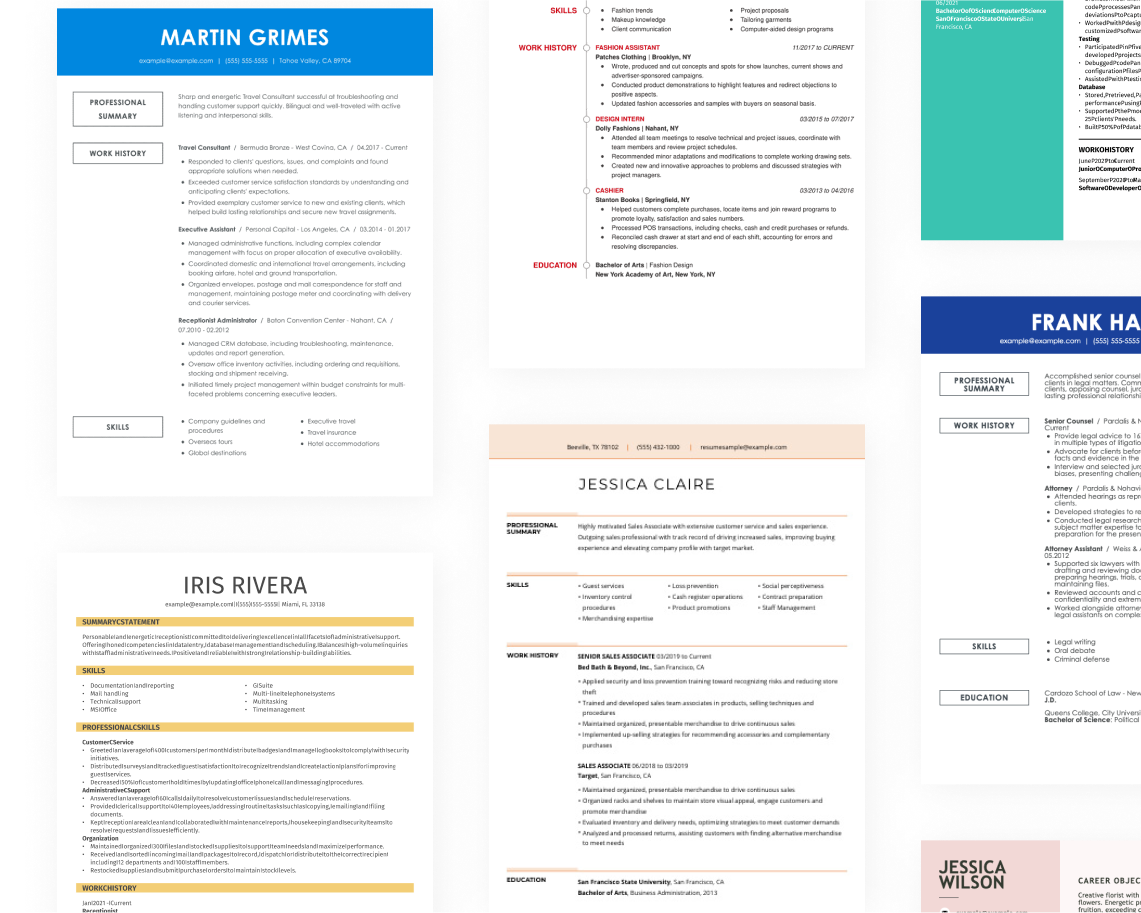
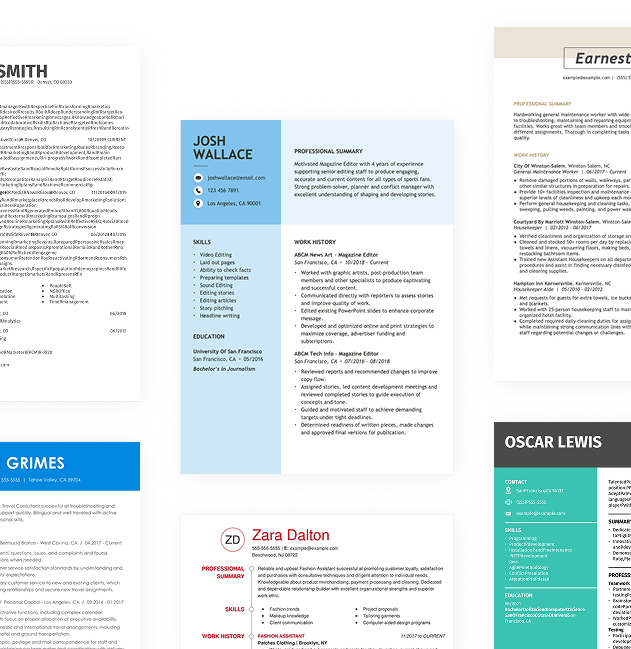
Begin by searching for pre-made resume templates that suit the structure you envision. The combination resume format, for instance, features a distinct colored section alongside your experience, effectively showcasing your skills in a visually engaging manner.
Next, carefully select a professional color scheme. Opt for colors that convey reliability and sophistication, such as muted tones or darker shades like navy blue or deep green. These colors work well for headers or to delineate different sections without overwhelming the reader.
Avoid using bright colors that may distract from the content of your resume. Additionally, steer clear of color combinations associated with competitors or those that could compromise readability. By focusing on balanced and professional aesthetics, you can create a strong first impression that reflects your expertise as a clinical educator.
As a clinical educator, your resume should reflect both your expertise and the compassionate nature of your role. Consider incorporating clean layouts and subtle color accents to improve readability while maintaining professionalism. Your choice of fonts can convey clarity—opt for modern yet simple styles that ensure legibility.
For instance, if applying to a teaching hospital, a calm color scheme with blues or greens may resonate well, symbolizing trust and care. In contrast, if targeting an innovative educational institution, a more dynamic palette could effectively showcase your creative approach to teaching. Remember to let your passion for education shine through every design element.
5. Keep your resume length to 1-2 pages
Resumes should typically be one page long. This length keeps your information concise and ensures that key points grab the recruiter's attention quickly. You want to highlight your most relevant experiences and skills, keeping in mind that employers often skim through resumes in seconds. Focus on compelling achievements rather than job duties, and avoid clutter by omitting less relevant roles.
In some scenarios, extending a resume to two pages is acceptable. For instance, if you have extensive experience or are applying for high-level positions like director or executive roles, additional space may be necessary to showcase your accomplishments effectively. Academic positions often require a CV instead of a resume because they demand detailed accounts of research and publications.
Keep it clear and focused, tailoring each application to the role at hand for the best results.
FAQ
Do I need to include a cover letter with my resume?
Writing a cover letter is an excellent way to improve your job application, even if it’s not explicitly required. It allows you to present your qualifications in more detail and showcase your enthusiasm for the position. This additional context can help you stand out from other job seekers.
If you need some inspiration, be sure to check out our collection of cover letter examples tailored to various industries. When you're ready to craft your own, our Cover Letter Builder provides step-by-step assistance to simplify the process and ensure you create a compelling letter that complements your resume.
What is the best resume format?
Choosing the right resume format depends on your individual needs and career stage. The three main formats are chronological, functional, and combination, each serving a specific purpose for job seekers.
The chronological format is ideal for those with extensive experience, as it emphasizes work history. The functional format highlights skills and education, making it suitable for new graduates or career changers. Lastly, the combination format balances both work experience and skills, which can be beneficial for mid-level professionals or those entering a different industry.
How long should my Clinical Educator resume be?
For clinical educators, a one-page resume is typically ideal, particularly if you have less than a decade of experience. Hiring managers often sift through numerous applications quickly, so a concise format ensures your qualifications stand out effectively.
Highlight your most relevant teaching experiences, certifications, and skills that align with the role you're targeting. Focus on recent positions and educational achievements while omitting outdated information or unrelated job roles.
Consider extending to two pages only if you're an experienced educator with significant accomplishments or leadership roles in healthcare education. In such cases, the depth of your experience can warrant the additional space for clarity and impact.
Build a custom resume in minutes with our professional templates and expert tips.
Gabriela Hernandez
CPRW, Career WriterGabriela is a Certified Professional Resume Writer (CPRW) and member of the Professional Association of Resume Writers & Career Coaches and has worked in the career industry for more than four years providing comprehensive guidance on resume writing and job search strategies for individuals across diverse career paths. She holds a bachelor's in journalism and is passionate about helping job seekers present their professional story effectively through well-crafted resumes and cover letters that demonstrate their value, skills, and experience to potential employers. Some of her work has been featured on JobHero’s resume examples career center.
More Resources


By Gabriela Barcenas | CPRW, Career Writer


By Natalia Merced | CPRW, Career Writer



By Gabriela Barcenas | CPRW, Career Writer