
-
-
Sort through our administrative resume examples to see what works best for you.
-
Our sales resume examples can help you write the best possible resume.
-
Explore our food service resume examples to show your skills effectively.
-
Start crafting your job-winning resume with our teaching resume examples.
-
-
-
Use our administrative cover letter examples for ideas on writing your own.
-
Use our sales cover letter examples to effectively show your sales accumen.
-
Write your job-winning cover letter following our nursing cover letter examples.
-
Learn to tell your story in education using our teaching cover letter examples.
-





- Our customers have been hired by*


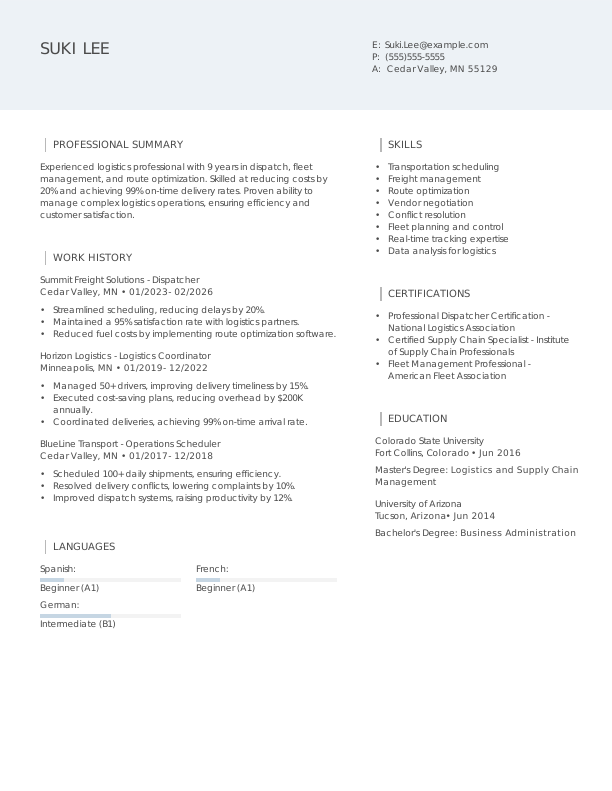
Entry-Level Dispatcher Resume
This resume example highlights the applicant's logistics expertise and accomplishments, making it ideal for career changers looking to excel in dispatcher roles with a strong foundation in transportation management.

Why this resume works:
A strong academic foundation shows the candidate is well-prepared to transition into this role.

Mid-Career Dispatcher Resume
This resume example is perfectly suited for dispatchers eager to leverage their experience in logistics and aim for roles that demand improved coordination and customer service skills.
Why this resume works:
This applicant highlights a track record of improving outcomes across multiple settings.

Experienced Dispatcher Resume
This dispatcher resume example demonstrates a strong background in logistics and proven achievements, making it ideal for experienced professionals seeking leadership roles.
Why this resume works:
Leadership roles and advanced certifications underscore the ability to manage complex scenarios.

Looking for something else?
Create Your Standout Resume Today
Use our resume examples for inspiration on organization, color, and design—and learn how to effectively summarize your dispatcher skills and experience with confidence.
How to Write a Dispatcher Resume
Learning how to write a resume is important for dispatchers, as it allows you to showcase your unique value beyond mere credentials. By emphasizing your skills in communication and problem-solving, you can create a strong impression on potential employers.
In the sections that follow, we will provide step-by-step guidance with useful resume tips specific to the dispatcher role. Expect practical advice that covers everything from layout to highlighting relevant experiences.
Start with your contact info
The header section contains all your contact information, prominently displayed at the top of your resume. Begin with your name in a bold and larger font to capture attention immediately. You might also choose a clean, professional layout that aligns with the overall aesthetic of your resume, ensuring it's both readable and visually appealing.
Next, include essential contact details such as your email address, phone number, and location; city and state are sufficient for most applications. This information is vital for recruiters to easily reach you and helps applicant tracking systems efficiently sort through applicants based on geographical relevance.
Finally, consider incorporating links to any relevant certifications or training programs you have completed. If applicable, adding a link to an online portfolio can further improve your profile by showcasing your experience and skills in dispatching roles. These resources can significantly bolster your application by demonstrating your qualifications more effectively.
Write a strong professional summary
A professional summary is a brief overview of your qualifications and skills that appears right below your contact information on a dispatcher resume. It serves as your first impression to recruiters, making it important for capturing their attention quickly.
In this section, highlight key abilities and experiences relevant to the dispatching role. Customizing your summary for each application can significantly improve your chances, as it showcases your alignment with the specific job requirements.
Look for strong resume summary examples tailored for dispatchers to inspire and guide you in crafting a compelling narrative that presents your strengths and enthusiasm.
Strong vs weak dispatcher summary
Strong

"Highly organized dispatcher with over five years of experience in emergency response coordination. Demonstrated ability to efficiently manage high-stress situations, ensuring timely response and resource allocation. Proficient in using state-of-the-art communication systems and software, resulting in a 20% improvement in dispatch efficiency. Certified in Emergency Management and CPR, recognized for exceptional teamwork and problem-solving skills."
Why this example works: This summary effectively outlines the applicant’s relevant experience, showcases measurable improvements like dispatch efficiency, highlights critical skills relevant to the role, and incorporates keywords commonly found in dispatcher job descriptions.
Weak

"Dispatcher seeking a position to use my communication skills and assist in operations. I have some experience in logistics and enjoy working with others."
Why this example doesn't work: This professional summary is weak and generic, failing to provide specific details about the applicant's experience, skills, or measurable achievements relevant to the role of a dispatcher.

Craft a personal mission statement as a dispatcher by reflecting on how your communication skills improve team efficiency and customer satisfaction. Align your statement with your employer's values to show you contribute positively to the company culture while meeting job requirements.
Share your work history
Your work history is, arguably, the central and most important part of your resume. List your most recent roles in reverse-chronological order. If you’ve held numerous positions, select the ones most relevant to the job you’re applying for.
When listing your work history, focus on:
- Job title and company name
- Dates of employment (month and year)
- Key responsibilities (What did you do on a daily basis?)
- Achievements and contributions (What did you accomplish? Did you improve processes, reduce costs, or increase efficiency?)
- Measurable results (Use numbers when possible, such as "reduced patient wait times by 15%.")
Finally, when describing your achievements, use action verbs to make your work history come alive.
Strong vs weak dispatcher work history
Strong
Dispatcher, Citywide Transport Services
2018–2023
- Managed scheduling for over 150 daily transport requests, optimizing routes to improve efficiency by 25%.
- Implemented a new communication protocol that reduced response times by 40%, significantly improving service quality.
- Trained and supervised a team of six junior dispatchers, resulting in a 30% increase in overall team productivity.
Why this example works: A strong work history highlights specific achievements and responsibilities that demonstrate your expertise as a dispatcher. It showcases quantifiable results and effective leadership skills, reinforcing your ability to manage operations efficiently.
Weak
Dispatcher
Metro Transport Services
- Coordinated transport and managed schedules.
- Handled calls from drivers.
Why this example doesn't work: This entry is ineffective as it lacks specific details about the types of transport coordinated or the scale of operations. The responsibilities are vague and could apply to any dispatch role.
Highlight your leadership skills on your resume by including specific examples like "Managed logistics for multiple delivery routes" or "Oversaw a team of 10 dispatchers to improve response times." These statements show your ability to lead while ensuring smooth operations in fast-paced environments.
Highlight your key skills
The skills section of your resume is essential for demonstrating your qualifications as a dispatcher. Here's a rundown of various skills and their importance in ensuring effective communication and operational efficiency:
- Personal attributes known as soft skills reveal how you collaborate with others, including communication, multitasking, and problem-solving. In the role of dispatcher, strengths such as active listening and quick decision-making are important to ensure efficient coordination during emergencies and maintain clear channels of information within teams.
- Hard skills are the specific technical abilities that a dispatcher acquires through training, education, or hands-on experience. Examples include skill in radio communication, emergency response coordination, GPS navigation, and call triage.
- Technical skills for a dispatcher include handling communication systems, mapping software, and emergency response technologies. Notable examples are CAD systems such as TriTech, radio dispatch equipment, and GPS navigation tools, which ensure efficient routing and real-time coordination.
For new dispatchers, position your skills section near the top of your resume to highlight your abilities despite limited experience. Experienced dispatchers should place their skills section after work history, as their extensive background showcases their expertise.
Top 15 skills for your dispatcher resume
When preparing your resume as a dispatcher, it’s important to choose skills that align with the demands of the role. Focus on a mix of soft skills like problem-solving and communication, along with hard skills such as familiarity with dispatch software. Including transferable skills can broaden your appeal across different industries.
Here’s a list of the top 15 skills for dispatchers based on insights from JobHero users. These skills are essential for standing out in your applications and showcasing your capabilities in this competitive field.
Build your education section
The education section of your resume should be tailored to reflect your experience level and industry expectations. For seasoned professionals, particularly those with extensive work history, the focus should shift towards showcasing relevant job experiences. In such cases, consider placing your education section lower on the resume or even omitting it if it's not directly applicable.
Conversely, recent graduates or individuals entering specialized fields must emphasize their educational background as a key asset. Position this section prominently at the top of your resume to highlight degrees, certifications, and relevant coursework that can set you apart from other applicants.
In summary, align the prominence of your education with your professional journey. Adjusting its placement can effectively showcase either breadth of experience or academic achievements based on where you stand in your career.
20 action verbs to add to your resume
Using action verbs in your dispatcher resume significantly improves its impact. These powerful words convey your responsibilities and achievements, making your experience more engaging and clear to hiring managers.
Additionally, selecting action verbs that resonate with the skills highlighted in job postings for dispatchers is important. This alignment demonstrates your suitability for the role and showcases relevant expertise.
- Organized
- Directed
- Scheduled
- Facilitated
- Optimized
- Executed
- Oversaw
- Guided
- Informed
- Cooperated
- Resolved
- Streamlined
- Allocated
- Executed
- Advocated
- Analyzed
- Improved
- Arranged
- Evaluated
- Supported
Consider additional resume sections
While your core resume provides the most critical information, adding targeted sections can showcase your unique qualifications. These sections help hiring managers quickly identify your skills, experiences, and achievements that extend beyond the basic requirements.
Here are optional sections we often see on dispatcher resumes:
- Communication skills: Highlight specific communication techniques or tools you use to effectively relay information under pressure.
- Technical proficiencies: Detail software and systems you're skilled in, such as CAD or radio communication systems.
- Emergency response experience: Describe situations where you have successfully managed emergency calls or crisis scenarios.
- Certifications: List any relevant certifications like CPR, First Aid, or emergency medical dispatch certification.
- Professional development: Mention workshops or training sessions you've attended to improve your dispatching skills.
5 Tips for Formatting Your Resume
Proper resume formatting is important for job seekers as it improves visibility and engages recruiters. Using ATS-friendly resume templates not only improves the chances of passing automated screenings but also presents a polished image that captures attention in competitive job markets.
1. Watch your line spacing and margins
Proper spacing helps your resume look clean and organized, making it easier for hiring managers to read. Well-planned spacing can also highlight key sections and draw attention to your accomplishments. Here's what works best:
- Keep margins between 0.5″ to 1.0″ to ensure your content doesn't feel cramped.
- Use single spacing between paragraphs and bullet points for a streamlined appearance.
- Increase the space to 1.5″ or double-space between sections to create clear distinctions.
2. Use a professional font
Choosing the right resume font is important for creating a strong first impression. Aim for fonts that convey professionalism and readability.
- Arial
- Helvetica
- Verdana
- Garamond
- Cambria
- Trebuchet MS
Consider using a slightly bolder or distinct font style for your name at the top to make it pop while maintaining overall balance.
3. Organize your resume sections
A resume for a dispatcher should be clear and structured. Use bullet points to outline your key responsibilities and achievements, ensuring you do not overwhelm the reader. Start each bullet with a strong action verb such as "Coordinated," "Managed," or "Responded" to convey your proactive role in operations.
Highlight measurable accomplishments that demonstrate your effectiveness. For example, stating "Reduced response times by 15% through optimized routing protocols" shows not only what you did but also the positive impact of your actions on service delivery. This specific result can help set you apart from other applicants.
To ensure compatibility with applicant tracking systems (ATS), consider using an ATS resume checker. It will identify any formatting issues and make sure relevant keywords are present, increasing the chances of your resume being seen by hiring managers.
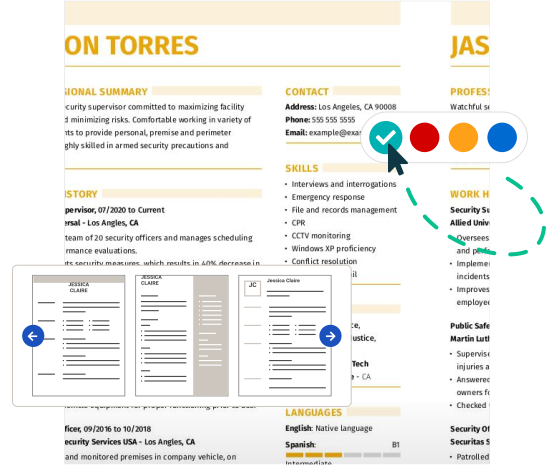
4. Use colors and design
Using color and design elements in your resume can significantly improve its appeal and effectiveness. A well-crafted resume not only showcases your qualifications but also reflects your personality and professionalism.
To begin, search for pre-made resume templates that resonate with your style. The combination resume format is particularly effective for a dispatcher, as it allows you to highlight both your skills and work experience prominently. This format typically features a colored sidebar that can draw attention to essential competencies.
Next, choose a professional color scheme. Consider using subtle colors like dark blue or deep green that convey reliability and trustworthiness—qualities important in dispatch roles. These colors can be used in headings or section dividers to create a cohesive look.
Avoid bright colors that may distract from the content or hinder readability. Additionally, steer clear of any color combinations associated with competitors within the industry, as this could inadvertently send the wrong message about your brand. Ultimately, aim for a design that balances creativity with professionalism, ensuring clarity and focus on your achievements.
5. Keep your resume length to 1-2 pages
Resumes should typically be one page long. This length allows you to present your qualifications clearly and concisely, making it easier for hiring managers to quickly assess your fit for a position. Focus on showcasing your most relevant experiences and skills, omitting repetitive tasks or unrelated roles.
In certain situations, extending your resume to two pages can be justified. For instance, if you have extensive experience in senior management positions or are applying for specialized academic roles, additional space may be needed to highlight significant contributions and achievements. In those cases, consider using a CV instead of a standard resume, as this format allows for a more detailed overview of your academic and professional background.
FAQ
Do I need to include a cover letter with my resume?
Yes, writing a cover letter and including it with your resume can significantly boost your job application, even if it’s not required. This document allows you to showcase your unique qualifications and make a lasting impression on potential employers. By providing extra context about your experiences, you can distinguish yourself from other job seekers.
If you're uncertain where to start, explore our collection of cover letter examples for inspiration tailored to various roles and industries. When you're ready to create your own, use our Cover Letter Builder for straightforward guidance through the writing process.
What is the best resume format?
The best resume formats depend on your career stage and goals. The three primary types are chronological, functional, and combination, each serving a unique purpose tailored to specific career needs.
Chronological resumes highlight work history, ideal for experienced individuals showcasing their career progression. Functional resumes focus on skills, education, and certifications, perfect for newcomers or those with employment gaps. Combination resumes provide a balanced approach between experience and skills, suitable for mid-level professionals or those transitioning careers. Choosing the right format can improve your job application by aligning with your strengths and circumstances.
How long should my dispatcher resume be?
For dispatcher resumes, one page is usually best, especially for those with less than a decade of experience. Recruiters often skim through numerous applications quickly, so a concise format highlights your key qualifications effectively.
Emphasize relevant dispatching experience, certifications, and skills. Focus on recent positions that directly relate to the job you're targeting. Remove outdated skills or lengthy descriptions of irrelevant roles.
A two-page resume may be justified if you're a seasoned dispatcher with extensive experience in specialized areas or management roles. In these cases, showcasing your additional qualifications and achievements can provide valuable insight into your capabilities.
Build a custom resume in minutes with our professional templates and expert tips.
More Resources

By Natalia Merced | CPRW, Career Writer

By Gabriela Barcenas | CPRW, Career Writer

By Natalia Merced | CPRW, Career Writer

By Natalia Merced | CPRW, Career Writer

By Natalia Merced | CPRW, Career Writer

