
How to Write a Career Change Resume in 2026


- Our customers have been hired by*


Switching careers can be exciting but challenging. To market yourself effectively to employers, you need to learn how to write a career change resume that highlights your transferable skills and fit for the new role.
In this article, you’ll find helpful tips for writing a persuasive career change resume with examples to get you started.
What Is a Career Change Resume?
A career change resume is a one- to two-page job application document specifically crafted to help you move into a new field or industry.
Unlike a traditional resume that focuses on direct experience, a career change resume emphasizes transferable skills, relevant achievements, and education that demonstrate your potential for the new role.
A well-written career change resume shows employers how your background aligns with the requirements of the new career you’re pursuing, even if your past job titles don’t match perfectly.
How to Write a Resume for a Career Change
Making a career switch can feel daunting, especially when your experience doesn’t perfectly match the job you want. A career change resume helps bridge that gap by showcasing the qualities that position you as a strong candidate, even without direct experience in the new field.
Here’s a step-by-step guide to crafting a resume that gets you noticed.
1. Pick the Right Resume Format for a Career Change
Choosing the right resume format is essential when changing careers. The three main resume formats are chronological, functional, and hybrid, each with different advantages.
A functional (skills-based) resume focuses on skills rather than job history, making it useful if you lack direct experience but have relevant skills. It’s especially effective for highlighting internships, contract work, or short-term roles.
While great for career changers, the functional format may not always perform well on online job boards and applicant tracking systems (ATS).
A combination resume gives equal focus to skills and work experience, allowing you to showcase transferable skills first while remaining ATS-friendly, making it the best option for most career changers applying online.
2. Start With a Strong Introduction
Most resumes begin with a summary or objective that highlights your most relevant skills and sets the tone for the rest of the document.
A resume objective is especially effective for career changers because it directly explains your transition and shows how your transferable skills make you a strong candidate for the role.
“Dedicated and highly organized professional with 3 years of elementary teaching experience, seeking a personal assistant role. Skilled in multitasking, scheduling, communication, and problem-solving, with a strong potential to manage tasks and support executives. Previous experience stretching school supply budgets to manage a class size of 40 students transfers neatly into the responsibilities for this position.”
If your past experience is relevant to your career change, you can get away with a strategic resume summary that highlights the accomplishments most relevant to the new job.
“Detail-oriented and adaptable professional with 3 years of experience as a receptionist, transitioning into a personal assistant role. Skilled in organization, scheduling, communication, and problem-solving, with a proven ability to manage multiple tasks efficiently. Adept at providing administrative support, coordinating daily operations, and ensuring seamless workflow in fast-paced environments.”
3. Prioritize Transferable Skills & Experience
Companies want candidates with industry experience and the necessary skills, which career changers may not yet have. The good news is that employers also value adaptability and a willingness to learn, so focus your skills section on showing potential and transferable strengths.
How to build an effective skills section:
- Review the job description and highlight required professional skills.
- Identify skills or experiences that match your past roles.
- If gaps exist, build those skills through volunteering, freelance work, or online courses.
- Create a skills section that clearly connects your abilities to the employer’s requirements.
SKILLS
Leadership & Management: Led a team of 4 associates and 2 paralegals, managing caseload strategy and successfully resolving an average of 30 cases annually through litigation and mediation.
Coaching & Mentorship: Trained and supervised junior associates, providing guidance on legal strategy, client communication, and performance development.
Data & Systems Management: Used MS Excel and practice management software (PMS) to manage budgets, organize case workflows, and track critical documentation.

Why It Works:
The skills section includes both soft skills (leadership and mentorship) and hard skills (systems knowledge and contract negotiation) that show proficiency in the workforce. Furthermore, this section links these skills to those expected in a corporate development role.
4. Reframe Your Work Experience
When changing careers, your work experience section should emphasize transferable skills and achievements, not just a list of job titles and generic tasks. Focus on the goals you achieved and the results that demonstrate how your previous roles prepared you for the new field.
Tips for writing an effective work experience section for a career change:
- Lead with relevant skills. Highlight abilities that directly relate to the job you’re targeting, even if the context was different.
- Spotlight accomplishments, not duties. Quantify your impact whenever possible. For example, “Managed a team of 5 to increase efficiency by 15%” is stronger than “Managed a team.”
- Include nontraditional experience. Volunteer work, freelance projects, internships, or coursework can demonstrate your capabilities.
- Translate your experience into industry language. Frame your past achievements in terms that your target industry will understand and value.
- Keep it concise. Focus on three to five bullet points per role that clearly connect your past experience to the new career.
Event Coordinator, Spark Events | Jan 2018 – Dec 2025
Planned and executed corporate events for 50–500 attendees.
Managed vendor contracts, budgets, and timelines to ensure smooth event operations.
Coordinated logistics, including venues, catering, and staff schedules.
Supervised a team of 5 assistants to deliver events on time and within budget.
Marketing Intern, Bright Media | Jun 2017 – Dec 2017
Assisted with social media campaigns, creating content that increased engagement by 15%.
Conducted market research to support promotional strategies and event planning.
Prepared reports and presentations for senior management.
Why It Works:
These bullet points show measurable results, such as the number of events managed, budgets overseen, or efficiency improvements achieved, giving a clear picture of the candidate’s impact over time. They also highlight concrete skills like project coordination, budgeting, and team leadership, demonstrating the abilities the candidate can bring to a new employer.
5. Focus on Relevant Education & Training
With a career change resume, you should highlight relevant academic achievements, especially those that support this professional pivot. Let’s look at how this recent graduate emphasizes their relevant degree and academic awards to apply to an adjunct professor opening.
Master of Business Administration | Wharton School
Philadelphia, PA | May 2024
Graduated with Highest Honors and Dean’s List
Excelled as a TA for undergraduate business courses
President of the Entrepreneurship Club
Why It Works:
This education section matters because it demonstrates success in their MBA program and lists prior teaching experience.
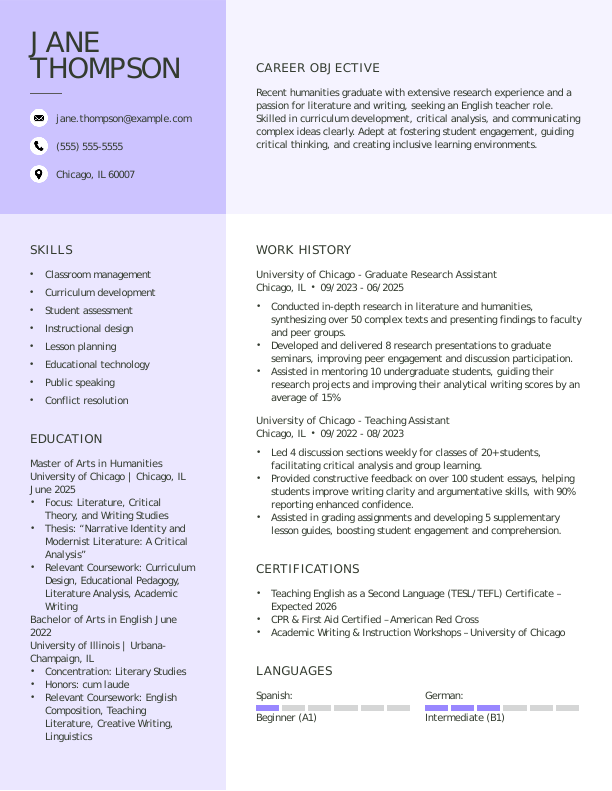
Another example is a student who graduated more recently and is applying to be a history teacher at a school.
Bachelor of Arts in English | University of Texas at Austin
Austin, TX | May 2025
GPA 3.6: magna cum laude
Tutored international students for 4 semesters
Worked 20/hrs per week at a local restaurant for 6 semesters
Why It Works:
This education section shows their experience mentoring and tutoring others. This candidate also had a part-time job during college. While the work experience from the part-time job might not be relevant to the job they’re applying for, it’s still noteworthy because it shows that they balanced a job and their studies.
Career Change Resume Examples
Kick-start your new job search by using these resume examples tailored to common career-change pivots.
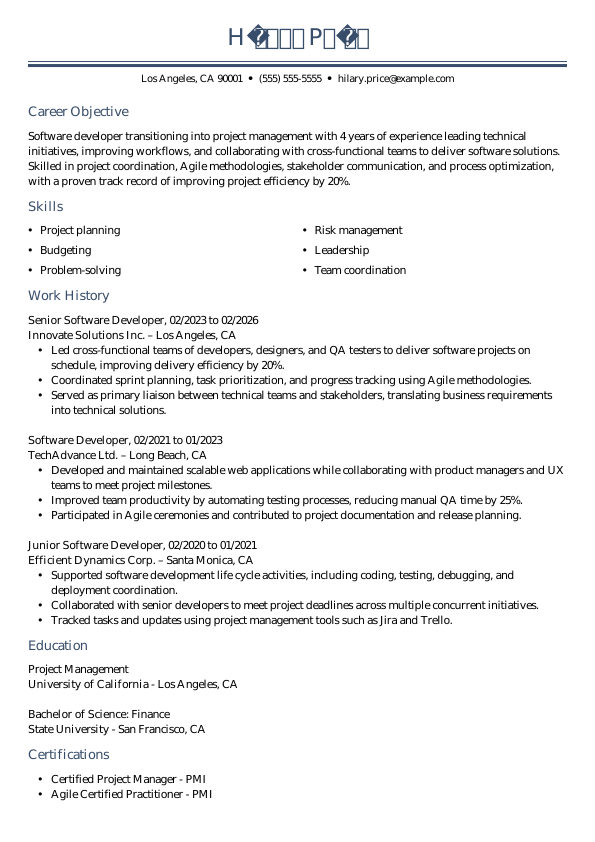
Project Manager
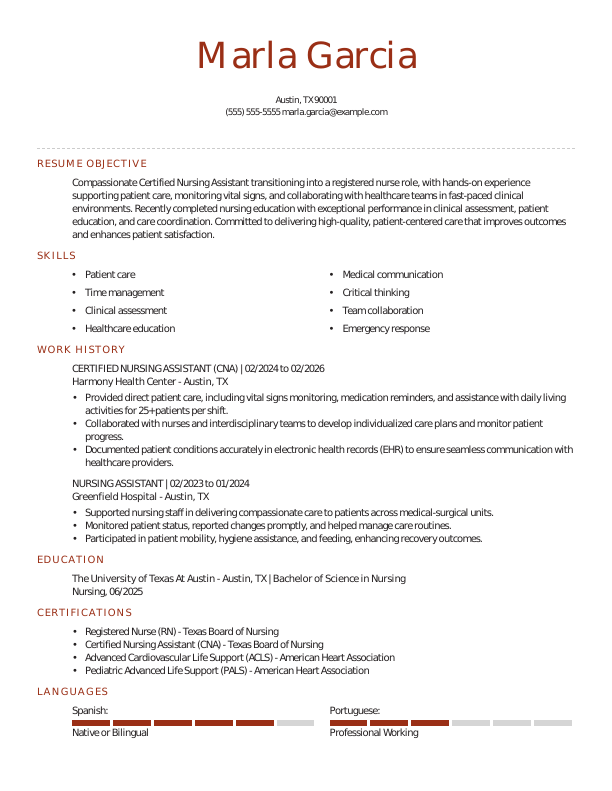
Registered Nurse
Teacher
Tips for Writing a Career Change Resume
Here are key writing tips to remember as you write your career change resume:
FAQ
How can I explain a career change on a resume?
You can explain a career change on a resume by mentioning your transition in your resume’s career objective section and backing it up with any education or retraining you’ve undergone to prepare yourself for the new role.
If you have no relevant experience, emphasize transferable skills and accomplishments from past jobs that align with your target role.
What is an example of a resume objective for changing careers?
A strong example of a resume objective directly addresses your career transition and highlights your relevant skills.
For example:
"Dedicated and organized professional with 5 years of experience as an event planner, seeking a project manager role. Skilled in multitasking, scheduling, communication, and problem-solving, with a proven ability to complete on-time event-planning projects that meet or exceed expectations."
What is a hybrid resume for a career change?
A hybrid resume, also called a combination resume, is ideal for a career change transition because it formats your resume sections so that your skills and work experience are equally emphasized.
The hybrid/combination resume format allows you to showcase transferable skills first while still outlining your job history. This format is ideal for career changers and works well with online applications and applicant tracking systems (ATS).

Learn About Our Writing Standards
Editorial Standards
Related Articles


By Natalia Merced | CPRW, Career Writer

By Natalia Merced | CPRW, Career Writer