-
-
Sort through our administrative resume examples to see what works best for you.
-
Our sales resume examples can help you write the best possible resume.
-
Explore our food service resume examples to show your skills effectively.
-
Start crafting your job-winning resume with our teaching resume examples.
-
-
-
Use our administrative cover letter examples for ideas on writing your own.
-
Use our sales cover letter examples to effectively show your sales accumen.
-
Write your job-winning cover letter following our nursing cover letter examples.
-
Learn to tell your story in education using our teaching cover letter examples.
-





- Our customers have been hired by*


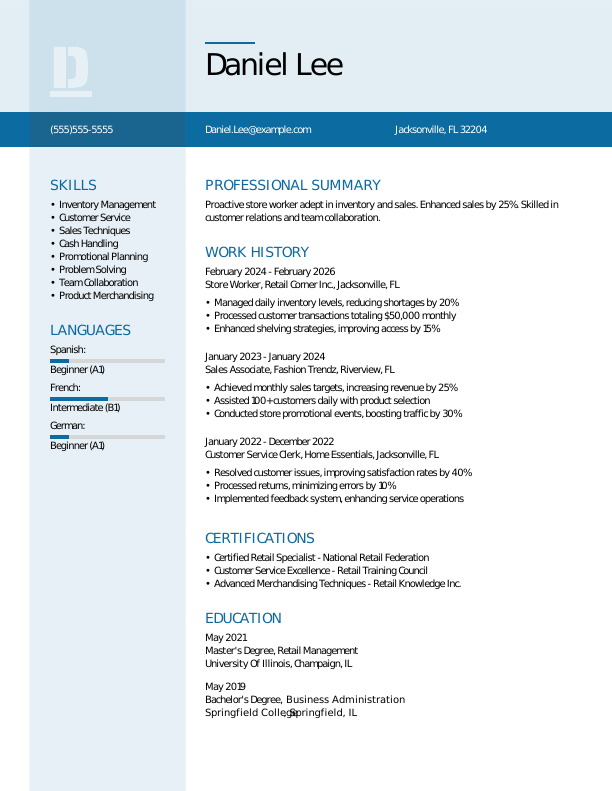
Entry-Level Store Worker Resume
This resume example highlights relevant skills and achievements, making it ideal for recent graduates and career changers eager to excel in the retail industry.

Why this resume works:
A strong academic foundation shows the candidate is well-prepared to transition into this role.

Mid-Career Store Worker Resume
This resume example is perfect for store workers with hands-on experience who aim to improve their skills and take on leadership roles in retail environments.
Why this resume works:
Mid-career store workers can highlight achievements such as increasing monthly sales by 15% through strategic promotions or reducing inventory shrinkage by 10% via effective management practices. They may also note improving customer satisfaction scores by 20%, demonstrating a commitment to exceptional service and operational excellence.

Experienced Store Worker Resume
This store worker resume highlights proven capabilities in leadership and sales, making it ideal for professionals seeking advancement in retail management.
Why this resume works:
Leadership roles and advanced certifications underscore the ability to manage complex scenarios.

Looking for something else?
Create Your Standout Resume Today
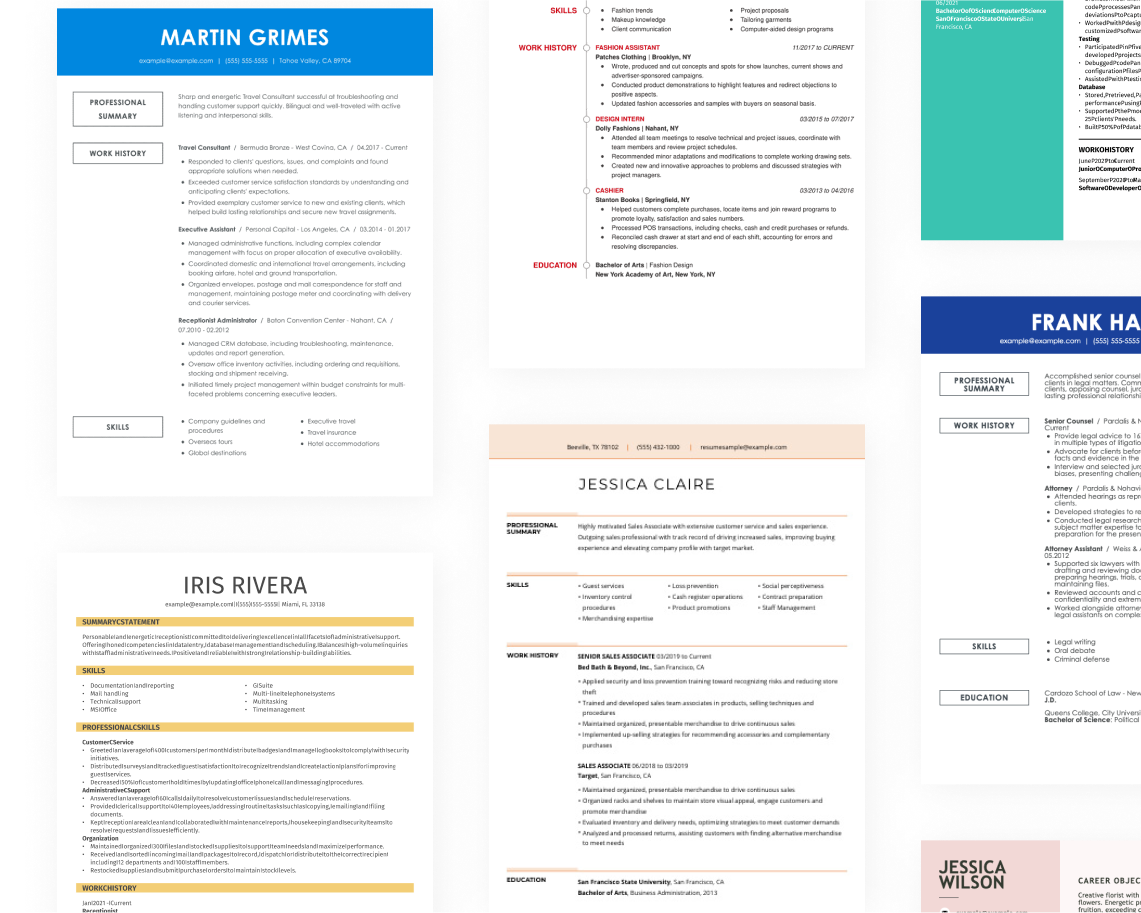
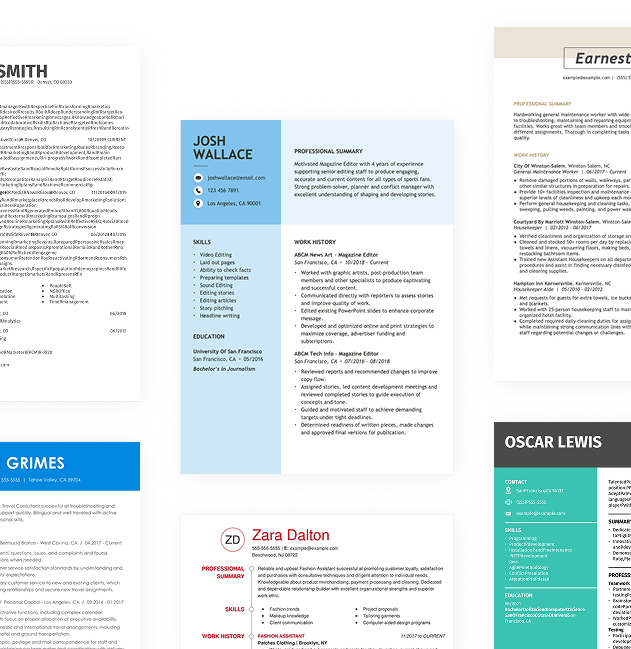
Use our resume examples for inspiration on organization, color, and design—and learn how to effectively summarize your store worker skills and experience with confidence.
How to Write a Store Worker Resume
Understanding how to write a resume allows you to showcase your unique value as a store worker, highlighting the skills and experiences that set you apart from others.
In the upcoming sections, we will guide you through the essential steps of crafting your resume, covering everything from formatting and key sections to resume tips that will help make your application stand out in the competitive job market.
Start with your contact info
The header section contains all your contact information and should be prominently placed at the top of your resume. Start with your name in a bold, larger font to ensure it catches the recruiter's eye immediately. Using a clean design that improves readability will make it easier for employers to identify you quickly among many applications.
Include important contact details like your email address, phone number, and location. It's not necessary to list your full address, but including city, state, and ZIP code is important for verifying job eligibility and assisting applicant tracking systems (ATS) in efficiently processing your application.
Depending on the relevance to the store worker role, consider adding links to certifications or trainings that might improve your profile. If you have completed specific retail training programs or safety certifications, showcasing these can highlight your preparedness and dedication to meeting industry standards. An online portfolio may not be essential unless it clearly demonstrates skills relevant to customer service or inventory management.
Write a strong professional summary
A professional summary serves as your introduction on a store worker resume. This section is typically located right below your contact details, making it one of the first things potential employers will see.
In this summary, highlight key qualifications and relevant skills that demonstrate your fit for the role. Customizing it for each application can significantly increase its impact and show recruiters that you're genuinely interested in their position.
For inspiration, consider reviewing resume summary examples tailored to similar roles. These examples can guide you in structuring your own summary while showcasing your strengths.
Strong vs weak store worker summary
Strong

"Dedicated and organized store worker with over four years of experience in retail environments. Proven ability to improve customer satisfaction through effective communication and problem-solving skills. Skilled in inventory management, merchandising, and cash handling, consistently recognized for achieving sales goals and maintaining a clean, inviting store atmosphere. Certified in customer service excellence and trained in loss prevention strategies."
Why this example works: This summary effectively describes the applicant's experience and skills, highlights measurable achievements like sales goals, emphasizes role-specific competencies such as inventory management, and incorporates relevant keywords found in retail job descriptions.
Weak

"Store worker seeking a position where I can use my skills and contribute to the team. I have experience in retail environments and enjoy interacting with customers."
Why this example doesn't work: This summary is weak because it lacks specific achievements, details on relevant skills, or evidence of expertise that would make the applicant stand out for a store worker role.

Create a personal mission statement that reflects your dedication to customer service and teamwork, aligning with the store's core values. This strategy showcases your skills while demonstrating how you can positively impact the overall shopping experience, adding value beyond operational tasks.
Share your work history
Your work history is a critical component of your resume. Listing your experience in reverse chronological order allows hiring managers to quickly see your most relevant and recent roles. This format emphasizes your career growth and the skills you've acquired over time.
When detailing your work experience, focus on these key elements:
- Job title and store name
- Dates of employment (month and year)
- Daily responsibilities (What tasks did you perform regularly?)
- Achievements (Did you improve customer satisfaction or sales?)
- Quantifiable results (For instance, "boosted sales by 30% during holiday season.")
Finally, ensure that you use dynamic action verbs to make each bullet point strong.
Strong vs weak store worker work history
Strong
Store Worker, Retail Mart
2018–2023
- Managed inventory, ensuring a 20% reduction in stock discrepancies through diligent tracking and organization.
- Provided excellent customer service, resulting in a 15% increase in customer satisfaction scores over two years.
- Trained new employees on store procedures and best practices, leading to a 30% decrease in onboarding time.
Why this example works: A strong work history highlights specific achievements and responsibilities that showcase your skills. Including quantifiable results and detailed tasks illustrates your expertise and ability to contribute effectively to the team.
Weak
Store Worker
SuperMart
- Helped customers and stocked shelves.
- Cleaned the store.
Why this example doesn't work: This work experience entry is ineffective due to its lack of detail regarding specific duties or accomplishments. It does not specify the duration of employment, the department worked in, or any metrics that could demonstrate success.
Integrating your resume Add your resume to LinkedIn can improve your professional reach. Use store operations keywords, highlight customer service achievements, and include any relevant certifications. Connect with industry groups and follow retail companies to stay updated and attract recruiters seeking diligent and skilled store workers like you.
Highlight your key skills
The skills section of your resume is essential for demonstrating your strengths as a store worker. Here's a rundown of various skill types and their significance in improving your employability:
- Soft skills are personal attributes that illustrate how you collaborate with others, such as communication, teamwork, and problem-solving. For store workers, qualities like adaptability and customer service are important since they improve the shopping experience and contribute to a positive work environment.
- Hard skills are specific abilities obtained through training or experience that are essential for a store worker. Examples include inventory management, customer service, cash handling, and product merchandising.
- Technical skills for store workers include skill in point-of-sale systems like Square or Clover, inventory management software such as Fishbowl, and barcode scanners. Being familiar with these tools ensures efficient transaction processing and stock control.
For new store workers, place your skills section near the top of your resume to highlight your capabilities despite limited experience. If you have a solid work history, position the skills section after your job experiences to show how they demonstrate your abilities.
Top 15 skills for your store worker resume
When crafting your resume, it's best to choose skills that highlight your strengths. Focus on a mix of soft skills, like communication and teamwork, alongside hard skills relevant to store work. Don't forget to include transferable skills that can be valuable in various roles, showing your versatility as a job seeker.
Below is a list of the top 15 popular skills for store workers, based on insights from JobHero users. These skills reflect what employers are looking for in potential hires and can set you apart from other applicants.
Build your education section
The education section of your resume plays an important role depending on your experience in the retail industry. For seasoned store workers with extensive hands-on experience, emphasize your work history instead of educational qualifications. In such cases, consider placing the education section toward the end or omitting it entirely if relevant degrees are not required.
Conversely, for recent graduates or those new to retail roles, showcasing educational achievements can be vital. Position your education section prominently near the top of your resume and include any relevant coursework or certifications that demonstrate your commitment to learning.
If you're entering a specialized area within retail such as inventory management or customer service training, ensure that your educational background stands out to highlight your preparedness and capability in these niches.
20 action verbs to add to your resume
Using action verbs in your resume strengthens its impact by communicating your experience and fostering an engaging tone. These verbs provide clarity, making your contributions and achievements stand out to potential employers.
When crafting your resume, prioritize action verbs that resonate with the responsibilities of a store worker. Aligning these verbs with key skills outlined in job postings can significantly boost your candidacy.
- Stocked
- Assisted
- Organized
- Displayed
- Processed
- Maintained
- Trained
- Facilitated
- Advised
- Coordinated
- Promoted
- Communicated
- Resolved
- Engaged
- Supported
- Monitored
- Inspected
- Analyzed
- Delivered
- Collaborated
Consider additional resume sections
While your core resume provides the most critical information, adding targeted sections can showcase your unique qualifications. These sections help hiring managers quickly identify your skills, experience, and achievements beyond standard resume entries.
Here are optional sections we tend to see on store worker resumes:
- Customer service skills: Highlight specific customer service abilities such as conflict resolution, communication, or sales techniques.
- Product knowledge: Detail specific products or services you're familiar with, demonstrating your expertise in the inventory.
- Sales achievements: Include metrics that show your success in meeting or exceeding sales targets or improving customer satisfaction.
- Team contributions: Describe how you've collaborated with team members to improve store operations or improve workflow.
- Training and certifications: List any relevant training programs or certifications related to retail management, safety protocols, or customer engagement.
5 Tips for Formatting Your Resume
Proper resume formatting is essential for job seekers aiming to grab the attention of recruiters and navigate ATS filters. By using ATS-friendly resume templates, job seekers can ensure their resumes are visually appealing and structured in a way that highlights key information, improving overall engagement and increasing chances of selection.
1. Watch your line spacing and margins
Proper spacing helps your resume look clean and organized, making it easier for hiring managers to read. A well-spaced resume presents your information clearly and professionally. Here's what works best:
- Keep margins between 0.5″ to 1.0″, depending on how much space you need.
- Use single spacing between paragraphs and bullet points.
- Raise the space to 1.5″ or double-space between sections.
2. Use a professional font
Choosing the ideal resume font is important because it affects both readability and first impressions. Consider using classic, professional fonts such as:
- Arial
- Calibri
- Helvetica
- Georgia
- Garamond
- Verdana
Consider a bolder or slightly larger font for your name at the top to create an compelling introduction.
3. Organize your resume sections
A resume should be clear and easy to navigate. Use bullet points to detail your responsibilities in previous roles, beginning each point with a strong action verb that captures your achievements or skills. For example, say "Managed inventory levels by conducting weekly stock audits."
Highlight measurable results to demonstrate your impact, such as "Increased sales by 15% through effective merchandising strategies." This method improves readability and helps hiring managers quickly understand your contributions.
To ensure compatibility with applicant tracking systems, use an ATS resume checker. This tool verifies that your formatting and keywords meet industry standards for store worker positions, which makes it easier for potential employers to identify your qualifications.
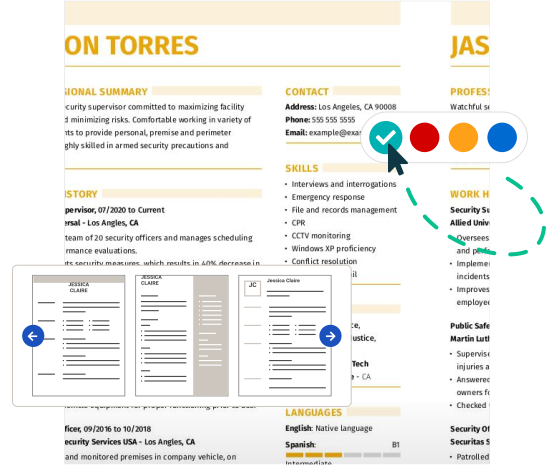
4. Use colors and design
Incorporating color and design elements into your resume can improve its appeal and draw attention to key information. A well-structured resume reflects your personality while showcasing your strengths.
Begin by selecting a template that aligns with your professional image. The combination resume format is helpful, as it allows you to emphasize both skills and work history prominently. This approach ensures that relevant qualifications stand out in a clear and organized manner.
Next, choose a color scheme that conveys professionalism and clarity. Subtle shades like navy or dark gray are excellent options for maintaining a polished look while adding visual interest. You can incorporate these colors at the top of the document or within section dividers to create an appealing layout.
Avoid bright colors that might distract from your content or make it harder to read. It's also important to avoid using colors associated with competitors since doing so could unintentionally send the wrong message about your suitability for the role.
Thoughtful use of design elements will help distinguish your resume from others, showing attention to detail while leaving a strong impression on potential employers.
For store workers, creating a standout resume can be achieved through vibrant design elements that reflect your personality while remaining professional. Using bold colors and engaging layouts can demonstrate your creativity and attention to detail. Think about incorporating visual cues like icons or thematic colors related to retail, such as bright tones for energetic environments or softer shades for customer service roles.
However, it's important to align your choices with the company culture. A trendy boutique might embrace a playful style, whereas a corporate retail chain may favor a more polished approach. Ultimately, ensure that your design improves readability and showcases your skills effectively.
5. Keep your resume length to 1-2 pages
Resumes should typically be one page long. This length allows you to present your most relevant experience without overwhelming hiring managers. Remember, they often spend just a few seconds reviewing each resume, so clarity and focus are essential for making a strong impression.
Prioritize your most recent and relevant roles. Highlight achievements that align with the job description rather than listing every responsibility from previous positions. If you have extensive experience—like over ten years—or if you're applying for higher-level roles such as executives, two pages may be justified to showcase your contributions effectively. In academia or specialized fields, consider using a CV instead of a traditional resume, as it provides more space for detailed accomplishments and publications.
FAQ
Do I need to include a cover letter with my resume?
Writing a cover letter is an essential step in the job application process, even when it’s not mandatory. It lets you showcase your personality and highlight experiences that make you a great fit for the role. By including a cover letter, you can provide context to your resume and stand out from other applicants.
For inspiration, explore our collection of cover letter examples tailored for various positions. When you're ready to craft your own, use our Cover Letter Builder for structured guidance to create a compelling narrative about your qualifications.
What is the best resume format?
Choosing the right resume format depends on your individual circumstances and career goals. The three main formats are chronological, functional, and combination. Each serves its own purpose based on the job seeker's experience and skills.
The chronological format is ideal for those with a solid work history because it emphasizes past positions. In contrast, the functional format focuses on relevant skills and education, making it suitable for entry-level applicants. The combination format offers a balanced approach by showcasing both experience and skills clearly, which appeals to mid-career professionals or individuals transitioning between industries.
How long should my Store Worker resume be?
For store worker resumes, aim to keep it to one page. Employers often sift through many applications quickly, so a concise layout helps highlight your key skills and experience effectively. Focus on retail-related positions and specific achievements, such as sales targets met or customer service awards received.
Remove unrelated job experiences or lengthy descriptions of past roles that don’t pertain to the retail industry. If you have significant experience in various retail positions or are applying for a supervisory role, a two-page resume may be justified. In this case, showcasing your extensive background can set you apart from other applicants.
Should I use a resume template or design my own?
For most job seekers, using a professionally crafted resume template is highly recommended. These templates simplify the writing process and ensure an ATS-friendly layout, which can be important in getting noticed by employers.
However, if you’re a creative professional or have distinct design preferences that align with your field, designing your own resume could help showcase your individuality. Just remember to adhere to effective guidelines for clarity and impact to make it truly stand out.
What’s the difference between a resume and a CV?
A resume is a concise document, typically one page, highlighting your most relevant skills and experiences tailored for the specific job you're applying to. It’s designed to quickly showcase your qualifications to potential employers.
Conversely, a CV (Curriculum Vitae) is more comprehensive, often spanning two or more pages. It includes detailed information about your entire work history, education, publications, presentations, and other professional achievements. CVs are commonly used in academia or research positions.
For clarity on how to write a CV, seek out CV examples to ensure yours meets industry standards and expectations.
Build a custom resume in minutes with our professional templates and expert tips.
More Resources


By Natalia Merced | CPRW, Career Writer


By Gabriela Barcenas | CPRW, Career Writer

By Natalia Merced | CPRW, Career Writer
By Gabriela Barcenas | CPRW, Career Writer

By Natalia Merced | CPRW, Career Writer