-
-
Sort through our administrative resume examples to see what works best for you.
-
Our sales resume examples can help you write the best possible resume.
-
Explore our food service resume examples to show your skills effectively.
-
Start crafting your job-winning resume with our teaching resume examples.
-
-
-
Use our administrative cover letter examples for ideas on writing your own.
-
Use our sales cover letter examples to effectively show your sales accumen.
-
Write your job-winning cover letter following our nursing cover letter examples.
-
Learn to tell your story in education using our teaching cover letter examples.
-





- Our customers have been hired by*


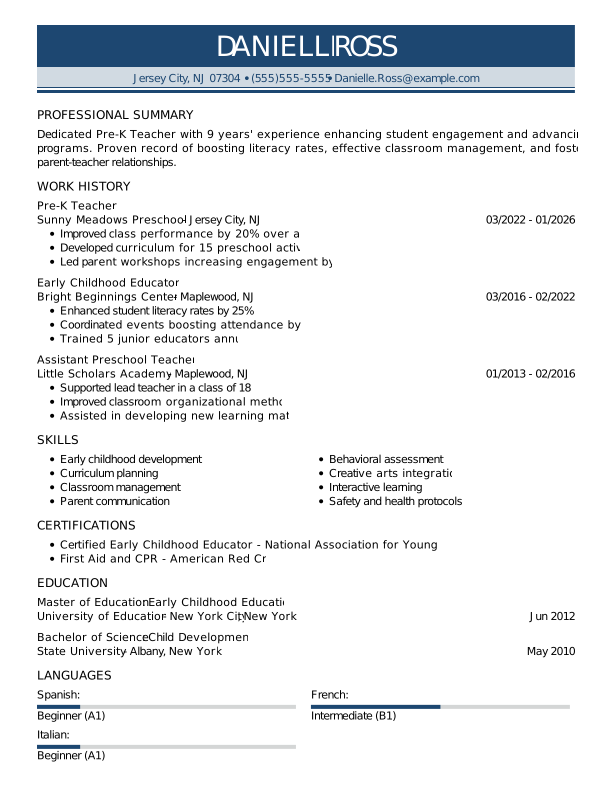
Entry-Level Pre-K Teacher Resume
This resume example effectively demonstrates the skills and accomplishments of career changers, showcasing their ability to foster student engagement and satisfaction in pre-K teaching roles.

Why this resume works:
It allows applicants to emphasize essential skills, like curriculum design and classroom management, showcasing readiness to inspire young learners.

Mid-Career Pre-K Teacher Resume
This resume example is ideal for pre-K teachers with a solid background, showcasing their achievements in curriculum development and student engagement to help them advance in their careers.
Why this resume works:
This applicant highlights a track record of improving outcomes across multiple settings.

Experienced Pre-K Teacher Resume
This pre-K teacher resume example is perfect for seasoned educators looking to advance their careers through strong leadership opportunities.
Why this resume works:
Leadership roles and advanced certifications underscore the ability to manage complex scenarios.

Looking for something else?
Create Your Standout Resume Today
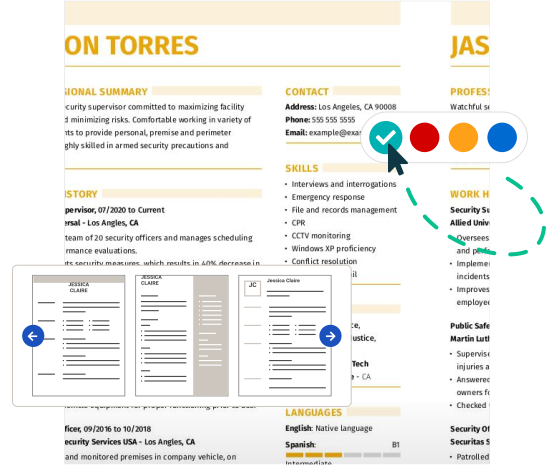
Use our resume examples for inspiration on organization, color, and design—and learn how to effectively summarize your pre-K teacher skills and experience with confidence.
How to Write a Pre-K Teacher Resume
Learning how to write a resume is important for showcasing your unique value as a pre-K teacher, rather than just listing your credentials. By emphasizing your teaching philosophy and experiences, you can create a narrative that stands out to potential employers.
In the following sections, we will offer step-by-step guidance with valuable resume tips specifically for teaching positions. You'll find essential advice on everything from highlighting your educational background to showcasing your classroom management skills effectively.
Start with your contact info
The header section contains all your contact information, prominently displayed at the top of your resume. Start with your name in a larger font to ensure it captures attention right away. You may use a playful font or a bright color that aligns with the vibrant nature of pre-K education, making it appealing yet professional.
Next, include essential contact details such as your email address, phone number, and location; providing just the city and state is sufficient. This information allows potential employers to reach you easily and is vital for applicant tracking systems (ATS) that filter applicants based on location.
Lastly, consider adding links to relevant certifications in early childhood education or additional training programs. If you have an online portfolio showcasing lesson plans or classroom activities, include that as well. These resources can improve your application by demonstrating your qualifications and passion for teaching young children effectively.
Write a strong professional summary
A professional summary serves as your introduction on a pre-K teacher resume, positioned right beneath your contact details. This section is your chance to make a strong first impression and capture the attention of hiring managers.
In this summary, include key qualifications, relevant skills, and your passion for teaching young children. Tailoring this section to align with each job application can significantly improve your appeal to potential employers.
Consider looking at various resume summary examples to help you structure and articulate your own unique narrative effectively. These resources can provide inspiration for showcasing your strengths in the best light.
Strong vs weak pre-K teacher summary
Strong

"Enthusiastic pre-K teacher with over four years of experience fostering a love for learning in young children. Proven ability to create engaging lesson plans that cater to diverse learning needs, resulting in improved literacy and social skills among students. Skilled in classroom management and early childhood development, holding certifications in CPR and First Aid. Recognized for building strong relationships with students and parents alike."
Why this example works: This summary effectively outlines the job seeker's relevant experience, highlights measurable achievements such as improved student skills, emphasizes essential teaching competencies, and incorporates keywords commonly found in early childhood education job descriptions.
Weak

"Pre-K teacher seeking a position where I can contribute my skills and passion for early childhood education. I have experience in classrooms and enjoy working with young children."
Why this example doesn't work: This professional summary is weak and vague, offering no specifics about the teacher's qualifications, teaching methods, or unique experiences relevant to the role of a pre-K teacher.

Highlight key interpersonal skills such as patience and empathy on your pre-K teacher resume. Use specific examples to illustrate how these skills fostered positive relationships with students and parents, showcasing your ability to create a nurturing classroom environment.
Share your work history
Listing your work experience in reverse-chronological order is essential for showcasing your most recent and relevant roles first. This approach allows hiring managers to easily see your professional growth and the skills you’ve acquired over time. It ensures that your latest experiences catch their attention right away.
When detailing your work history, focus on:
- Job title and school name
- Dates of employment (month and year)
- Daily responsibilities (What activities did you engage in with children?)
- Accomplishments (Did you improve learning outcomes or improve classroom management?)
- Quantifiable results (For example, "increased student engagement by 30%.")
Finally, be sure to use dynamic action verbs to vividly convey your contributions.
Strong vs weak pre-K teacher work history
Strong
Pre-K Teacher, Bright Futures Academy
2018–2023
- Developed and implemented a play-based curriculum for 20 children, improving early literacy skills by 40% over the school year.
- Organized engaging classroom activities that fostered social skills, resulting in a 25% increase in cooperative play among students.
- Collaborated with parents to create individualized learning plans for each child, leading to improved participation and enthusiasm for learning.
Why this example works: A strong work history highlights specific accomplishments that showcase your teaching impact. Including quantifiable results demonstrates your effectiveness in fostering student development and encourages confidence in your abilities as an educator.
Weak
Pre-K Teacher
Bright Futures Academy
- Supervised children and planned activities.
- Helped with snacks and stories.
Why this example doesn't work: This work experience entry is ineffective because it lacks specific details about the teaching environment or age group, provides no dates of employment, and describes vague responsibilities that do not showcase unique contributions.
Highlight leadership skills with examples like "Directed classroom activities for 20+ students" or "Organized parent-teacher meetings." These examples demonstrate your ability to manage a dynamic learning environment effectively.
Highlight your key skills
The skills section is key to showcasing your strengths as a pre-K teacher. Here's an overview of essential teaching skills and their significance in nurturing young minds:
- Soft skills are personal attributes that highlight how you collaborate with others—such as patience, creativity, and communication. Qualities like empathy and adaptability are important for pre-K teachers as they create a nurturing learning environment and foster strong relationships with young children and their families.
- Hard skills for a pre-K teacher are specific abilities acquired through training and experience. These include lesson planning, classroom management, early childhood development knowledge, and skill in educational technology tools.
- Technical skills for a pre-K teacher include expertise in educational software such as ABCmouse, interactive whiteboards like SMART Board, and digital assessment tools. Familiarity with early childhood learning apps can improve classroom engagement and development.
For new pre-K teachers, highlight your skills right after your professional summary to showcase your strengths. If you have substantial experience, position the skills section after your work history to let your accomplishments speak for themselves.
Top 15 skills for your pre-K teacher resume
When preparing your resume as a pre-K teacher, it’s essential to highlight skills that align with what employers are seeking. Focus on a mix of soft skills, like patience and creativity, alongside hard skills such as lesson planning and classroom management. Including transferable skills can also improve your appeal across different educational roles.
Here’s a list of the 15 most popular skills for pre-K teachers, gathered from JobHero users. These skills reflect what hiring managers value in early childhood education job seekers and can help your resume stand out in this vibrant field.
Build your education section
The education section's prominence on a resume varies significantly based on your experience level and the teaching field. For seasoned pre-K teachers with extensive experience, it's advisable to minimize the focus on education. Place this section toward the bottom of your resume, emphasizing your teaching history, notable achievements, and relevant skills instead.
Conversely, recent graduates should highlight their educational background prominently. Positioning this section at the top allows you to showcase your degree, student teaching experiences, and any specialized training or certifications that demonstrate your readiness for the classroom.
For those transitioning into early childhood education from other fields or pursuing specialized roles, it’s important to detail any relevant coursework or credentials. This approach can strengthen your candidacy by illustrating both your educational foundation and commitment to effective teaching methods.
20 action verbs to add to your resume
Using action verbs in your resume significantly improves its strength by effectively communicating your experiences and creating an engaging tone. They allow you to vividly showcase your accomplishments, making a strong impression on potential employers.
When crafting your resume, focus on selecting action verbs that resonate with the skills highlighted in pre-K teaching job postings. This alignment demonstrates your suitability for the role and showcases relevant expertise effectively.
- Facilitated
- Engaged
- Guided
- Nurtured
- Planned
- Organized
- Encouraged
- Developed
- Presented
- Shared
- Created
- Inspired
- Coached
- Tailored
- Improved
- Promoted
- Observed
- Collaborated
- Communicated
- Fostered
Consider additional resume sections
While your core resume provides the most critical information, adding targeted sections can highlight your unique strengths as a pre-K teacher. These additions allow hiring managers to quickly recognize your skills, relevant experiences, and accomplishments that extend beyond typical resume entries.
Here are some optional sections frequently found on pre-K teacher resumes:
- Teaching philosophy: Share your beliefs about education and how they shape your teaching methods.
- Classroom management strategies: Describe techniques you use to create a positive learning environment for young children.
- Curriculum development: Highlight any experience in creating engaging lesson plans or educational activities.
- Family engagement initiatives: Detail programs or activities you've implemented to involve families in their children's education.
- Professional development workshops: List relevant training sessions or courses that demonstrate your commitment to improving your teaching skills.
5 Tips for Formatting Your Resume
A well-formatted resume is important for job seekers as it captures the attention of recruiters and improves readability. Using ATS-friendly resume templates can significantly improve your chances of passing automated filters while keeping hiring managers engaged with your qualifications.
1. Watch your line spacing and margins
Proper spacing helps your resume look clean and organized, making it easier for hiring managers to read. Effective use of space not only improves visual appeal but also highlights the most important information. Here's what works best:
- Keep margins between 0.5″ to 1.0″ for a balanced look.
- Use single spacing between paragraphs and bullet points to maintain clarity.
- Increase spacing to 1.5″ or double-space between sections for better separation.
2. Use a professional font
Selecting the right resume font is important as it influences first impressions. Choose professional fonts like:
- Helvetica
- Garamond
- Verdana
- Tahoma
- Trebuchet MS
- Courier New
Consider using a slightly more distinctive font for your name in the header to give it a unique flair.
3. Organize your resume sections
A resume for a pre-K teacher should be clear and easy to navigate. Use bullet points to present your responsibilities and achievements effectively. Start each bullet with a strong action verb, emphasizing your key contributions. For example, "Developed engaging lesson plans that increased student participation by 40%" highlights both your initiative and the positive impact on learning.
Focusing on measurable accomplishments is important. Quantify your successes wherever possible, such as "Implemented a new reading program that improved literacy rates among students by 25%," which showcases your ability to drive results in early education.
To ensure your resume meets ATS standards, use an ATS resume checker. This tool will help you identify potential formatting issues or keyword gaps, making sure your application stands out to hiring managers successfully.
4. Use colors and design
Using color and design elements in your resume can make it stand out while effectively communicating your qualifications as a pre-K teacher. A well-structured resume not only highlights your skills but also reflects your personality.
Begin by searching through various resume templates to find one that matches the organizational style you prefer. The combination resume format is particularly useful for educators, as it allows a colored sidebar to showcase essential skills alongside your teaching experience.
Next, select an appropriate color scheme. Opt for soft, inviting colors that resonate with a classroom environment, such as pastel shades or muted primary colors. These choices can improve readability and create a friendly tone without overwhelming the reader.
Be mindful to avoid overly bright or distracting colors that could diminish the professional appearance of your resume. Additionally, steer clear of colors associated with competitors or any hues that may be hard on the eyes. Focus on crafting a warm yet polished presentation of your qualifications to appeal to hiring committees in education.
As a pre-K teacher, your resume is an opportunity to showcase your creativity and passion for early childhood education. Consider incorporating playful design elements like fun fonts and bright colors that reflect the joyful nature of teaching young children. However, balance this with professionalism to ensure clarity and readability.
For instance, a vibrant color scheme can be perfect for a daycare or preschool focused on creativity, while a more subdued palette may be suitable for educational institutions with a formal approach.
Tailoring your resume's style to match the environment you wish to join will highlight your understanding of the field while demonstrating your unique personality as an educator.
5. Keep your resume length to 1-2 pages
Resumes for pre-K teachers should be clear and focused, ideally fitting on one page. Given that hiring managers often skim resumes quickly, brevity is important for making a strong impression. Include only the most relevant teaching experiences and skills that relate to early childhood education. Highlight your ability to engage young learners and any specialized training or certifications you possess.
While one page is generally optimal, two pages may be warranted for those with extensive experience or additional qualifications in education. For instance, if you have several years of teaching experience or have held leadership roles within educational settings, you might need extra space to showcase your achievements fully. In unique cases such as academic positions in education, consider using a CV to detail your extensive background and contributions to the field.
FAQ
Do I need to include a cover letter with my resume?
Writing a cover letter can significantly improve your job application, even when it’s not mandatory. It lets you showcase your personality and provide context for your qualifications, helping you stand out in a competitive field. If you're unsure where to start, explore our collection of cover letter examples for inspiration tailored to various roles, including pre-K teacher positions. Once you're ready to create your own, our Cover Letter Builder offers easy-to-follow steps to guide you through the process. Don't miss this chance to elevate your application and make a memorable impression.
What is the best resume format?
Choosing the right resume format largely depends on your individual circumstances. The three primary formats are chronological, functional, and combination, each tailored to different career stages and job seeker needs.
The chronological format is ideal for those with extensive experience as it emphasizes work history. Newcomers or those changing careers might find the functional format suitable since it focuses more on skills and education. Lastly, the combination format works well for mid-career professionals by mixing both relevant experience and skill sets to present a comprehensive view of qualifications.
How long should my pre-K teacher resume be?
As a pre-K teacher, your resume should ideally be one page. Early childhood education professionals often receive numerous applications, so keeping your resume concise helps highlight your essential qualifications effectively.
Emphasize relevant teaching experience, certifications, and skills that directly relate to early childhood education. Focus on recent roles and any specialized training in child development or classroom management. Eliminate outdated skills or extensive details about non-education jobs.
Consider a two-page resume only if you have significant experience in various educational settings or leadership roles like preschool director. In those cases, additional space can showcase your valuable contributions and diverse qualifications.
How far back should my work history go?
For your resume, aim to include work experience from the last 10 years. This guideline helps keep your application focused and relevant. If you have a rich history in teaching or specific roles that demonstrate your skills with young children, consider including those. However, if older positions don’t relate directly to pre-K teaching, it’s best to exclude them for clarity and impact.
Should I use the same resume for every job?
No, using the same resume for every job application isn't advisable. Tailoring your resume to each position can greatly boost your interview chances. Start by adjusting your skills and summary to align with the job description, ensuring you include relevant keywords that reflect the employer's needs.
This approach is important because many companies use ATS to filter resumes based on specific terms and criteria before they reach a hiring manager. By customizing these elements, you stand a better chance of passing through these initial screenings and capturing the interest of potential employers.
Build a custom resume in minutes with our professional templates and expert tips.
Natalia Merced
CPRW, Career WriterNatalia is a Certified Professional Resume Writer (CPRW) and member of the Professional Association of Resume Writers & Career Coaches and has worked in the career industry for more than two years providing comprehensive guidance on resume writing and job search strategies for individuals across diverse career paths. She holds a master's degree in counseling psychology and a bachelor's degree in public relations and advertising and is passionate about helping job seekers present their professional story effectively through well-crafted resumes and cover letters that demonstrate their value, skills, and experience to potential employers. Some of her work has been featured on JobHero's resume examples career center.
More Resources

By Natalia Merced | CPRW, Career Writer



By Gabriela Barcenas | CPRW, Career Writer

By Natalia Merced | CPRW, Career Writer

By Gabriela Barcenas | CPRW, Career Writer