-
-
Sort through our administrative resume examples to see what works best for you.
-
Our sales resume examples can help you write the best possible resume.
-
Explore our food service resume examples to show your skills effectively.
-
Start crafting your job-winning resume with our teaching resume examples.
-
-
-
Use our administrative cover letter examples for ideas on writing your own.
-
Use our sales cover letter examples to effectively show your sales accumen.
-
Write your job-winning cover letter following our nursing cover letter examples.
-
Learn to tell your story in education using our teaching cover letter examples.
-





- Our customers have been hired by*


Entry-Level Board Member Resume
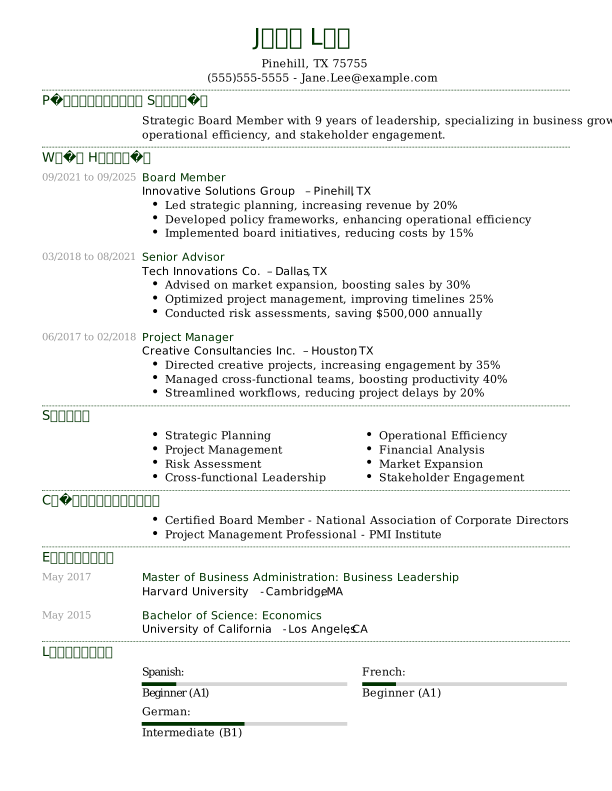
This resume example is effective for recent graduates and career changers as it emphasizes strategic achievements and leadership skills that demonstrate the ability to contribute meaningfully in board roles.

Why this resume works:
A strong academic foundation and relevant skills show the candidate is well-prepared to transition into a board member position.

Mid-Career Board Member Resume
This resume example is ideal for board members aiming to leverage their leadership experience and strategic insights to drive organizational success and influence powerful decision-making.
Why this resume works:
This applicant highlights a track record of improving outcomes across multiple board member settings.

Experienced Board Member Resume
This board member resume example is perfect for experienced professionals eager to elevate their careers into influential leadership roles.
Why this resume works:
Leadership roles and advanced certifications underscore the ability to manage high-level board member responsibilities.

Looking for something else?
Create Your Standout Resume Today
Use our resume examples for inspiration on organization, color, and design—and learn how to summarize your board member skills and experience with confidence.
How to Write a Board Member Resume
Learning how to write a resume for a board member role is important for highlighting your strategic vision, leadership experience, and unique contributions beyond generic qualifications.
In the following sections, you'll find a step-by-step guide with resume tips on crafting your resume. This includes sections on governance experience, key achievements, and tailored advice to ensure you stand out in competitive board searches.
Start with your contact info
The contact information section is important for a board member resume, as it establishes your identity and accessibility. Start by placing your name at the top in a large, bold font to ensure it captures attention immediately. Consider using a clean, professional font style that reflects your stature and aligns with the tone of the position.
Next, include essential contact details such as your email address, phone number, and general location; city and state will suffice. This information makes it easy for potential collaborators or organizations to reach you while also being friendly to applicant tracking systems (ATS) that may filter resumes based on these key details.
Additionally, consider incorporating links to relevant certifications or professional profiles that showcase your leadership experience and expertise. If applicable, an online portfolio can further illustrate your contributions to previous boards or organizations. These resources improve your candidacy by providing tangible proof of your qualifications and commitment to governance excellence.
Write a strong professional summary
A professional summary is a brief statement that showcases your qualifications and skills. It appears directly below your contact information, making it one of the first elements recruiters see on your resume.
In this section, highlight your relevant experience and enthusiasm for the board member position. Customizing your summary to align with the specific organization can significantly improve your appeal as a job seeker.
Explore various resume summary examples to gather ideas on what to include and how to structure this important segment of your resume. These resources can guide you in crafting a compelling introduction that stands out.
Strong vs weak board member summary
Strong

"Strategic board member with over ten years of experience in nonprofit governance and organizational development. Proven track record in driving successful initiatives that increased funding by 30% while improving community engagement. Skilled in financial oversight, stakeholder relations, and strategic planning, recognized for fostering a culture of transparency and accountability. Certified in non-profit management and governance."
Why this example works: This summary describes the applicant's extensive experience, highlights measurable achievements like funding increases, emphasizes relevant skills essential for board roles, and incorporates keywords relevant to nonprofit governance.
Weak

"Board member seeking opportunities to contribute my insights and experience. I have been involved in various organizations and value teamwork."
Why this example doesn't work: This professional summary is overly simplistic and lacks concrete details about the applicant's relevant skills, achievements, or specific contributions as a board member.

To craft a personal mission statement as a board member, focus on how your leadership experience and strategic vision align with the organization’s mission and values. Highlight your commitment to fostering innovation and collaboration, showcasing the unique perspectives you bring that extend beyond traditional qualifications.
Share your work history
Your work experience is a vital component of your resume, showcasing your professional journey. By presenting your roles in reverse-chronological order, you allow employers to see your most relevant and recent experiences first. This approach helps highlight your career progression.
When detailing each position, ensure you include:
- Job title and organization
- Employment dates (month and year)
- Primary duties (What were your daily tasks?)
- Key accomplishments (What did you achieve? Did you streamline operations or improve performance?)
- Quantifiable results (Whenever possible, use figures like "increased sales by 20%.")
Keep in mind, using action verbs will energize your descriptions and illustrate your impact.
Strong vs weak board member work history
Strong
Board Member, Community Development Association
2018–2023
- Facilitated strategic planning sessions that led to a 25% increase in community engagement initiatives.
- Oversaw budget allocations resulting in cost savings of 15% while improving program effectiveness.
- Mentored new board members, ensuring a seamless onboarding process and fostering a collaborative team environment.
Why this example works: This board member's work history highlights specific contributions to governance and strategy, reflecting measurable impacts on the organization, such as a 25% increase in community engagement initiatives.
Weak
Board Member
Community Nonprofit Org
- Attended meetings and discussed various topics.
- Provided input on decisions made.
Why this example doesn't work: The weak work history example doesn't specify the duration of service or specific initiatives undertaken, provides vague responsibilities that could apply to any board position, and lacks evidence of impact or outcomes from contributions.
For board member professionals with over 10 years of experience, a chronological resume format is ideal. It showcases your leadership journey and significant contributions to previous organizations, demonstrating your growth and the depth of your expertise in governance.
Highlight your key skills
The skills section of your resume is important for highlighting your qualifications and strengths. Here's a rundown of various skill types and their significance in demonstrating your value as a board member:
- Soft skills are personal attributes that illustrate how you collaborate with others, such as strategic thinking, effective communication, and conflict resolution. For board members, these qualities are important because they enable constructive discussions and foster a positive environment for decision-making, ultimately contributing to the organization's success.
- Hard skills for a board member are specific abilities gained through experience, training, or education. Examples include financial analysis, strategic planning, governance compliance, and risk management.
- Technical skills for board members include expertise with governance software, financial analysis tools, and strategic planning platforms. Examples of relevant technologies are Diligent Boards for meeting management, QuickBooks for financial oversight, and Asana for project tracking.
For board members just starting out, position the skills section at the top of your resume to highlight your capabilities. If you have significant experience, consider placing it after your work history so your accomplishments can take center stage.
Top 15 skills for your board member resume
When crafting your resume as a board member, it's important to showcase both specific and transferable skills. Highlight leadership, strategic planning, and financial acumen while also emphasizing communication and problem-solving abilities that can cross industries. A balanced skill set improves your appeal to different organizations.
Below is a list of the top 15 skills for board members, grounded in what JobHero users prioritize when building their resumes. These skills ensure you stand out by aligning with current trends and expectations within this influential role.
Build your education section
When crafting your resume, the education section's prominence varies with your experience level and industry. For seasoned professionals, extensive work history often takes precedence over educational background. You may choose to place this section at the bottom or omit it if your roles do not demand specific degrees.
In industries where practical experience is valued, such as tech or business, highlighting your achievements can outweigh formal qualifications. However, if you’re in a field that typically requires certifications or licenses, ensure those credentials are visible.
For recent graduates or individuals entering specialized sectors like healthcare or engineering, education can be a vital asset. Position this section prominently at the top of your resume and include relevant coursework and any honors received to showcase your academic foundation.
20 action verbs to add to your resume
Using action verbs on your resume as a board member can significantly improve its impact. These verbs convey your experience and accomplishments, creating a dynamic narrative that captures attention.
When selecting action verbs, focus on those relevant to governance and leadership. Connect them to the essential skills highlighted in job postings to demonstrate how you align with the role's requirements.
- Governed
- Strategized
- Oversaw
- Analyzed
- Facilitated
- Innovated
- Directed
- Advised
- Promoted
- Coached
- Negotiated
- Endorsed
- Contributed
- Reviewed
- Spearheaded
- Improved
- Guided
- Influenced
- Advocated for
- Collaborated with
Consider additional resume sections
While your core resume provides the most critical information, adding targeted sections can showcase your unique qualifications. These sections help hiring managers quickly identify your leadership skills, strategic vision, and contributions beyond standard resume sections.
Here are optional sections we tend to see on board member resumes:
- Leadership experience: Detail previous roles in governance or management that demonstrate your ability to lead organizations.
- Committee involvement: List committees you have served on, highlighting any leadership positions and key initiatives you contributed to.
- Industry expertise: Describe relevant knowledge or experience in specific sectors (healthcare, finance, technology) that improves your insight as a board member.
- Achievements and awards: Mention recognitions received for outstanding performance or contributions in previous roles.
- Community engagement: Include volunteer work or community service that illustrates your commitment to social responsibility and public welfare.
5 Tips for Formatting Your Resume
Proper resume formatting is important for job seekers as it improves professionalism and captures the recruiter's attention. Using ATS-friendly resume templates can greatly help you pass automated filters while ensuring your skills and experiences are showcased.
1. Space your lines and margins
Proper spacing helps your resume look clean and organized while ensuring that your information is easy to read. It plays an important role in making a strong first impression.
- Set margins between 0.5" and 1.0" for a balanced look.
- Use single spacing for paragraphs and bullet points for clarity.
- Increase spacing to 1.5" or double-space between sections to improve separation.
2. Use a professional font
Choosing the right resume font is important because it affects readability and first impressions. Consider these professional fonts:
- Helvetica
- Garamond
- Verdana
- Cambria
- Trebuchet MS
- Book Antiqua
To make your name stand out, opt for a slightly bolder or larger font at the top of your resume.
3. Organize your resume sections
A resume should communicate your contributions as a board member in a concise format. Use bullet points to outline key responsibilities and achievements, making it easy for reviewers to grasp your impact. Start each bullet with strong action verbs like "led," "developed," or "oversaw" to convey leadership and initiative.
Highlight measurable accomplishments that reflect your effectiveness in governance. For example, you may state, "Increased stakeholder engagement by 30% through the implementation of quarterly town hall meetings." This approach showcases your ability to drive results and foster collaboration.
To ensure your resume is optimized for the ATS, use an ATS resume checker. This tool will help confirm that you’re using appropriate keywords and formatting, improving your chances of being noticed by hiring committees.
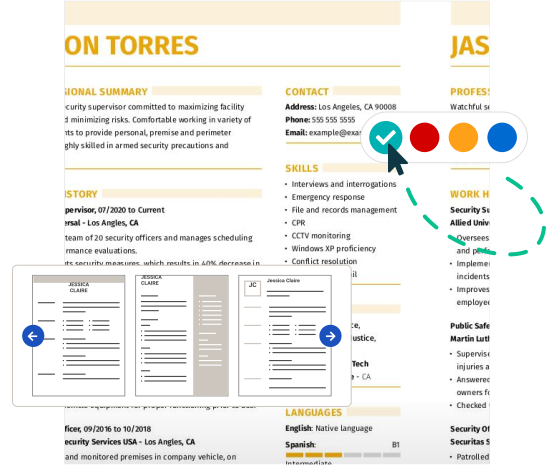
4. Use colors and design
Crafting a compelling resume as a board member requires strategic use of color and design elements. A visually appealing resume not only captures attention but also emphasizes your leadership and expertise. Start by exploring various pre-made templates that align with your professional brand. The combination resume format is particularly effective, featuring a dedicated section for skills alongside your extensive experience.
When selecting a color scheme, aim for tones that convey authority and professionalism. Deep shades like navy or forest green are excellent choices, providing a clean look while maintaining elegance. If you prefer lighter colors, consider soft grays or muted blues to keep the overall appearance refined.
It's important to avoid overly bright colors that can distract from key information or hinder readability. Additionally, stay clear of using colors associated with competing organizations to ensure your unique identity shines through in your application materials.
5. Keep your resume length to 1-2 pages
A resume should typically be one page. This length allows you to present information clearly and concisely, which is important since recruiters often spend only seconds reviewing each document. Focus on including relevant experience and skills that directly align with the position you're applying for. Avoid redundancy by not listing similar tasks across different roles.
In some cases, extending your resume to two pages can be justified. For instance, if you have extensive relevant experience for a senior leadership role, this additional space can help showcase your accomplishments. Academic positions may require a CV instead of a traditional resume, as these documents allow for more comprehensive detailing of your scholarly work and qualifications.
FAQ
Do I need to include a cover letter with my resume?
Writing a cover letter is essential, even if it’s not required for the position of board member. This document allows you to articulate your vision, values, and expertise, giving potential stakeholders insight into what you bring to the table. It helps differentiate you from other applicants by adding depth to your application.
If you’re unsure where to begin, explore our extensive collection of cover letter examples tailored for various roles. These can provide valuable inspiration as you craft your own narrative.
When you're ready to move forward with drafting your letter, our Cover Letter Builder offers step-by-step assistance, ensuring that your message is clear and compelling.
What is the best resume format?
Choosing the right resume format is important and varies based on your professional background and career goals. The three main formats are chronological, functional, and combination, each designed to highlight different strengths depending on the job seeker’s situation.
The chronological format is ideal for those with a solid work history, showcasing employment timelines. In contrast, the functional format emphasizes skills and accomplishments, making it suitable for recent graduates or individuals shifting careers.
The combination format merges both approaches, offering a comprehensive view that benefits mid-career professionals or those entering new fields.
How long should my board member resume be?
For board member resumes, one page is typically ideal. Recruiters often sift through numerous applications quickly, so a concise format helps highlight your key qualifications.
Emphasize your leadership experience, strategic contributions, and relevant board positions. Showcase accomplishments that demonstrate your ability to drive organizational success. Remove less relevant roles or excessive details about previous jobs outside of board service.
Consider expanding to two pages only if you have extensive experience, multiple significant contributions across various boards, or are applying for a high-level position where detailed achievements need showcasing. In these situations, the extra content can reinforce your value as an applicant.
Should I use a resume template or design my own?
For most job seekers, it’s advisable to use a professional resume template. These templates simplify the process and ensure your resume is ATS-friendly, which is important for getting noticed.
However, if you are a board member or involved in a creative sector, designing your own format may be beneficial to highlight your unique qualifications and vision. Just ensure that clarity and professionalism remain at the forefront of your design choices.
What’s the difference between a resume and a CV?
A resume is generally a brief document, typically one page, summarizing the most relevant skills and experiences tailored to a specific job.
Conversely, a CV offers a more detailed account of your professional journey, often ranging from two to six pages. It is commonly used in academic or research roles and includes comprehensive information such as your entire work history, educational background, publications, and awards.
For those looking to craft a CV, exploring CV examples can be an excellent starting point to understand the necessary structure. Additionally, learning how to write a CV will help you meet content expectations.
Build a custom resume in minutes with our professional templates and expert tips.
Natalia Merced
CPRW, Career WriterNatalia is a Certified Professional Resume Writer (CPRW) and member of the Professional Association of Resume Writers & Career Coaches and has worked in the career industry for more than two years providing comprehensive guidance on resume writing and job search strategies for individuals across diverse career paths. She holds a master's degree in counseling psychology and a bachelor's degree in public relations and advertising and is passionate about helping job seekers present their professional story effectively through well-crafted resumes and cover letters that demonstrate their value, skills, and experience to potential employers. Some of her work has been featured on JobHero's resume examples career center.
More Resources


By Gabriela Barcenas | CPRW, Career Writer

By Natalia Merced | CPRW, Career Writer



By Gabriela Barcenas | CPRW, Career Writer