-
-
Sort through our administrative resume examples to see what works best for you.
-
Our sales resume examples can help you write the best possible resume.
-
Explore our food service resume examples to show your skills effectively.
-
Start crafting your job-winning resume with our teaching resume examples.
-
-
-
Use our administrative cover letter examples for ideas on writing your own.
-
Use our sales cover letter examples to effectively show your sales accumen.
-
Write your job-winning cover letter following our nursing cover letter examples.
-
Learn to tell your story in education using our teaching cover letter examples.
-





- Our customers have been hired by*


Entry-Level Underwriter Resume
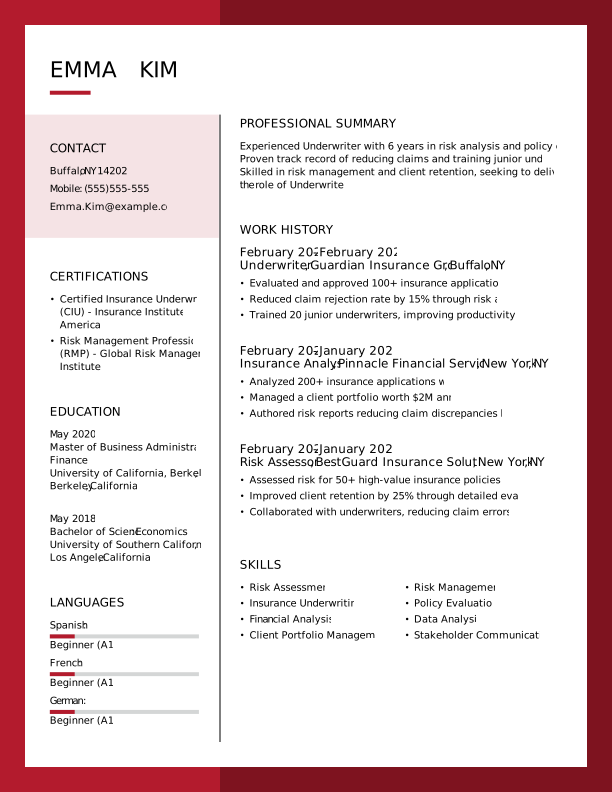
This resume example shows the analytical skills and industry knowledge that career changers bring to the underwriter role, highlighting its value for individuals moving into this field.

Why this resume works:
A skills-focused resume lets aspiring or returning underwriters showcase abilities like risk assessment and financial analysis, emphasizing potential over work gaps.

Mid-Career Underwriter Resume
This resume example is perfect for underwriters with experience looking to improve their expertise and take on more challenging roles in risk assessment and financial management.
Why this resume works:
Mid-career underwriters can highlight cost savings, efficiency gains, and improved accuracy through high-volume application analysis.

Experienced Underwriter Resume
This underwriter resume example showcases significant achievements and expertise, making it perfect for experienced professionals pursuing senior roles in the insurance industry.
Why this resume works:
Leadership roles and advanced certifications underscore the ability to manage complex scenarios.

Looking for something else?
Create Your Standout Resume Today
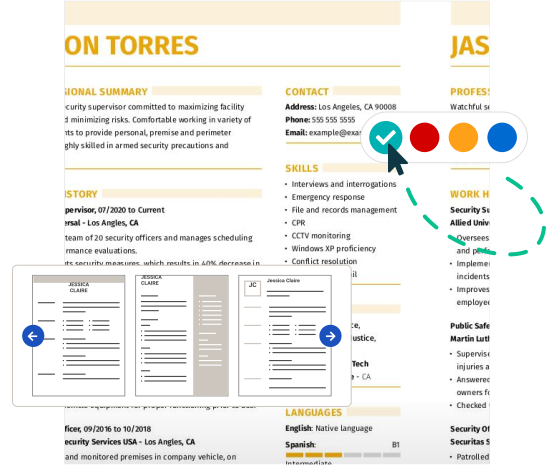
Use our resume examples for inspiration on organization, color, and design—and learn how to effectively summarize your underwriter skills and experience with confidence.
How to Write a Underwriter Resume
Mastering how to write a resume is important for underwriters because it allows you to showcase your unique value beyond listing your credentials. Emphasizing your analytical skills and attention to detail can create a strong impression on potential employers.
In the following sections, we will guide you through each step of crafting an effective resume, including key resume tips on formatting, highlighting relevant experience, and tailoring your application to stand out in the competitive underwriting field.
Start with your contact info
The header section contains all your contact information and sits prominently at the top of your resume. Begin with your name in bold or a slightly larger font than the rest of the text. This strategic placement ensures that recruiters notice your application immediately, providing a professional first impression that is both clear and visually appealing.
Next, include essential details: your email address, phone number, and location; listing just the city and state will suffice. These elements are important for swift communication from potential employers and assist applicant tracking systems in organizing applicants based on geographical criteria.
Additionally, consider incorporating links to relevant certifications or professional profiles such as LinkedIn. For underwriters, showcasing certifications or involvement in industry-related activities can highlight your qualifications and commitment to professional development. These optional additions can distinguish you from other applicants by offering deeper insights into your expertise and career achievements.
Write a strong professional summary
A professional summary is a brief statement that highlights your qualifications and skills. It appears right below your contact information, making it the first impression recruiters have of you, aside from your name.
This section should outline your key strengths and express your passion for the role. Tailor it to reflect the specific job and company you're targeting, as customization shows you're genuinely interested in the position.
Look for resume summary examples to inspire your own writing. These samples can provide clarity on what to include and how to structure this important part of your resume.
Strong vs weak underwriter summary
Strong

"Results-driven underwriter with over eight years of experience in evaluating risk and determining coverage options for personal and commercial insurance policies. Proficient in analyzing financial statements, credit reports, and market trends to make informed underwriting decisions that improve profitability. Recognized for improving quote turnaround times by 25%, while maintaining compliance with regulatory standards. Certified in Property and Casualty insurance, demonstrating a strong commitment to professional development."
Why this example works: This summary effectively captures the job seeker's extensive experience, highlights measurable achievements such as improved turnaround times, showcases key skills like risk evaluation, and includes relevant industry-specific keywords.
Weak

"Underwriter seeking a position where I can apply my skills and support the team. I have experience in insurance and enjoy working with clients."
Why this example doesn't work: This professional summary is weak due to its vague language and failure to highlight specific skills, achievements, or relevant experience related to the underwriter role.

Highlight your interpersonal skills on your underwriter resume by providing specific examples of how you've communicated with clients or collaborated with colleagues. Showcasing instances where these skills led to successful outcomes will demonstrate your ability to build strong professional relationships and contribute positively to the team.
Share your work history
Your work history is, arguably, the central and most important part of your resume. List your most recent roles in reverse-chronological order. This approach allows hiring managers to quickly assess your most relevant experience and qualifications.
When listing your work history, focus on:
- Job title and company name
- Dates of employment (month and year)
- Key responsibilities (What did you do on a daily basis?)
- Achievements and contributions (What did you accomplish? Did you improve processes, reduce costs, or increase efficiency?)
- Measurable results (Use numbers when possible, such as "approved loans with a 98% accuracy rate.")
Finally, use powerful action verbs to make each description stand out.
Strong vs weak underwriter work history
Strong
Underwriter, ABC Insurance Co.
2018–2023
- Evaluated over 1,000 insurance applications, ensuring compliance with company policies and industry regulations.
- Reduced risk assessment time by 25% through implementation of an automated underwriting system.
- Collaborated with sales teams to develop tailored coverage options, resulting in a 15% increase in client retention.
Why this example works: A strong work history for an underwriter highlights specific tasks and achievements that showcase your analytical skills and decision-making abilities. Including quantifiable results emphasizes your effectiveness in managing risk while supporting business growth.
Weak
Underwriter
ABC Insurance Co.
- Reviewed applications and made decisions.
- Communicated with clients about policies.
Why this example doesn't work: This entry is ineffective because it does not specify the type of underwriting or any particular products involved. The tasks are vague and lack detail on the impact of decisions made.
If you have over 10 years of experience as an underwriter, the chronological resume format is your best choice. This format allows you to clearly demonstrate your career progression and the depth of your expertise, showcasing your relevant achievements and long-term commitment to the field.
Highlight your key skills
The skills section of your resume is essential for demonstrating your unique strengths as an underwriter. Here's a rundown of different types of skills and why they matter in effectively evaluating risks and making informed decisions:
- Soft skills are personal attributes that show how you collaborate with others, like analytical thinking, attention to detail, and strong communication. Underwriters benefit from these qualities as they assist in assessing risk accurately and building trust with clients, which ultimately contributes to sound decision-making and effective policy development.
- Hard skills are specific competencies developed through formal training, education, or hands-on experience in underwriting. Examples include risk assessment, financial analysis, policy interpretation, and data evaluation.
- Skill in technical skills is essential for an underwriter and includes expertise with software and systems used to assess risk. Examples include underwriting platforms like Verisk, credit scoring tools such as FICO, and document management systems like DocuSign.
For new underwriters, you should place your skills section near the top of your resume to highlight your abilities despite limited experience. In contrast, experienced underwriters should position their skills after the work history, showcasing how their past roles demonstrate their expertise.
Top 15 skills for your underwriter resume
When preparing your resume as an underwriter, it’s essential to choose skills that align with industry demands. Highlight a mix of analytical abilities, attention to detail, and strong communication skills. Incorporating transferable skills, such as problem-solving and decision-making, can show employers that you're adaptable and capable in various situations.
Here is a list of the top 15 most popular skills for underwriters based on insights from JobHero users. These skills not only represent what hiring managers look for but also help improve your ability to stand out in a competitive job market.
Build your education section
The education section's significance varies depending on your experience level and the underwriting industry. Seasoned underwriters with extensive work history should emphasize their professional accomplishments rather than educational credentials. In these cases, you might choose to minimize this section or place it at the end of your resume.
Conversely, recent graduates entering the underwriting field should prioritize their education as it represents a key qualification. Position this section prominently near the top and include any relevant coursework, internships, or certifications that showcase your preparedness for the role.
For job seekers transitioning into specialized areas within underwriting, highlighting advanced degrees or specialized training becomes important. Make sure to detail how your educational background aligns with specific job requirements to stand out to hiring managers.
20 action verbs to add to your resume
Using action verbs in your resume for an underwriter position significantly strengthens how you communicate your experience. These verbs improve clarity and engagement, providing a dynamic portrayal of your accomplishments and responsibilities in the field.
When selecting action verbs, ensure they align with key skills highlighted in job postings. This targeted approach demonstrates your suitability for the role and emphasizes relevant expertise to potential employers.
- Evaluated
- Understood
- Analyzed
- Reviewed
- Calculated
- Structured
- Facilitated
- Advised
- Mitigated
- Sustained
- Negotiated
- Assessed
- Orchestrated
- Guided
- Secured
- Improved
- Collaborated
- Presented
- Executed
- Ensured
Consider additional resume sections
While your core resume provides the most critical information, adding targeted sections can showcase your unique qualifications. These sections help hiring managers quickly identify your underwriting expertise, certifications, and achievements beyond standard resume sections.
Here are optional sections we tend to see on underwriter resumes:
- Certifications and licenses: Include relevant certifications such as Chartered Property Casualty Underwriter (CPCU) or state-specific licensure.
- Courss: Describe courses, seminars, or workshops that show your commitment to staying updated with industry trends.
- Achievements: Detail successful risk assessments or financial analyses that led to positive business outcomes.
- Affiliations and memberships: List memberships in professional organizations like the American Association of Insurance Services (AAIS).
5 Tips for Formatting Your Resume
Proper resume formatting is important for job seekers as it improves visual appeal and keeps recruiters engaged. Using ATS-friendly resume templates ensures that your application not only catches the eye but also navigates through automated filters, increasing your chances of landing an interview.
1. Watch your line spacing and margins
Proper spacing helps your resume look clean and organized, making it easier for hiring managers to read. A well-structured layout can also highlight your professionalism and attention to detail. Here's what works best:
- Keep margins between 0.5″ to 1.0″, allowing enough white space without losing valuable content.
- Use single spacing between paragraphs and bullet points for a tidy appearance.
- Increase the space to 1.5″ or double-space between sections to clearly define different areas of your resume.
2. Use a professional font
Choosing the right resume font is important since it directly affects readability and first impressions. Opt for these professional fonts:
- Helvetica
- Garamond
- Verdana
- Cambria
- Trebuchet MS
- Book Antiqua
Consider using a slightly different or bolder font for your name at the top to add a touch of flair and make it memorable.
3. Organize your resume sections
A resume for an underwriter should be clear and easy to read. Use bullet points to showcase your experience and key contributions. Start each bullet with a strong action verb, such as "Evaluated" or "Analyzed," followed by a specific responsibility or achievement. For example, "Analyzed risk factors of over 200 applications monthly, leading to a 15% decrease in claim costs," demonstrates your impact on the organization.
Highlight measurable accomplishments to stand out among job seekers. Quantifying your results can show potential employers the value you bring. An example could be, "Developed underwriting guidelines that improved approval turnaround time by 20%."
To ensure compatibility with applicant tracking systems (ATS), use an ATS resume checker. This tool helps confirm that your formatting is correct and that you're including relevant keywords for the role.
4. Use colors and design
Using color and design elements in your resume can greatly improve its impact, making it more engaging and easier to navigate. A visually appealing resume helps you stand out, especially in competitive fields like underwriting.
Begin by exploring various pre-made resume templates that allow for flexibility in design. The combination resume format is particularly effective as it showcases your skills alongside your work history. This layout can draw attention to your key qualifications while maintaining a professional structure.
Next, select a color scheme that communicates professionalism and reliability. Consider using muted tones or classic colors such as navy blue or charcoal gray, which provide a sophisticated backdrop without overwhelming the reader. You might opt for subtle accents in lighter shades to highlight section titles or borders.
It’s important to avoid bright colors or any that may compromise readability. Additionally, refrain from using colors associated with competitors or those that could convey negative connotations. By thoughtfully integrating color and design into your resume, you’ll create a polished representation of your professional brand while ensuring clarity and focus on your accomplishments.
5. Keep your resume length to 1-2 pages
Resumes should be clear and straightforward. A one-page format is typically ideal, as recruiters often spend only a few seconds reviewing each resume. Keeping your content focused helps you stand out quickly. Prioritize the most relevant experiences and skills for the job you're applying for. Avoid redundancy by not repeating similar responsibilities across different positions.
In some cases, extending to two pages may be acceptable. This applies to applicants with extensive experience, such as those seeking senior management roles, where demonstrating significant achievements is vital. Alternatively, academic or research-focused positions may require a CV to capture a broader scope of work and publications, making it essential to choose the right format based on your career stage and field.
FAQ
Do I need to include a cover letter with my resume?
Yes, including a cover letter with your resume is a good job application strategy. Writing a cover letter allows you to showcase your personality and provide context for your qualifications, making you more memorable to potential employers. Even if it’s not required, taking the time to write one can improve your applicant profile.
To kickstart your writing process, explore our collection of cover letter examples tailored to various industries and roles. When you're ready to create yours, consider using our Cover Letter Builder for straightforward guidance throughout each step.
What is the best resume format?
The ideal resume format varies based on individual needs and career stages. The three primary formats are chronological, functional, and combination. Each serves distinct purposes depending on the applicant's experience level.
Chronological resumes highlight work history, making them suitable for seasoned professionals with extensive experience. Functional resumes emphasize skills and education, ideal for those new to the workforce or changing careers. Combination resumes offer a balanced approach between experience and skills, perfect for mid-level professionals or individuals transitioning between industries.
How long should my underwriter resume be?
As an underwriter, your resume should ideally be one page long, particularly if you have under a decade of experience. Hiring managers often sift through numerous resumes quickly, so a succinct one-page format helps highlight your key skills and qualifications effectively.
Emphasize relevant underwriting experience, industry certifications, and specific skills that align with the job you're targeting. Remove any outdated information or unrelated work experiences that do not showcase your underwriting expertise.
A two-page resume may be suitable for senior underwriters with extensive backgrounds or those applying for managerial roles. In such cases, detailing additional accomplishments and specialized knowledge will warrant the extra space.
Should I use a resume template or design my own?
For most job seekers, using a professionally crafted resume template is highly recommended. These templates simplify the writing process and are designed to be ATS-friendly, ensuring that your application gets noticed by employers. They also provide a clear structure and consistent formatting.
However, if you're an underwriter looking to showcase creativity or have specific design preferences, creating your own custom resume can be beneficial. Just ensure it remains professional and adheres to essential guidelines for maximum impact.
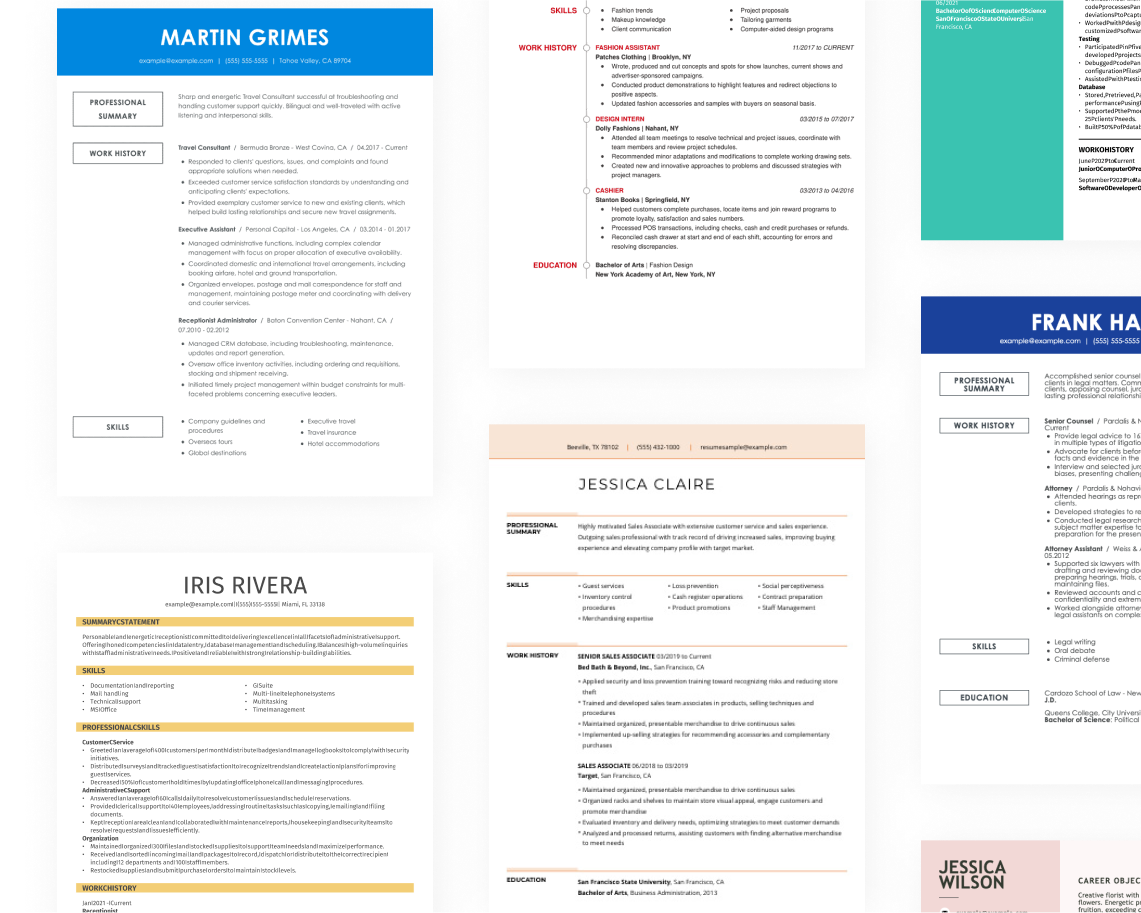
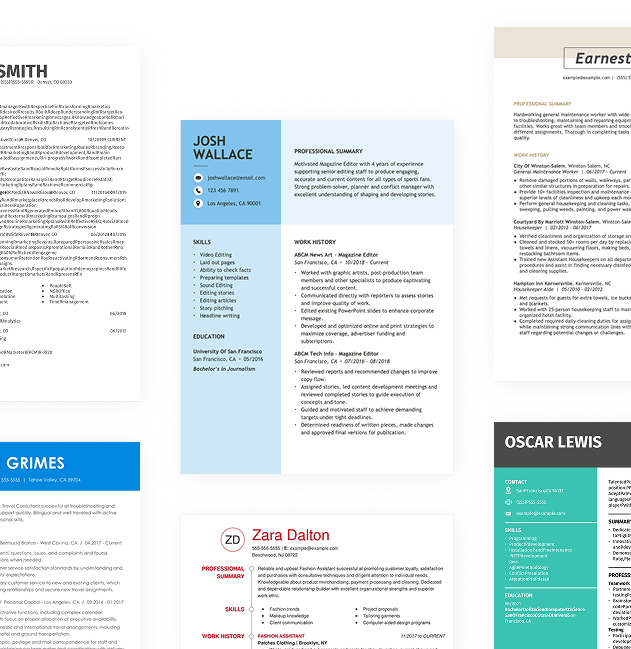
Build a custom resume in minutes with our professional templates and expert tips.
More Resources

By Gabriela Barcenas | CPRW, Career Writer


By Natalia Merced | CPRW, Career Writer

By Natalia Merced | CPRW, Career Writer

By Natalia Merced | CPRW, Career Writer

By Gabriela Barcenas | CPRW, Career Writer