
-
-
Sort through our administrative resume examples to see what works best for you.
-
Our sales resume examples can help you write the best possible resume.
-
Explore our food service resume examples to show your skills effectively.
-
Start crafting your job-winning resume with our teaching resume examples.
-
-
-
Use our administrative cover letter examples for ideas on writing your own.
-
Use our sales cover letter examples to effectively show your sales accumen.
-
Write your job-winning cover letter following our nursing cover letter examples.
-
Learn to tell your story in education using our teaching cover letter examples.
-





- Our customers have been hired by*


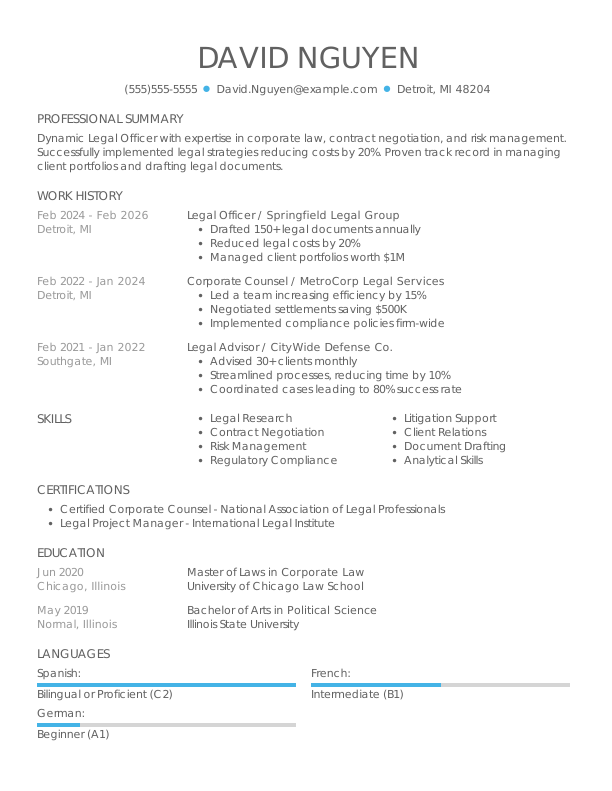
Entry-Level Legal Officer Resume
This resume example highlights the comprehensive legal expertise and strategic skills suitable for career changers, making it an ideal choice for recent graduates pursuing a legal officer role.

Why this resume works:
A skills-focused resume helps new or returning legal professionals highlight skills like drafting, compliance, and negotiation over work gaps.

Mid-Career Legal Officer Resume
This resume example is perfect for legal officers with experience looking to elevate their careers by showcasing their contributions to compliance and efficiency in legal operations.
Why this resume works:
This applicant highlights a track record of improving outcomes across multiple settings.

Experienced Legal Officer Resume
This legal officer resume example is perfect for experienced professionals eager to ascend into senior-level roles within the legal field.
Why this resume works:
Leadership roles and advanced certifications underscore the ability to manage complex scenarios.

Looking for something else?
Create Your Standout Resume Today
Use our resume examples for inspiration on organization, color, and design—and learn how to effectively summarize your legal officer skills and experience with confidence.
How to Write a Legal Officer Resume
Learning how to write a resume is important for legal officers, as it allows you to present your unique value and expertise rather than listing your credentials. By emphasizing your skills and experiences, you can make a strong impression on potential employers with these resume tips.
In the sections that follow, you will find detailed step-by-step guidance on how to write a resume tailored specifically for legal positions. Expect practical resume tips covering everything from structuring your information to highlighting relevant accomplishments.
Start with your contact info
The header section contains all your contact information and sits prominently at the top of your resume. Start with your name in a bold, larger font to capture attention quickly. Consider using a professional typeface that reflects the seriousness of a legal role, ensuring it's visually appealing yet maintains an air of professionalism.
Following your name, include essential contact details such as your email address, phone number, and location; specifically city and state. These elements are important for recruiters to reach you efficiently and ascertain your proximity to the job location. Additionally, including this information improves compatibility with applicant tracking systems used by many firms.
For a legal officer's resume, consider adding links to any online profiles or directories where you're listed as a member of professional organizations or bar associations. Including these can substantiate your credentials and demonstrate active involvement in the legal community, which is vital for such roles.
Write a strong professional summary
A professional summary serves as a brief introduction to your qualifications and skills, positioned directly below your contact information on your resume. This section is important as it gives recruiters their first impression of you, showcasing your fit for the legal officer role.
In this summary, highlight key achievements and relevant experiences that align with the job description. Tailoring this section to reflect the specific employer's needs demonstrates your genuine interest and increases your chances of standing out.
Consulting resume summary examples can provide inspiration for structuring yours to capture attention and convey your unique value proposition clearly.
Strong vs weak legal officer summary
Strong

"Accomplished legal officer with over eight years of experience in corporate law and compliance. Demonstrated expertise in drafting and negotiating contracts, managing legal risks, and ensuring regulatory adherence, contributing to a 30% reduction in compliance-related incidents. Proficient in litigation support and legal research, holding certifications in contract management and compliance. Recognized for delivering strategic legal advice that aligns with business objectives."
Why this example works: This summary effectively describes the applicant’s extensive experience, highlights measurable achievements such as a reduction in compliance incidents, emphasizes key skills like contract negotiation, and incorporates relevant keywords found in legal job descriptions.
Weak

"Legal officer seeking a position to use my knowledge in law and support clients. I have some experience in legal settings and enjoy working with others."
Why this example doesn't work: This professional summary is weak because it's vague and lacks specific details about the applicant's skills, achievements, or relevant legal experience.

Craft a personal mission statement that reflects your commitment to justice and ethical practice in the legal field. Highlight how your values resonate with the organization's goals, showcasing your unique contributions beyond your legal expertise.
Share your work history
Your work history is, arguably, the central and most important part of your resume. List your most recent roles in reverse-chronological order. This format enables employers to see your latest qualifications and career growth at a glance.
When listing your work history, focus on:
- Job title and organization name
- Dates of employment (month and year)
- Key responsibilities (What did you handle daily?)
- Achievements and contributions (What did you accomplish? Did you improve legal processes or compliance?)
- Measurable results (Use numbers when applicable, such as "reduced legal processing time by 30%.")
Finally, use strong action verbs to vividly illustrate your experiences.
Strong vs weak legal officer work history
Strong
Legal Officer, XYZ Law Firm
2018–2023
- Drafted and reviewed over 150 legal documents, ensuring compliance with state regulations.
- Successfully represented clients in 50+ court cases, achieving a favorable outcome in 90% of them.
- Conducted legal research that led to the revision of internal policies, improving client satisfaction scores by 25%.
Why this example works: A strong work history section provides a detailed account of responsibilities and achievements. It highlights specific outcomes, numbers, and expertise in legal matters that showcase both analytical skills and leadership capabilities.
Weak
Legal Officer
Law Firm XYZ
- Provided legal advice and drafted documents.
- Participated in meetings.
Why this example doesn't work: This entry is ineffective because it lacks detail about the specific area of law practiced, omits employment dates, and describes vague tasks that do not showcase unique responsibilities or achievements.
Add your resume to LinkedIn to improve your visibility in the legal field. Use specific legal terminology and case highlights in your profile summary, and actively participate in law-related discussions to attract attention from recruiters seeking skilled legal officers who can make an impact.
Highlight your key skills
The skills section of your resume is vital for demonstrating your strengths as a legal officer. Here's a rundown of essential skills and their significance in improving your candidacy for the role:
- Soft skills are personal attributes that show how you collaborate with others—such as negotiation, critical thinking, and attention to detail. For legal officers, qualities like strong communication and ethical judgment are important since they help build strong cases and foster trust with clients and colleagues alike.
- Hard skills are specific legal competencies acquired through formal education or professional experience. Examples for a legal officer include contract drafting, legal research, case analysis, and compliance assessment.
- The technical skills required for a legal officer include skill in essential software and tools. These encompass case management systems like Clio, document automation platforms such as HotDocs, and legal research databases like Westlaw or LexisNexis.
For those starting out as a legal officer, place your skills section near the top of your resume to highlight your abilities despite limited experience. If you have substantial experience, position it after your work history to showcase how your past roles demonstrate your skills.
Top 15 skills for your legal officer resume
When crafting your resume for a legal officer position, it’s essential to choose skills that match the role's demands. Emphasize a combination of analytical skills, negotiation abilities, and strong communication techniques. Additionally, include transferable skills like project management and teamwork that can boost your appeal across various legal environments.
Here are the top 15 most popular skills for legal officers, based on insights from JobHero users. This list highlights key competencies valued by employers and can help you stand out in a competitive job market.
Build your education section
The education section of your resume should reflect your experience level and the norms of the legal field. For seasoned legal officers with substantial work history, focus on showcasing your professional accomplishments over educational credentials. Placing the education section toward the end or omitting it may be appropriate if you hold relevant licenses.
On the other hand, recent graduates or those new to specialized areas of law should prioritize their education prominently. Include details like degrees earned, honors received, and any relevant coursework that aligns with your desired position in law.
For applicants transitioning into niche legal sectors, emphasize advanced training or certifications acquired during your studies. This demonstrates commitment and readiness for specialized roles within the industry.
20 action verbs to add to your resume
Using action verbs in your resume significantly improves its strength by communicating your experience and creating a compelling narrative. Action verbs convey clarity and confidence, making your accomplishments stand out to potential employers.
When crafting your resume, select action verbs that resonate with the legal profession and align with key skills highlighted in job postings. This targeted approach showcases your relevance to the role.
- Reviewed
- Advised
- Negotiated
- Drafted
- Analyzed
- Presented
- Facilitated
- Trained
- Guided
- Oversaw
- Resolved
- Collaborated
- Secured
- Investigated
- Clarified
- Engaged
- Complied
- Supported
- Executed
- Supervised
Consider additional resume sections
While your core resume provides the most critical information, adding targeted sections can showcase your unique qualifications. These sections help hiring managers quickly identify your legal expertise, certifications, and achievements beyond standard resume sections.
Here are optional sections we tend to see on legal officer resumes:
- Areas of practice: List specific legal fields you've worked in (criminal law, corporate law, intellectual property, etc.) to demonstrate your targeted expertise.
- Certifications and licenses: Detail your bar admission details and any specialized certifications (Mediation, Contract Law Specialist, etc.).
- Continuing education: Highlight recent relevant courses or workshops that demonstrate your commitment to staying current in legal practices.
- Legal achievements: Describe successful cases you’ve handled or significant contributions to legal outcomes.
- Professional affiliations: Include memberships with organizations like the American Bar Association or local bar associations.
5 Tips for Formatting Your Resume
Proper resume formatting is important for job seekers who want to capture the attention of recruiters and navigate applicant tracking systems. Using ATS-friendly resume templates ensures that your layout meets industry standards, improving both readability for hiring managers and compatibility with automated screening tools.
1. Watch your line spacing and margins
Proper spacing helps your resume look clean and organized, making it easier for hiring managers to read. A well-spaced resume not only improves readability but also conveys professionalism. Here's what works best:
- Keep margins between 0.5″ to 1.0″ to ensure your content has breathing room.
- Use single spacing between paragraphs and bullet points for a tidy appearance.
- Increase the space to 1.5″ or double-space between sections to clearly delineate different parts of your resume.
2. Use a professional font
Selecting the right resume font for your resume is important as it impacts readability and first impressions. Opt for professional fonts such as:
Result:
- Arial
- Helvetica
- Verdana
- Garamond
- Tahoma
- Book Antiqua
Consider using a slightly more distinctive font style or weight for your name in the header to add a touch of personality.
3. Organize your resume sections
A resume for a legal officer should be clear and easy to navigate. Use bullet points to concisely present your roles and achievements without overwhelming the reader. Begin each bullet point with a strong action verb, such as "Drafted," "Negotiated," or "Reviewed," followed by specific tasks that showcase your expertise and impact.
Highlight measurable accomplishments wherever possible. For instance, stating "Reduced contract review time by 25% through streamlined processes" illustrates both what you did and the positive outcome of your efforts. This not only demonstrates your effectiveness but also adds credibility to your experience.
Ensure your resume is compatible with ATS by using an ATS resume checker. This tool will help identify any formatting issues or missing keywords, ensuring that your application stands out in digital screenings while maintaining clarity for human reviewers.
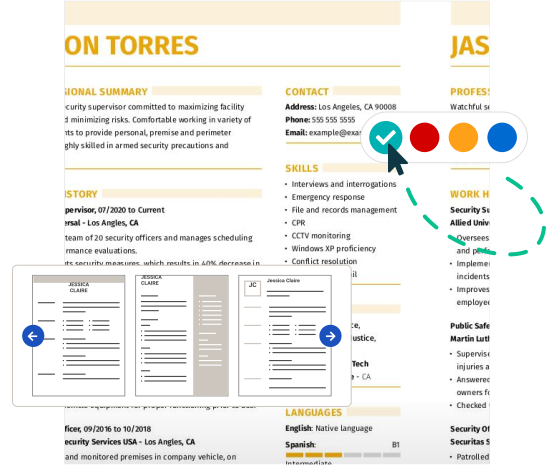
4. Use colors and design
Creating a visually appealing resume is essential for legal officers, as it reflects your attention to detail and professionalism. While a simple design is effective, incorporating color and design elements can make your resume stand out and draw attention to key qualifications.
Begin by selecting an appropriate pre-made resume template. Look for one that aligns with how you wish to present your information. The combination resume format works particularly well in the legal field, as it allows you to showcase both your skills and work history prominently, often featuring a colored sidebar for emphasis.
Next, choose a professional color scheme. Opt for classic colors that convey seriousness and authority—think dark shades such as navy or charcoal gray, which can improve the overall look without overwhelming the reader. You might also consider subtle accents like deep green or maroon to add a touch of personality while maintaining professionalism.
Be sure to avoid bright colors or overly flashy designs that could detract from the content. Additionally, steer clear of colors associated with competing firms or those that may hinder readability. A thoughtful approach to color will help ensure your resume makes a strong impression in the competitive legal industry.
5. Keep your resume length to 1-2 pages
A resume should ideally be one page long. Recruiters often spend mere seconds reviewing each document, so concise and relevant content is important for capturing their attention. Prioritize your most recent and significant experiences, focusing on achievements that align with the job you seek. Avoid listing redundant tasks across different roles to maintain clarity.
In certain situations, a two-page resume is acceptable. For instance, if you have extensive experience or are applying for senior-level positions, more space may be necessary to showcase your contributions effectively. Academic roles might call for a CV instead of a traditional resume, as these documents allow for a comprehensive overview of publications and research work. Always tailor your approach based on the audience and position you're targeting.
FAQ
Do I need to include a cover letter with my resume?
Improving your job application with a cover letter can make a big difference, even if it's not explicitly required. By writing a cover letter, you have the opportunity to showcase your personality and elaborate on your qualifications in a way that connects with potential employers. This additional context can distinguish you from other job seekers.
To craft an impressive cover letter, explore our collection of cover letter examples tailored for different industries. After gathering inspiration, use our Cover Letter Builder for step-by-step guidance in creating a compelling document that highlights your strengths.
What is the best resume format?
The best resume format depends on your individual career stage and goals. Three main formats to consider are chronological, functional, and combination. Each serves distinct purposes based on varying needs.
Chronological resumes suit experienced professionals by emphasizing their work history. Functional resumes highlight skills and education, benefiting those new to the workforce or with gaps in employment. Combination resumes mix both approaches, ideal for mid-career individuals or those transitioning industries, as it showcases skills alongside relevant experience.
How long should my legal officer resume be?
For legal officer resumes, aim for a one-page format, particularly if you have under 10 years of experience. Hiring managers often sift through numerous applications quickly, so a concise and clear resume helps your qualifications stand out.
Highlight your most relevant legal experiences, key skills, and certifications. Focus on recent roles that relate directly to the position you're pursuing. Remove outdated information or excessive details about non-legal jobs.
Consider a two-page resume only if you're a senior legal professional with specialized expertise or applying for high-level positions such as general counsel. In such cases, showcasing your extensive accomplishments may warrant the extra space.
How far back should my work history go?
Typically, your resume should cover the last 10 years of your work history. This guideline maintains relevance and clarity for prospective employers. For a legal officer role, prioritize positions that highlight your expertise in legal practices or management. If earlier roles contributed significantly to your skill set or involved notable achievements, consider including them despite their age. Always tailor your resume to emphasize the most relevant experiences and accomplishments that align with the job you're applying for.
Should I use the same resume for every job?
No, using the same resume for every job application is not advisable. Customizing your resume for each position can greatly improve your chances of securing an interview. Even minor adjustments, like highlighting specific skills or revising your summary, can make a difference.
Review the job description closely and integrate relevant keywords that match the employer's needs. Emphasize experiences that align with the role and showcase skills specifically mentioned in the posting. This is important because many companies use applicant tracking systems (ATS) to filter resumes based on these keywords before they reach a hiring manager’s desk.
Build a custom resume in minutes with our professional templates and expert tips.
More Resources


By Natalia Merced | CPRW, Career Writer

By Gabriela Barcenas | CPRW, Career Writer

By Natalia Merced | CPRW, Career Writer

By Natalia Merced | CPRW, Career Writer

By Natalia Merced | CPRW, Career Writer

