-
-
Sort through our administrative resume examples to see what works best for you.
-
Our sales resume examples can help you write the best possible resume.
-
Explore our food service resume examples to show your skills effectively.
-
Start crafting your job-winning resume with our teaching resume examples.
-
-
-
Use our administrative cover letter examples for ideas on writing your own.
-
Use our sales cover letter examples to effectively show your sales accumen.
-
Write your job-winning cover letter following our nursing cover letter examples.
-
Learn to tell your story in education using our teaching cover letter examples.
-





- Our customers have been hired by*


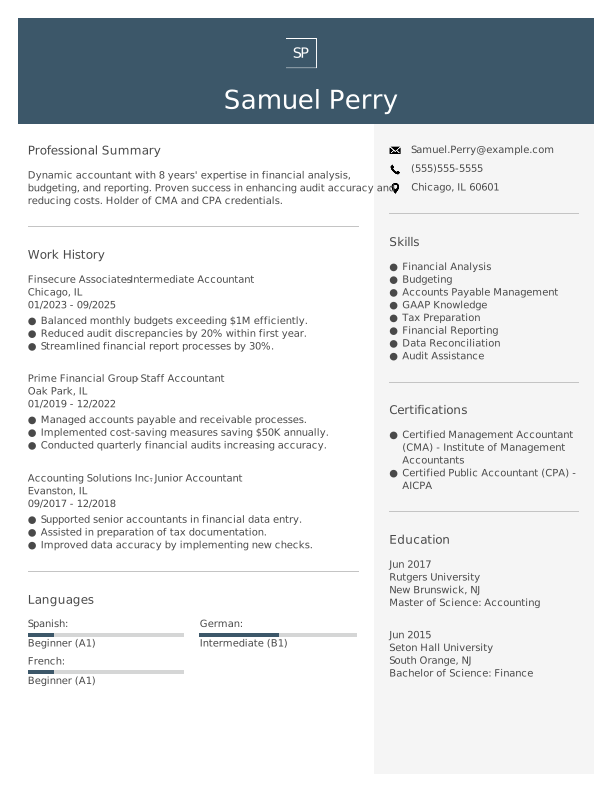
Entry-Level Intermediate Accountant Resume
This resume example effectively demonstrates relevant accounting skills and achievements, making it ideal for recent graduates and career changers who are looking to establish themselves in the accounting field.

Why this resume works:
Relevant skills and a strong educational background show this candidate is ready to contribute to the role.

Mid-Career Intermediate Accountant Resume
This resume example is ideal for intermediate accountants seeking to leverage their experience and expertise to advance into more senior roles or specialized areas within the accounting field.
Why this resume works:
This applicant highlights a track record of improving outcomes across multiple settings.

Experienced Intermediate Accountant Resume
This intermediate accountant resume example is perfect for professionals ready to elevate their careers into senior-level financial roles.
Why this resume works:
Leadership roles and advanced certifications underscore the ability to manage complex scenarios.

Looking for something else?
Create Your Standout Resume Today
Use our resume examples for inspiration on organization, color, and design—and learn how to effectively summarize your intermediate accountant skills and experience with confidence.
How to Write an Intermediate Accountant Resume
Learning how to write a resume is essential for an intermediate accountant, as it allows you to highlight your unique skills and contributions beyond just listing your job history. This can help you distinguish yourself from other applicants in a competitive market.
In the following sections, we'll break down the resume-writing process step-by-step. You’ll learn how to effectively present your contact information, qualifications, and work experience and get additional resume tips that will help you create a standout resume tailored for accounting professionals.
Start with your contact info
Start by placing your name at the top of your resume in a larger font size to ensure it catches the eye of recruiters immediately. Consider using bold or distinctive font styles to improve visibility, as this is the first detail hiring managers will notice.
Next, include essential contact details such as your email address, phone number, and general location; the city and state will suffice. This information not only makes it easier for potential employers to reach you but also plays an important role in applicant tracking systems (ATS), which often scan resumes for your location.
Lastly, think about adding links to any relevant certifications or an online portfolio that showcases your work. These extra resources can highlight your qualifications and competencies as an intermediate accountant, demonstrating your dedication to professional growth and expertise in the field.
Write a strong professional summary
A professional summary is a critical component of your resume. Positioned right beneath your contact details, it serves as the initial impression you make on hiring managers, highlighting who you are as a job seeker.
In this section, include key qualifications and skills that align closely with the job description. Customizing your summary for each application emphasizes your fit for the role and can significantly improve your chances of landing an interview.
To inspire your own writing, look for effective resume summary examples tailored to accounting roles. These resources can provide insights into structure and content that resonate with potential employers.
Strong vs weak intermediate accountant summary
Strong

"Detail-oriented intermediate accountant with over four years of experience in financial reporting and tax preparation. Proven expertise in managing monthly close processes and ensuring compliance with GAAP, resulting in a 30% decrease in audit discrepancies. Skilled in using accounting software such as QuickBooks and SAP, with strong analytical abilities to improve financial strategies. Certified Public Accountant (CPA) committed to delivering quality financial services."
Why this example works: This summary effectively outlines the applicant’s experience, showcases measurable achievements like reducing audit discrepancies, highlights relevant skills such as QuickBooks, and integrates key terms associated with accounting roles.
Weak

"Intermediate accountant seeking a position to use my accounting skills. I have experience in financial environments and enjoy collaborating with colleagues."
Why this example doesn't work: This summary uses generic language and lacks specific details about the job seeker's skills, experience, or achievements relevant to the intermediate accountant role.

Highlight interpersonal skills such as teamwork and problem-solving on your intermediate accountant resume. Use specific examples where these abilities improved collaboration with colleagues or strengthened client interactions, showcasing your ability to build strong professional relationships.
Share your work history
The work experience section of your resume is important for showcasing your qualifications. Listing your roles in reverse chronological order allows employers to see your most relevant and recent experiences first. This structure helps highlight your career progression effectively.
When detailing each position, ensure you include:
- Job title and organization
- Employment dates (month and year)
- Primary duties (What were your daily tasks?)
- Notable achievements (What did you accomplish? Did you streamline operations, cut costs, or boost efficiency?)
- Quantifiable outcomes (Incorporate figures when applicable, such as "increased revenue by 20%.")
Finally, remember to use strong action verbs to bring your work history to life.
Strong vs weak intermediate accountant work history
Strong
Intermediate Accountant, ABC Financial Services
2018–2024
- Managed monthly financial closings, ensuring 100% accuracy in journal entries and reconciliations.
- Developed a new budgeting process that increased forecasting accuracy by 25%, leading to better resource allocation.
- Collaborated with the audit team to streamline year-end audits, reducing the time taken by 15%.
Why this example works: This example highlights key accomplishments and responsibilities, providing a detailed view of the applicant's capabilities. It showcases quantifiable results and specific accounting practices that reflect both technical expertise and collaborative skills.
Weak
Intermediate Accountant
ABC Financial Services
- Handled financial statements and reports.
- Assisted with bookkeeping tasks.
Why this example doesn't work: This example lacks specific information about the type of accounting role, doesn't provide any dates, and outlines very general responsibilities that could apply to many positions. It also fails to include measurable outcomes that would demonstrate the applicant's skills and effectiveness in their role.
Highlight your leadership skills as an intermediate accountant by showcasing specific achievements. For example, include statements like "Managed a team of 3 accountants to streamline financial reporting" or "Led the implementation of a new accounting software that improved efficiency by 20%."
Highlight your key skills
The skills section of your resume is an important opportunity to highlight your strengths as an intermediate accountant. Here's a rundown of various skills and their importance in demonstrating your qualifications for the role:
- Soft skills are personal attributes that illustrate how you collaborate with others, such as attention to detail, effective communication, and problem-solving. Intermediate accountants benefit from qualities like teamwork, time management, and adaptability, as they ensure accurate financial reporting and foster strong relationships with clients and colleagues.
- Hard skills are specific abilities gained through training or experience. For an intermediate accountant, these include financial analysis, accounting software, tax return preparation, and ledger management.
- Technical skills for an intermediate accountant include proficiency with accounting software and financial reporting tools. Examples of relevant systems are QuickBooks, Microsoft Excel, and SAP, which streamline data management and improve accuracy in financial analysis.
For intermediate accountants, new professionals should feature their skills section near the top of the resume to spotlight their capabilities despite limited experience. Experienced accountants can position their skills section after work history, allowing their extensive experience to highlight those abilities naturally.
Top 15 skills for your intermediate accountant resume
When crafting your resume as an intermediate accountant, it's essential to align your skills with those in demand in the accounting field. Highlight a mix of technical abilities and soft skills that showcase your qualifications. Don't forget to include transferable skills that can improve your appeal across different roles.
Below is a list of the top 15 skills favored by JobHero users for accountants. These skills reflect what employers are looking for and can help you stand out in a competitive job market.
Build your education section
When crafting your resume, the placement of the education section largely hinges on your experience and industry. For seasoned professionals, it is often best to emphasize your work history. You might choose to place education at the end of your resume or omit it entirely if your roles do not require specific degrees.
On the other hand, if you are a recent graduate or entering a specialized field, education becomes a key highlight. In such cases, position this section prominently at the top of your resume. Include relevant coursework, certifications, and any honors that showcase your qualifications.
Ultimately, tailoring this section to reflect your individual journey is essential. Always consider what will resonate most with potential employers based on their expectations for job seekers in your field.
20 action verbs to add to your resume
Using action verbs in your resume can significantly improve its impact. These verbs effectively convey your experience and achievements, creating a more dynamic narrative that grabs the attention of potential employers.
When crafting your resume as an intermediate accountant, choose action verbs that align with accounting responsibilities. Make sure these verbs resonate with the skills highlighted in job listings to show your suitability for the role.
- Analyzed
- Prepared
- Reconciled
- Processed
- Reviewed
- Calculated
- Forecasted
- Trained
- Guided
- Balanced
- Audited
- Streamlined
- Optimized
- Reported
- Documented
- Supported
- Resolved
- Facilitated
- Consulted
- Directed
Consider additional resume sections
While your core resume provides the most critical information, adding targeted sections can showcase your unique qualifications. These sections help hiring managers quickly identify your accounting expertise, certifications, and achievements beyond standard resume sections.
Here are optional sections we tend to see on intermediate accountant resumes:
- Certifications: Detail relevant certifications, such as CPA, CMA, or CFA, that demonstrate your professional expertise and commitment.
- Professional development: Highlight coursework, workshops, or seminars attended that show your dedication to ongoing learning in the field.
- Achievements: Describe notable contributions such as cost savings initiatives or process improvements you implemented in previous roles.
- Professional affiliations: Include memberships in accounting organizations like AICPA or local CPA societies to reflect your engagement with the profession.
5 Tips for Formatting Your Resume
Proper resume formatting is important for job seekers as it improves readability and keeps recruiters engaged. Using ATS-friendly resume templates can significantly improve your chances of passing applicant tracking systems while ensuring your qualifications shine through clearly.
1. Use consistent line spacing and margins
Proper spacing helps your resume look clean and organized while ensuring readability. It creates a professional appearance that employers appreciate.
- Set margins to 0.5″ to 1″ to frame your content effectively.
- Maintain single spacing for paragraphs and lists for clarity.
- Increase spacing to 1.5″ or double-space between major sections.
2. Use a professional font
Choosing the right resume font impacts first impressions. Opting for one of the following professional fonts can improve clarity and readability:
Result:
- Arial
- Helvetica
- Garamond
- Georgia
- Calibri
- Times New Roman
Consider using a slightly bolder or larger font for your name to draw attention and add a personalized touch.
3. Organize your resume sections
A resume should be scannable and easy to read. Use bullet points to detail your accounting experience clearly. Start each bullet point with a strong action verb such as "prepared," "analyzed," or "reconciled" to emphasize your contributions and responsibilities in previous roles.
Highlight measurable accomplishments that showcase your skills as an intermediate accountant. For example, you could state, "Increased financial reporting accuracy by 15% through improved data analysis techniques." Such specific examples provide tangible evidence of your performance and effectiveness.
Finally, ensure that your resume is ATS-friendly by using an ATS resume checker. This tool can help verify that you are using appropriate keywords and formatting so hiring managers easily recognize your qualifications.
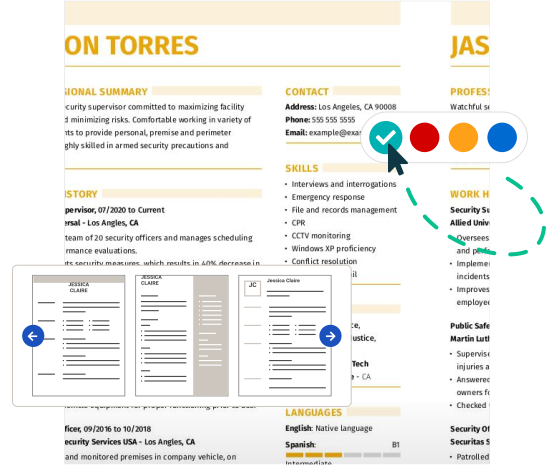
4. Use colors and design
When crafting a resume as an intermediate accountant, incorporating color and design elements can make your application stand out. A visually appealing resume not only captures attention but also effectively communicates your qualifications.
Begin by selecting a pre-made resume template that aligns with your professional image. The combination resume format is ideal for accountants, as it allows you to showcase both your skills and work history prominently. Look for designs that feature a neat layout with space for key information.
Next, choose a sophisticated color scheme. Aim for colors that are clean and professional—soft grays or muted blues often work well in the finance sector. If you prefer darker shades, a deep green or navy can add a touch of elegance when used in headers or section breaks.
Be mindful to avoid bright, flashy colors that might distract from your content. Additionally, steer clear of any color combinations resembling those of competing firms to maintain a distinct professional identity throughout your resume.
5. Keep your resume length to 1-2 pages
Resumes should typically be one page long. This length helps ensure clarity and keeps the reader's attention, as recruiters often spend only seconds reviewing each resume. Focus on showcasing your most relevant experiences and skills that align with the job you're targeting. Avoid including outdated positions or redundant tasks across different roles.
In some situations, extending to two pages may be warranted. For instance, if you have extensive experience relevant to a senior position, more space can effectively highlight your accomplishments. Additionally, academic or research-oriented careers may require a CV instead of a traditional resume to adequately detail publications and projects.
Always prioritize impact over length when crafting your resume to make it stand out in the hiring process.
FAQ
Do I need to include a cover letter with my resume?
Writing a cover letter is an essential part of the job application process, even if it’s not a requirement. It allows you to share your unique qualifications and explain how they align with the role of an intermediate accountant. This personal touch can significantly improve your candidacy and set you apart from others.
If you're unsure where to begin, our extensive collection of cover letter examples offers valuable insights and inspiration tailored for various accounting roles.
Once you're ready to create your own cover letter, consider using our user-friendly Cover Letter Builder, which provides step-by-step guidance to ensure you highlight all critical information effectively.
What is the best resume format?
The best resume formats depend on your career stage and objectives. The three main types are chronological, functional, and combination resumes. Each serves a unique purpose based on the individual's needs.
Chronological resumes highlight work history and are ideal for those with significant experience. Functional resumes focus on skills and qualifications, making them perfect for recent graduates or career changers. Combination resumes mix both approaches and are suitable for mid-level professionals seeking to showcase their skills alongside their work experience.
How long should my intermediate accountant resume be?
As an intermediate accountant, your resume should generally be one page, particularly if you have less than a decade of experience. Hiring managers often sift through numerous resumes rapidly, so a succinct one-page format highlights your qualifications effectively.
Emphasize your most relevant accounting experiences, certifications, and key skills. Focus on recent positions that showcase your capabilities in areas like financial reporting or tax preparation. Remove outdated software skills or excessive details about unrelated roles.
Consider extending to two pages only if you're applying for senior accountant roles with significant responsibilities or leadership positions. In such cases, additional space allows you to detail complex projects and notable achievements that demonstrate your expertise.
How far back should my work history go?
Generally, your resume should include work experience from the last 10 years. This guideline helps maintain relevance for potential employers. If you have nearly a decade of experience or have held multiple roles that directly relate to accounting, consider excluding older positions that don't showcase your current skills. Focus on highlighting experiences that demonstrate your capabilities and contributions as an intermediate accountant.
Should I use the same resume for every job?
No, you should never use the same resume for all applications. Customizing your resume is essential to effectively showcase your relevant skills and experiences tailored to each job description. By incorporating specific keywords that match what employers are looking for, you improve your chances of getting noticed, especially since many companies rely on ATS to filter applicants.
Focus on adjusting your summary, highlighting relevant achievements, and emphasizing particular skills mentioned in the job posting. This strategic approach not only demonstrates your genuine interest in the role but also increases the likelihood of landing an interview.
Build a custom resume in minutes with our professional templates and expert tips.
Natalia Merced
CPRW, Career WriterNatalia is a Certified Professional Resume Writer (CPRW) and member of the Professional Association of Resume Writers & Career Coaches and has worked in the career industry for more than two years providing comprehensive guidance on resume writing and job search strategies for individuals across diverse career paths. She holds a master's degree in counseling psychology and a bachelor's degree in public relations and advertising and is passionate about helping job seekers present their professional story effectively through well-crafted resumes and cover letters that demonstrate their value, skills, and experience to potential employers. Some of her work has been featured on JobHero's resume examples career center.
More Resources


By Gabriela Barcenas | CPRW, Career Writer

By Natalia Merced | CPRW, Career Writer



By Gabriela Barcenas | CPRW, Career Writer