-
-
Sort through our administrative resume examples to see what works best for you.
-
Our sales resume examples can help you write the best possible resume.
-
Explore our food service resume examples to show your skills effectively.
-
Start crafting your job-winning resume with our teaching resume examples.
-
-
-
Use our administrative cover letter examples for ideas on writing your own.
-
Use our sales cover letter examples to effectively show your sales accumen.
-
Write your job-winning cover letter following our nursing cover letter examples.
-
Learn to tell your story in education using our teaching cover letter examples.
-





- Our customers have been hired by*


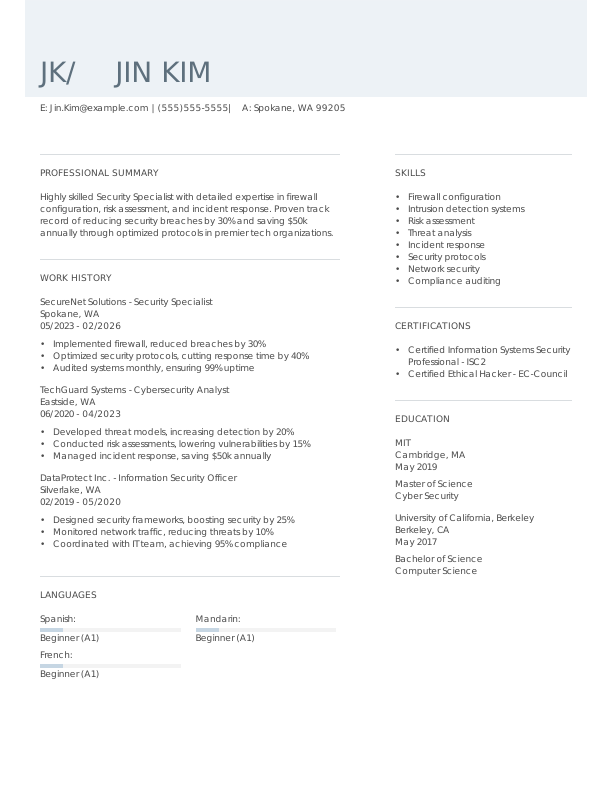
Entry-Level Security Specialist Resume
This resume example highlights the critical skills and achievements necessary for recent graduates and career changers looking to excel in security specialist roles.

Why this resume works:
It showcases critical skills and highlights technical competencies to significantly improve appeal to employers.

Mid-Career Security Specialist Resume
This resume example is perfect for security specialists with proven experience looking to elevate their careers by showcasing their accomplishments and expertise in cybersecurity and risk management.
Why this resume works:
It highlights achievements like a 40% reduction in security vulnerabilities or achieving a 25% enhancement in system security.

Experienced Security Specialist Resume
This security specialist resume example effectively highlights extensive experience and proven results, making it ideal for professionals aiming for senior roles in cybersecurity.
Why this resume works:
Leadership roles and advanced certifications underscore the ability to manage complex scenarios.

Looking for something else?
Create Your Standout Resume Today
Use our resume examples for inspiration on organization, color, and design—and learn how to effectively summarize your security specialist skills and experience with confidence.
How to Write a Security Specialist Resume
Learning how to write a resume is essential for highlighting your unique value as a security specialist, going beyond simply listing credentials. A well-crafted resume allows you to present your skills and experiences in a way that resonates with potential employers.
In the following sections, you will find step-by-step guidance on crafting your resume, covering everything from contact information to work history and resume tips to improve your application.
Start with your contact info
The header section contains all your contact information and should be prominently displayed at the top of your resume. Begin with your name in bold, large letters to catch the attention of recruiters. Consider using a professional font that improves readability while maintaining a clean layout.
Include essential contact details such as your email address, phone number, and general location. While you don't have to list your full address, including your city, state, and ZIP code is important for confirming your eligibility for local positions. This information also aids applicant tracking systems (ATS) in accurately processing your application.
Additionally, consider linking to relevant certifications or an online portfolio if they relate to the security specialist role. These links can showcase additional qualifications and practical experience, improving your candidacy by providing tangible evidence of your expertise and commitment to the field.
Write a strong professional summary
A professional summary is a brief overview of your qualifications and skills, appearing right below your contact details on your resume. It serves as an introduction to who you're as a job seeker.
In this section, highlight your relevant experience and skills while expressing your enthusiasm for the role. Tailoring this summary to match the specific job description is important for capturing the attention of hiring managers.
You can find numerous resume summary examples online that can inspire you. These resources will guide you in crafting a compelling summary that stands out.
Strong vs weak security specialist summary
Strong

"Dedicated security specialist with over six years of experience in risk assessment and mitigation strategies. Proven track record in developing and implementing security protocols that have reduced incidents by 30%. Skilled in conducting thorough investigations, managing access control systems, and training staff on safety procedures. Certified in Security Management and First Aid. Recognized for improving organizational safety culture through proactive measures."
Why this example works: This summary effectively outlines the applicant's experience, highlights quantifiable achievements, showcases relevant skills like risk assessment and training, while incorporating essential keywords related to security roles.
Weak

"Security specialist seeking a position to apply my skills in protecting information and assets. I have worked in various environments and value teamwork."
Why this example doesn't work: This professional summary is weak because it's generic and does not detail specific skills, accomplishments, or technical expertise relevant to the role of a security specialist.

Highlighting interpersonal skills on a security specialist resume is important. Use specific examples that illustrate how your communication and collaboration have resolved conflicts or improved team efficiency, demonstrating your ability to maintain a safe environment through effective relationships with colleagues and clients.
Share your work history
Your work history is, arguably, the central and most important part of your resume. List your most recent roles in reverse-chronological order. If you’ve held numerous positions, select the ones most relevant to the job you’re applying for.
When listing your work history, focus on:
- Job title and company name
- Dates of employment (month and year)
- Key responsibilities (What did you do on a daily basis?)
- Achievements and contributions (What did you accomplish? Did you improve processes, reduce costs, or increase efficiency?)
- Measurable results (Use numbers when possible, such as "reduced patient wait times by 15%.")
Finally, when describing your achievements, use action verbs to make your work history come alive.
Strong vs weak security specialist work history
Strong
Security Specialist, SecureTech Solutions
2018–2023
- Developed and implemented security protocols that reduced breaches by 40% over three years.
- Conducted regular risk assessments, identifying vulnerabilities that led to improved training for staff and a 25% decrease in incidents.
- Collaborated with law enforcement on investigations, resulting in the recovery of assets valued at over $1 million.
Why this example works: A strong work history section for a security specialist clearly outlines specific achievements and responsibilities. It highlights quantifiable results, detailed actions taken, and showcases technical skills alongside leadership roles, making your experience stand out.
Weak
Security Specialist
ABC Security Services
- Monitored security systems and handled incidents.
- Assisted with safety protocols.
Why this example doesn't work: This work experience entry is ineffective because it lacks specific details about the types of security systems used, omits dates employed, and describes generic responsibilities that don’t highlight any unique skills.
Improving your visibility in the security field starts when you add your resume to LinkedIn. Incorporate industry-specific keywords into your profile summary and highlight relevant certifications. Participating in security forums and groups helps you network, allowing recruiters to connect with your expertise and professional achievements.
Highlight your key skills
The skills section of your resume is vital for demonstrating your strengths as a security specialist. Here's a rundown of various skill types and their significance in improving your professional profile:
- Soft skills are personal attributes that reflect how you engage with others, such as critical thinking, attention to detail, and effective communication. For security specialists, traits like conflict resolution and teamwork are important as they help in assessing threats and fostering a safe environment for everyone involved.
- Hard skills are specific technical abilities gained through training, education, or hands-on experience in the field of security. Examples for a security specialist include risk assessment, incident response planning, surveillance system management, and cybersecurity protocols.
- Technical skills for a security specialist encompass skill with various tools and technologies. Examples include intrusion detection systems like Snort, firewall management platforms such as Palo Alto Networks, and security information and event management (SIEM) software like Splunk.
For those new to the security specialist field, place your skills section near the top of your resume to highlight your abilities despite limited experience. If you have significant experience, position your skills section after your work history to showcase how your background reflects those skills.
Top 15 skills for your security specialist resume
When crafting your resume, it's essential to choose skills that align with what employers are looking for in a security specialist. Highlight both hard and technical skills, while also showcasing transferable skills that apply across different roles. This approach will help present you as a well-rounded applicant.
Below is a list of the top 15 skills valued by JobHero users in the security specialist field. These skills reflect industry trends and can boost your resume’s appeal to potential employers.
Build your education section
The education section of your resume should reflect your experience level and the requirements of the security specialist field. For seasoned professionals, years of practical experience often outweigh formal education. In such cases, it may be best to minimize or position this section toward the bottom of your resume, focusing instead on your work history and relevant skills.
Conversely, recent graduates or those transitioning into security specialization should prioritize their educational background. Place this section near the top of the resume to highlight degrees, certifications, and any specialized training that distinguishes you from other job seekers.
Additionally, if you possess relevant coursework or projects that demonstrate your knowledge in security protocols and practices, include these details. This approach can strengthen your application by showing both academic achievement and hands-on learning.
20 action verbs to add to your resume
Resumes for security specialists become more effective when action verbs are used to describe responsibilities and achievements. These verbs communicate experience while crafting an engaging narrative.
Select action verbs that reflect the critical skills needed in security roles, ensuring they align with job requirements. This alignment showcases your ability to meet industry-specific demands, increasing your competitiveness.
- Secured
- Analyzed
- Investigated
- Documented
- Mitigated
- Executed
- Collaborated
- Trained
- Promoted
- Oversaw
- Reviewed
- Delivered
- Supported
- Advised
- Improved
- Maintained
- Communicated
- Responded
- Ensured
- Assisted
Consider additional resume sections
While your core resume provides the most critical information, adding targeted sections can showcase your unique qualifications. These sections help hiring managers quickly identify your skills, certifications, and achievements beyond standard resume entries.
Here are optional sections we tend to see on security specialist resumes:
- Technical skills: Detail specific tools, technologies, or software you've mastered (firewalls, intrusion detection systems, etc.) to highlight your technical skill.
- Certifications: List relevant certifications such as CISSP, CISM, or CompTIA Security+ that demonstrate your expertise in security practices.
- Professional development: Outline any recent training programs or workshops related to cybersecurity that reflect your commitment to ongoing learning.
- Project highlights: Describe significant projects you’ve led or contributed to that improved security measures or protocols.
- Memberships: Include memberships in professional organizations like ISACA or (ISC)² that show your involvement in the security community.
5 Tips for Formatting Your Resume
Proper resume formatting is essential for job seekers aiming to attract recruiters' attention and navigate ATS filters. By using ATS-friendly resume templates, job seekers can ensure their resumes are organized and visually appealing, which boosts engagement and increases the likelihood of moving forward in the hiring process.
1. Watch your line spacing and margins
Proper spacing helps your resume look clean and organized, making it easier for hiring managers to read. Adequate spacing not only improves visual appeal but also ensures that key information stands out. Here's what works best:
- Keep margins between 0.5″ to 1.0″ to ensure your content is framed well.
- Use single spacing between paragraphs and bullet points for a tidy appearance.
- Increase the space to 1.5″ or double-space between sections to separate different parts clearly.
2. Use a professional font
Choosing the right resume font is important since it affects readability and first impressions. Opt for fonts that convey professionalism, such as:
- Helvetica
- Garamond
- Verdana
- Trebuchet MS
- Book Antiqua
- Tahoma
Consider using a slightly bolder or larger font for your name at the top to improve visibility and add a personal touch.
3. Organize your resume sections
A resume must be clear and easily digestible. One effective method to achieve this is by using bullet points to detail your experience. Start each bullet point with a strong action verb that conveys your key responsibilities and achievements. For example, you might say "Secured sensitive data through advanced encryption methods."
Highlight measurable outcomes, such as "Decreased security incidents by 30% through rigorous training programs." This strategy not only improves readability but also demonstrates the impact of your work.
To ensure compatibility with applicant tracking systems, use an ATS resume checker. This tool can help verify that your formatting and keywords are aligned with what employers seek in security specialists today.
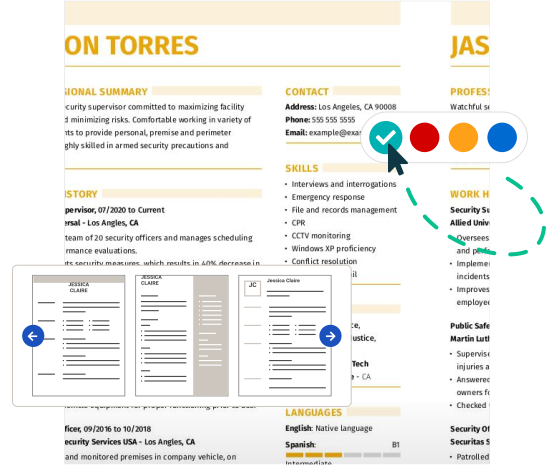
4. Use colors and design
Incorporating color and design elements into your resume can elevate its overall impact and help you convey your qualifications more compellingly. A well-crafted resume not only presents your skills but also reflects your professional persona.
Begin by exploring pre-made resume templates that suit the structure you envision. The combination resume format is a strong choice, featuring a skill section prominently alongside your work history. This layout allows for an effective presentation of your competencies.
Next, select a color scheme that maintains professionalism while adding visual interest. Colors like dark blue or forest green provide a polished look without overwhelming the reader. Use these shades at the top of the document or to delineate sections for clarity.
Be mindful to avoid overly bright colors that could detract from readability. Additionally, steer clear of any hues associated with competing organizations, as this could create confusion regarding your personal brand.
By making thoughtful design choices in your resume, you highlight not only your experience but also your understanding of presentation—a key quality in any security specialist role.
As a security specialist, presenting your expertise effectively is key. Your resume should reflect not only your technical skills but also your keen attention to detail. Use a clean layout with subtle design elements that improve readability while still showcasing your professionalism. Consider incorporating icons related to cybersecurity or a color palette that conveys trust, such as blues or greens.
When applying for roles in corporate environments, opt for a more conservative style. Conversely, if you’re targeting startups or tech companies, you might experiment with innovative layouts or stronger colors to express your creativity and adaptability. Remember, the goal is to present yourself as both competent and approachable.
5. Keep your resume length to 1-2 pages
Resumes should generally be one page long. This length makes it easier for recruiters to quickly identify your qualifications, as they often spend only seconds reviewing each document. Focus on including only the most relevant experiences and skills that align with the job you seek. Avoid redundancy by not listing similar duties across different positions.
In certain circumstances, extending your resume to two pages may be appropriate. For instance, if you have extensive experience in a specialized field or are applying for high-level roles like director or executive positions, two pages can provide necessary details about your accomplishments. Additionally, academic professionals typically use a CV instead of a resume due to the need for comprehensive information regarding publications and research work.
FAQ
Do I need to include a cover letter with my resume?
Even when a job posting doesn’t explicitly ask for it, writing a cover letter is highly beneficial. It allows you to present your qualifications in greater detail and helps differentiate you from other applicants. This added context can make a significant difference in how potential employers perceive your application.
To get started, explore our collection of cover letter examples that cater to various industries and roles. These can spark ideas and help you find the right tone for your own letter. When you're ready to craft yours, our Cover Letter Builder offers straightforward guidance to streamline the process.
What is the best resume format?
Choosing the right resume format depends on your individual needs and career stage. The three primary resume formats are chronological, functional, and combination, each designed to highlight different aspects of your background.
The chronological format is best for those with a robust work history, as it emphasizes past employment. The functional format focuses on skills and qualifications, making it suitable for recent graduates or individuals changing careers. The combination format showcases relevant experience alongside specific skills by combining elements of both, making it ideal for mid-career professionals looking to transition to new roles.
How long should my security specialist resume be?
For security specialists, a resume should ideally be one page long, especially if you have under 10 years of experience. Employers in the cybersecurity field often sift through numerous applications quickly, so keeping your resume concise highlights your most essential qualifications effectively.
Emphasize relevant work experience, certifications, and technical skills that align with the job. Focus on recent positions that showcase your expertise in areas like risk assessment or incident response. Remove outdated skills or extensive details about unrelated roles to maintain clarity.
Consider extending to two pages only if you’re a senior security specialist with significant accomplishments or specialized certifications. In such cases, the added space allows you to showcase your depth of knowledge and leadership roles effectively.
Do I need to include references on my resume?
Including references on your resume is usually unnecessary. However, if you have particularly strong endorsements from industry professionals or past employers, consider adding them. This can strengthen your application and provide extra assurance of your qualifications to potential employers.
Build a custom resume in minutes with our professional templates and expert tips.
More Resources


By Gabriela Barcenas | CPRW, Career Writer


By Natalia Merced | CPRW, Career Writer
By Gabriela Barcenas | CPRW, Career Writer

By Natalia Merced | CPRW, Career Writer

By Natalia Merced | CPRW, Career Writer