-
-
Sort through our administrative resume examples to see what works best for you.
-
Our sales resume examples can help you write the best possible resume.
-
Explore our food service resume examples to show your skills effectively.
-
Start crafting your job-winning resume with our teaching resume examples.
-
-
-
Use our administrative cover letter examples for ideas on writing your own.
-
Use our sales cover letter examples to effectively show your sales accumen.
-
Write your job-winning cover letter following our nursing cover letter examples.
-
Learn to tell your story in education using our teaching cover letter examples.
-





- Our customers have been hired by*


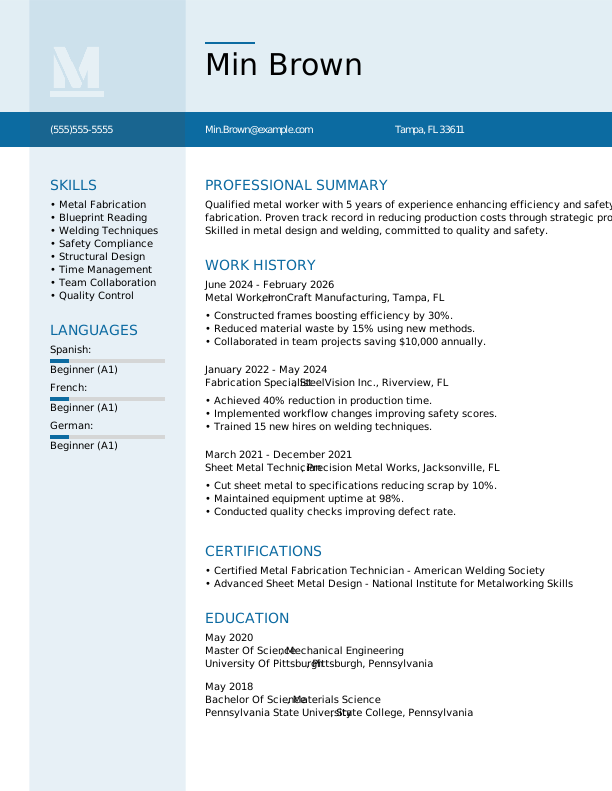
Entry-Level Metal Work Resume
This resume example highlights relevant skills and accomplishments, making it ideal for career changers and recent graduates looking to establish themselves in the metal work industry.

Why this resume works:
A skills-focused resume format is particularly helpful for professionals in metal work who are new to the industry, returning after a break, or shifting careers. This approach allows individuals to showcase their technical skills like welding techniques and CNC operation rather than concentrating on employment gaps or limited experience.

Mid-Career Metal Work Resume
This metal work resume example highlights a professional's extensive experience and achievements, making it perfect for individuals eager to advance their careers in welding or fabrication.
Why this resume works:
Mid-career metal work professionals can highlight a 15% reduction in production costs through process optimization or achieving a 98% customer satisfaction rate on custom projects.

Experienced Metal Work Resume
This metal work resume example highlights the job seeker's extensive experience and achievements, making it perfect for professionals pursuing senior roles in the industry.
Why this resume works:
Leadership roles and advanced certifications underscore the ability to manage complex scenarios.

Looking for something else?
Create Your Standout Resume Today
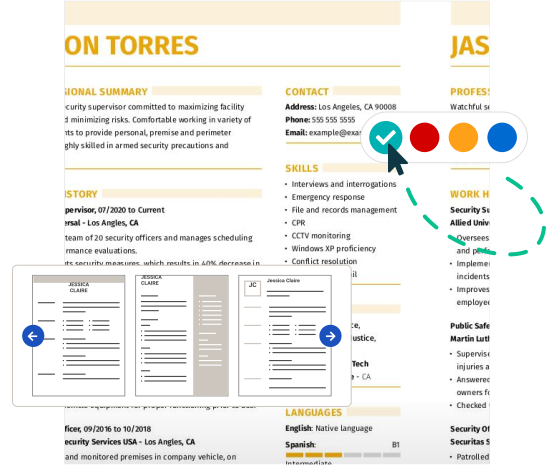
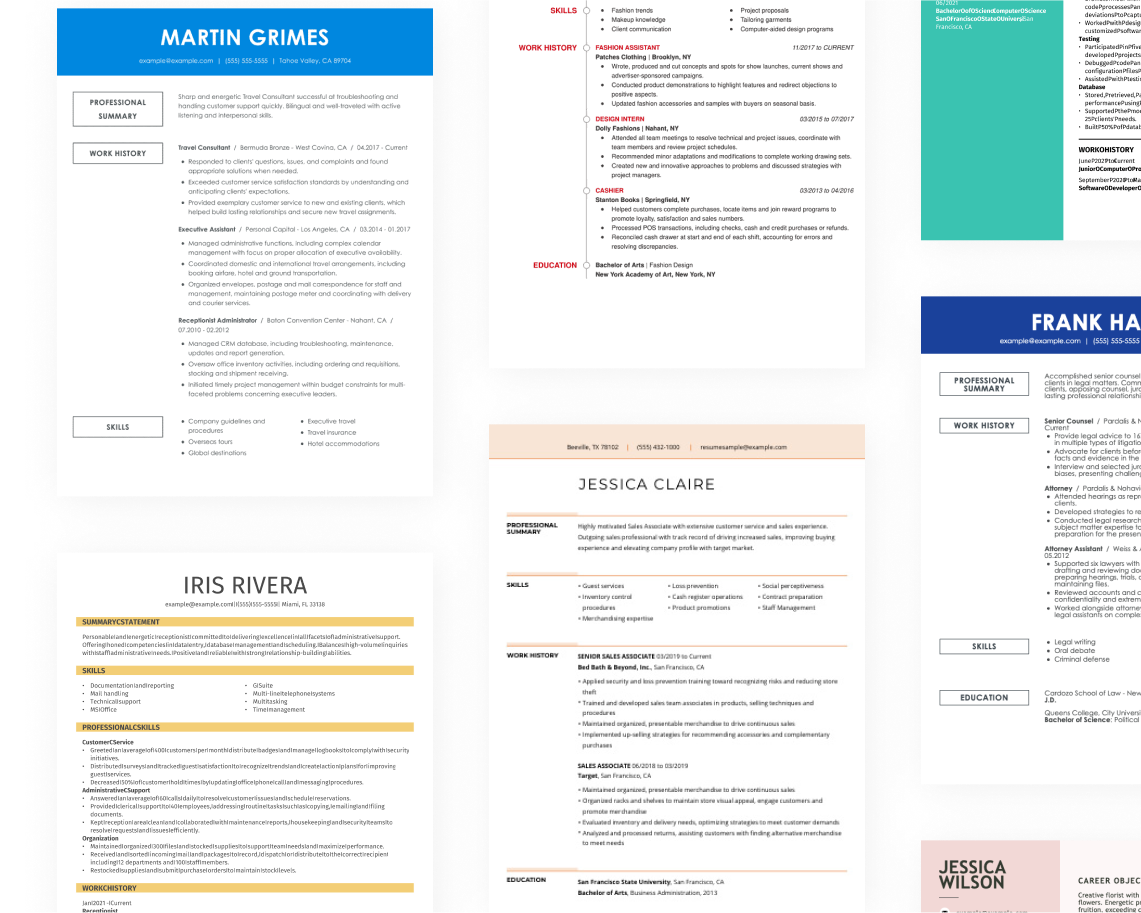
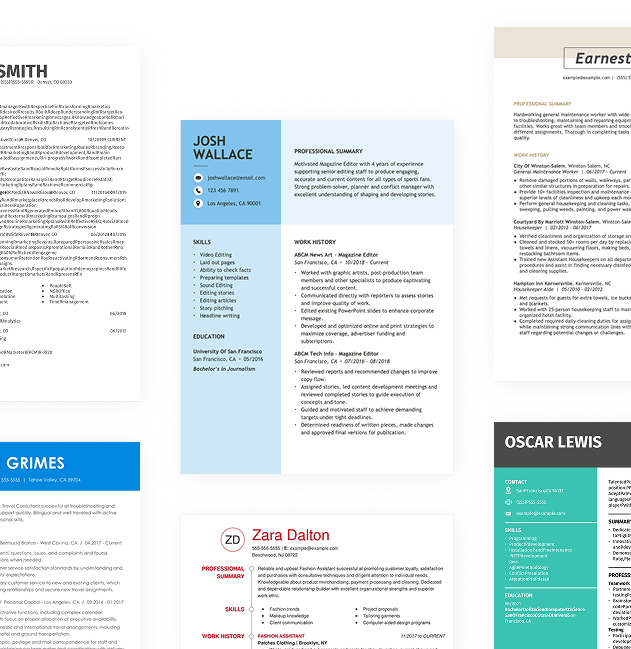
Use our resume examples for inspiration on organization, color, and design—and learn how to effectively summarize your metal work skills and experience with confidence.
How to Write a Metal Work Resume
Learning how to write a resume is essential for showcasing your unique value as a metal worker, rather than just listing your credentials. A well-crafted resume highlights the skills and experiences that set you apart in the industry.
In the sections that follow, you'll discover step-by-step guidance on crafting your resume, including resume tips on what to include from your work history to relevant projects and key accomplishments that can impress potential employers.
Start with your contact info
The header section contains all your contact information and should be prominently displayed at the top of your resume. Start by placing your name in a bold, larger font to ensure it catches the eye of recruiters immediately. Consider using a clean design that improves readability while reflecting your professionalism in metal work.
Include essential details such as your email address, phone number, and location. While you don’t need to provide your full address, listing your city, state, and ZIP code is important for confirming eligibility for job opportunities and assisting applicant tracking systems (ATS) in processing your application efficiently.
You might also consider adding links to relevant certifications or an online portfolio showcasing your past projects if applicable. This can be particularly beneficial in the metal work field, where demonstrating hands-on experience and craftsmanship can significantly improve your application and set you apart from other job seekers.
Write a strong professional summary
A professional summary is a brief overview of your qualifications and skills, positioned directly beneath your contact information on your resume. This section serves as a quick introduction for recruiters, giving them insight into who you're as an applicant.
In this summary, include key achievements and relevant experience that showcase your fit for the metalwork position. Tailoring this section to align with the job description demonstrates your interest and understanding of the role.
Looking at resume summary examples can provide inspiration on structuring yours. These examples highlight essential elements and help you visualize the impact a well-crafted summary can have on your application.
Strong vs weak metal work summary
Strong

"Skilled metal worker with over seven years of experience in fabrication and welding. Expertise in creating custom metal structures, ensuring precision and quality in every project. Proficient in MIG and TIG welding techniques, leading to successful completion of complex designs. Certified AWS welder recognized for attention to detail and commitment to safety standards."
Why this example works: This summary effectively highlights the job seeker's experience, specific skills like MIG and TIG welding, measurable achievements such as successful project completions, while incorporating relevant keywords found in metal work job descriptions.
Weak

"Metal worker seeking a position to use my skills in fabrication and assembly. I have some experience in workshops and enjoy collaborating with others."
Why this example doesn't work: This summary is weak due to its vague language, failing to highlight specific skills, measurable achievements, or relevant technical expertise that would be beneficial for a metal work role.

When crafting a personal mission statement for your metal work career, reflect on how your craftsmanship and commitment to quality align with the company’s values. Highlight your unique approach to problem-solving and dedication to innovation, showcasing how these traits improve the organization beyond technical skills alone.
Share your work history
Your work history is, arguably, the central and most important part of your resume. List your most recent roles in reverse-chronological order. This method allows employers to quickly see your latest skills and experiences, ensuring they recognize your current capabilities.
When listing your work history, focus on:
- Job title and company name
- Dates of employment (month and year)
- Key responsibilities (What tasks did you perform regularly?)
- Achievements and contributions (What improvements or successes can you highlight?)
- Measurable results (Include figures when applicable, like 'increased production efficiency by 30%.')
Finally, use action verbs to convey a strong sense of initiative and accomplishment in your job descriptions.
Strong vs weak metal work work history
Strong
Metal Worker, Precision Metalworks Inc.
2018–2023
- Fabricated over 300 custom metal components, ensuring precision that reduced production errors by 25%.
- Implemented new welding techniques that increased efficiency by 15%, resulting in faster project completion times.
- Supervised a team of four junior metal workers, improving their skill sets through hands-on training and mentorship.
Why this example works: A strong work history gives insight into the specific tasks and achievements relevant to the role. It highlights quantifiable successes and expertise in metalworking processes, showcasing both technical skills and leadership qualities.
Weak
Metal Worker
Steel Fabrication Co.
- Worked on metal components and used tools.
- Followed safety procedures.
Why this example doesn't work: This entry is ineffective because it lacks specificity about the type of metal work performed and does not detail the tools used or techniques applied.
Add your resume to LinkedIn to improve your visibility in the metal work industry. Showcase your skills with specific tools and techniques, and share projects that demonstrate your craftsmanship. Engage with metalwork communities to connect with professionals and recruiters who appreciate your expertise and dedication in this field.
Highlight your key skills
The skills section of your resume is essential for showcasing your expertise in metal work and distinguishing yourself from other job seekers. Here's a rundown of key skills and their significance in the industry:
- Soft skills are personal attributes that show how you collaborate with others, including attention to detail, teamwork, and effective communication. In metal work, qualities like problem-solving and adaptability play a key role in ensuring precision in projects and fostering better collaboration on the shop floor.
- Hard skills in metal work refer to the specific techniques and abilities acquired through training or hands-on experience. Examples of these skills include welding, machining, metal fabrication, and blueprint reading, which are essential for achieving precision and quality in metal projects.
- Skills in metal work are part of your technical skills with tools and machines used in the field. This includes operating welding equipment like Miller and Lincoln Electric, using CNC machinery such as Haas and Mazak, and understanding metal fabrication software like SolidWorks.
For metal work professionals who are just starting out, position your skills section near the top of your resume to highlight your abilities even if you have limited experience. If you have significant experience, place the skills section after your work history so that your achievements can speak for themselves.
Top 15 skills for your metal work resume
Selecting the right skills for your resume is essential in showcasing your qualifications as a metal worker. Focus on a mix of technical abilities, hard skills, and soft skills that reflect your expertise and adaptability. Highlighting transferable skills can improve your appeal to potential employers across different roles within the industry.
Below is a list of the top 15 most popular skills for metal workers, drawn from insights shared by JobHero users. These skills not only demonstrate your capabilities but also position you well for various opportunities in the field.
Build your education section
In the metal work industry, the importance of the education section on your resume varies with your experience. For seasoned professionals, it's often beneficial to highlight extensive work history over educational credentials. If you have significant hands-on experience, consider placing your education section near the end or omitting it entirely if not required by employers.
Conversely, for recent graduates or those transitioning into specialized areas within metal work, education becomes a critical component of your resume. Position this section prominently at the top and include details such as relevant coursework, apprenticeships, and any certifications that demonstrate your qualifications.
Overall, tailor your approach based on your background and the specific job requirements. Clear presentation of skills and knowledge will make a stronger impression in this field.
20 action verbs to add to your resume
Using action verbs in your resume improves its effectiveness by clearly showcasing your expertise and achievements in metal work. These verbs instill a dynamic tone that captures attention.
Select action verbs that resonate with the skills required for metal work roles, ensuring they align with key competencies highlighted in job descriptions to make your application stand out.
- Fabricated
- Welded
- Assembled
- Modified
- Machined
- Crafted
- Designed
- Installed
- Tested
- Coordinated
- Analyzed
- Optimized
- Sourced
- Trained
- Supervised
- Executed
- Inspected
- Documented
- Maintained
- Collaborated
Consider additional resume sections
While your core resume provides the most critical information, adding targeted sections can showcase your unique qualifications. These sections help hiring managers quickly identify your skills, certifications, and achievements beyond standard resume sections.
Here are optional sections we tend to see on metal work resumes:
- Technical skills: List specific techniques you've mastered (welding, machining, fabrication) to demonstrate your hands-on expertise.
- Certifications: Detail any relevant certifications (AWS welding certification, OSHA safety training) that validate your skills.
- Project highlights: Describe key projects you’ve worked on that showcase your ability to apply metalworking techniques effectively.
- Tools and equipment skill: Mention the tools and machinery you're experienced with (CNC machines, lathes, plasma cutters) to highlight your technical competence.
- Professional associations: Include memberships in organizations like the American Welding Society or similar groups that improve your professional credibility.
5 Tips for Formatting Your Resume
Proper resume formatting is essential for job seekers aiming to engage recruiters and navigate ATS filters. By using ATS-friendly resume templates, applicants can present their skills clearly while ensuring that important information is easily recognized, improving their chances of standing out in a competitive job market.
1. Watch your line spacing and margins
Proper spacing helps your resume look clean and organized, ensuring that employers can easily read and digest your information. Effective use of space not only improves readability but also conveys professionalism. Here's what works best:
- Keep margins between 0.5″ to 1.0″ to provide enough breathing room.
- Use single spacing for paragraphs and bullet points to maintain a neat appearance.
- Increase spacing to 1.5″ or double-space between sections to clearly delineate different parts of your resume.
2. Use a professional font
Choosing the right resume font is important as it impacts readability and first impressions. Opt for professional fonts such as:
- Helvetica
- Garamond
- Verdana
- Cambria
- Trebuchet MS
- Book Antiqua
Consider using a slightly bolder or unique font for your name at the top to improve visibility and create a memorable header.
3. Organize your resume sections
A resume should be clear and easy to read. Use bullet points to showcase your metal work experience in a concise format. Start each bullet with a strong action verb that captures your responsibilities or achievements. For example, you might write "Fabricated custom metal components for various industrial applications."
Highlight measurable results, such as "Increased production efficiency by 30% through the implementation of streamlined welding techniques." This practice improves clarity and allows potential employers to quickly grasp your contributions.
To maximize effectiveness, use an ATS resume checker to ensure your document is compatible with applicant tracking systems. This will help confirm that your formatting and keywords align with what hiring managers look for in metal work professionals today.
4. Use colors and design
Incorporating color and design elements into your resume can significantly improve its appeal, making it more memorable to potential employers. A well-structured resume not only showcases your skills but also reflects your personality.
Begin by selecting a resume template that aligns with your professional image. The combination resume format is particularly helpful as it allows you to feature a dedicated skills section alongside your work history, drawing attention to key qualifications.
Next, pay careful attention to your color scheme. Choose colors that project professionalism, such as deep blues or earthy tones. These colors are ideal for headers or section dividers, adding structure without overwhelming the viewer.
Steer clear of bright or neon colors that may distract from the content. Additionally, avoid colors that could be perceived negatively or linked to competing businesses. Instead, opt for muted shades that maintain readability and improve the overall aesthetic of your resume.
By thoughtfully integrating these design elements, you can create a polished resume that highlights your metal work expertise while capturing the attention of hiring managers.
5. Keep your resume length to 1-2 pages
A resume should typically be one page long. This length ensures that hiring managers can quickly grasp your qualifications and experience since they often spend only seconds reviewing each application. Focus on including the most relevant roles and accomplishments, omitting repetitive tasks across different positions. Highlight achievements that align closely with the job you're targeting.
There are exceptions to this rule. If you have extensive experience, especially for senior-level positions like a director or executive role, extending your resume to two pages may be necessary to showcase your impact fully. In specialized fields such as academia, a CV is more appropriate as it provides space for detailed information regarding publications and presentations.
By following these guidelines, you'll create a focused and effective resume that meets industry standards.
FAQ
Do I need to include a cover letter with my resume?
Writing a cover letter can significantly improve your job application, even if it’s not mandatory. It allows you to showcase your unique qualifications and personality, helping you stand out from other job seekers. A thoughtful cover letter provides additional context that resumes often lack.
If you're looking for inspiration, check out our collection of cover letter examples tailored to various industries and roles. When you're ready to create your own, our Cover Letter Builder offers an easy step-by-step approach to help you craft the perfect message.
What is the best resume format?
Choosing the right resume format depends on your unique career situation. The three main formats are chronological, functional, and combination, each serving different job seekers at various stages of their careers.
The chronological format is ideal for those with extensive work history as it emphasizes past positions. The functional format focuses on skills and education, making it suitable for recent graduates or those changing fields. The combination format mixes both work experience and skills, offering a balanced approach that benefits mid-level applicants or individuals transitioning to new industries.
How long should my Metal Work resume be?
For metal work professionals, a one-page resume is often the ideal choice, especially if you have under ten years of experience. Employers in the manufacturing and skilled trades sectors typically review many resumes quickly. A concise, well-structured page ensures your critical skills and experiences stand out.
Highlight relevant projects, certifications, and technical skills that relate directly to the job you're targeting. Focus on recent work and key achievements in metal fabrication or welding roles. Avoid including unrelated job experiences or excessive details about older projects.
Consider extending to two pages only if you're an experienced craftsman with specialized skills or leadership roles in past positions. In such cases, additional space can effectively showcase your expertise and significant contributions to previous employers.
Should I use a resume template or design my own?
For most job seekers, using a professionally crafted resume template is highly recommended. These templates simplify the writing process and are designed to be ATS-friendly, ensuring your skills and experience are easily readable by hiring software.
However, if you work in a creative industry or have specific aesthetic preferences that reflect your style, creating a custom design could be beneficial. Just make sure to adhere to key formatting principles to maintain professionalism and clarity in your presentation.
Build a custom resume in minutes with our professional templates and expert tips.
More Resources


By Gabriela Barcenas | CPRW, Career Writer

By Gabriela Barcenas | CPRW, Career Writer

By Natalia Merced | CPRW, Career Writer
By Gabriela Barcenas | CPRW, Career Writer

By Gabriela Barcenas | CPRW, Career Writer