-
-
Sort through our administrative resume examples to see what works best for you.
-
Our sales resume examples can help you write the best possible resume.
-
Explore our food service resume examples to show your skills effectively.
-
Start crafting your job-winning resume with our teaching resume examples.
-
-
-
Use our administrative cover letter examples for ideas on writing your own.
-
Use our sales cover letter examples to effectively show your sales accumen.
-
Write your job-winning cover letter following our nursing cover letter examples.
-
Learn to tell your story in education using our teaching cover letter examples.
-





- Our customers have been hired by*


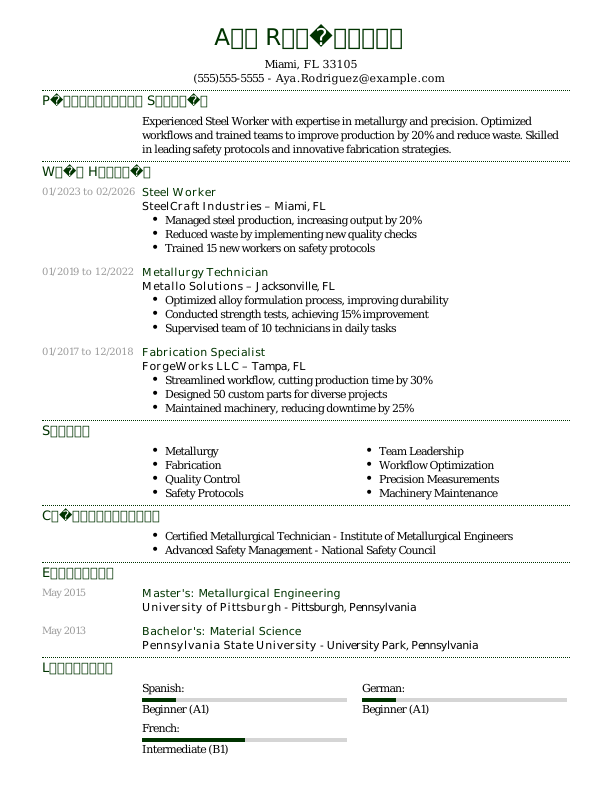
Entry-Level Steel Worker Resume
This resume example showcases valuable skills and accomplishments, making it ideal for recent graduates and career changers looking to enter the steel industry.

Why this resume works:
A skills-focused resume format is particularly beneficial for new steel workers, those re-entering the workforce, or individuals transitioning careers.

Mid-Career Steel Worker Resume
This steel worker resume example is ideal for professionals aiming to specialize in fabrication and welding, showcasing achievements in productivity improvement and safety compliance.
Why this resume works:
This applicant highlights a track record of improving outcomes across multiple settings.

Experienced Steel Worker Resume
This steel worker resume example showcases a robust background in fabrication and leadership, ideal for experienced professionals pursuing senior positions.
Why this resume works:
Leadership roles and advanced certifications underscore the ability to manage complex scenarios.

Looking for something else?
Create Your Standout Resume Today
Use our resume examples for inspiration on organization, color, and design—and learn how to effectively summarize your steel worker skills and experience with confidence.
How to Write a Steel Worker Resume
Learning how to write a resume is key to showcasing your unique value as a steel worker, allowing you to highlight your skills and experience beyond simply listing credentials. In the following sections, you'll receive step-by-step guidance on crafting your resume, covering everything from essential contact details to work experience and resume tips that will help you create a compelling job application.
Start with your contact info
The header section contains all your contact information and should be clearly displayed at the top of your resume. Start by placing your name in a bold, prominent font that catches the eye. This is important as it's the first detail recruiters will notice while reviewing applications.
Include essential details such as your email address, phone number, and location. While a full address isn’t necessary, providing your city, state, and ZIP code ensures you meet job eligibility criteria and aids applicant tracking systems (ATS) in processing your application effectively.
You might also consider adding links to any relevant certifications or an online portfolio if these resources highlight your skills and experience effectively. Depending on the position you're applying for, showcasing additional credentials can improve your application by demonstrating your expertise in steel work and commitment to professional growth.
Write a strong professional summary
A professional summary serves as your introduction on a steel worker resume, appearing right after your contact details. This section captures the attention of recruiters by showcasing your skills and experience.
In your summary, include key qualifications and relevant achievements that demonstrate your fit for the job. Tailoring this section to each position shows employers you understand their specific needs and emphasizes your genuine interest.
To improve your summary, consider reviewing resume summary examples for steel workers. These can provide inspiration on structure and content while helping you articulate your strengths clearly.
Strong vs weak steel worker summary
Strong

"Dedicated and safety-focused steel worker with over six years of experience in metal fabrication and welding. Demonstrated ability to improve production efficiency while maintaining high safety standards, resulting in a 20% reduction in workplace incidents. Proficient in MIG and TIG welding techniques and certified in OSHA safety protocols. Recognized for teamwork and reliability on complex projects."
Why this example works: This summary effectively describes the job seeker's extensive experience, highlights measurable achievements like incident reduction, showcases relevant skills such as welding techniques, and incorporates industry-specific keywords.
Weak

"Steel worker seeking employment where I can apply my skills and contribute to projects. I have experience in the industry and enjoy collaborating with others."
Why this example doesn't work: This professional summary is weak because it lacks specific details about the steel worker's actual skills, experiences, and measurable achievements relevant to the role.

Highlight your interpersonal skills by sharing examples of teamwork and communication in collaborative projects or successful coordination with colleagues on complex tasks. Specific instances where these skills led to improved efficiency or problem-solving will demonstrate your ability to work well in a fast-paced environment.
Share your work history
Your work history is a vital section of your resume, presenting your hands-on experience in the steel industry. Listing positions in reverse-chronological order showcases your most recent roles first, allowing employers to quickly gauge your latest qualifications and skills. This format also emphasizes your career growth and relevant expertise over time.
When detailing each job, focus on:
- Job title and company name
- Dates of employment (month and year)
- Daily tasks (What were your responsibilities?)
- Key accomplishments (Did you improve production efficiency or safety standards?)
- Quantifiable results (For instance, "increased output by 30% during peak operations.")
Finally, use strong action verbs to vividly illustrate your contributions.
Strong vs weak steel worker work history
Strong
Steel Worker, XYZ Steel Fabrication
2018–2023
- Operated heavy machinery to fabricate steel components, contributing to a 15% increase in production efficiency.
- Collaborated with the engineering team on over 50 projects, ensuring precision in measurements that reduced material waste by 20%.
- Mentored new hires in safety protocols and equipment handling, leading to a 40% decrease in workplace accidents.
Why this example works: A strong work history for a steel worker highlights specific tasks and accomplishments that reflect your hands-on experience. Including quantifiable results showcases both your technical skills and ability to contribute positively to the team's performance.
Weak
Steel Worker
ABC Steel Co.
- Worked with steel materials and followed safety protocols.
- Helped in various tasks on the production line.
Why this example doesn't work: This work experience entry is ineffective due to its vagueness. It does not specify the type of steel work performed, lacks employment dates, and uses generic descriptions that could apply to many positions.
If you have over 10 years of experience as a steel worker, consider using a chronological resume format. This approach highlights your extensive hands-on skills and career advancements, showcasing your dedication and expertise in the industry to potential employers.
Highlight your key skills
The skills section of your resume is essential for demonstrating your strengths as a steel worker. Here's a rundown of various skills and their significance in showcasing your qualifications to potential employers:
- Soft skills are personal attributes that show how you collaborate with others, including teamwork, communication, and problem-solving. For steel workers, qualities like attention to detail and adaptability are important because they ensure safety and efficiency in a demanding work environment.
- Hard skills are specific technical abilities acquired through training, education, or experience in steel work, such as metal fabrication, welding techniques, blueprint reading, and equipment operation.
- Technical skills for a steel worker encompass skill with specific tools and equipment. Key examples include operating hydraulic shears, using welding machines like Lincoln Electric, and working with fabrication software such as AutoCAD.
For new steel workers, positioning your skills section near the top of your resume helps highlight relevant abilities even with limited experience. Experienced professionals should place their skills section after their work history, which allows their extensive background to showcase capabilities more naturally.
Top 15 skills for your steel worker resume
When crafting your resume as a steel worker, it's best to highlight the right skills. Focus on a mix of hard and soft skills that showcase your qualifications. Don't forget transferable skills that can improve your appeal across different roles in the industry.
Below is a list of the top 15 skills for steel workers, reflecting what JobHero users find valuable in their resumes. These skills are not only relevant but also demonstrate your adaptability in various work environments.
Build your education section
The education section of a resume holds varying significance depending on your experience level and industry. For seasoned steel workers with extensive hands-on experience, it's often best to minimize the focus on education. Work history and specialized skills can take precedence, allowing you to place the education section toward the bottom.
Conversely, for recent graduates or those looking to enter specialized roles within the steel industry, educational qualifications are important. Highlight your degree prominently at the top of your resume along with any relevant coursework or certifications that demonstrate your knowledge and commitment.
Additionally, if you have completed specific training programs or apprenticeships related to steel work, be sure to include these in your education section. This showcases both your dedication and preparedness for the role ahead.
20 action verbs to add to your resume
Using action verbs in a resume for a steel worker role can significantly improve its impact. These verbs clarify your duties and achievements, offering a dynamic tone that captures attention.
Select action verbs relevant to the steel industry and align them with the skills highlighted in job listings, ensuring your resume resonates with potential employers.
- Fabricated
- Welded
- Assembled
- Constructed
- Milled
- Cut
- Shaped
- Joined
- Inspected
- Tested
- Repaired
- Maintained
- Operated
- Coordinated
- Analyzed
- Executed
- Supported
- Improved
- Monitored
- Documented
Consider additional resume sections
While your core resume provides the most critical information, adding targeted sections can showcase your unique qualifications. These sections help hiring managers quickly identify your skills, certifications, and accomplishments beyond standard resume sections.
Here are optional sections we tend to see on steel worker resumes:
- Specialized training: List any specific training you have received in welding techniques, machinery operation, or safety protocols.
- Certifications: Detail relevant certifications such as OSHA safety certification or welding qualifications.
- Project highlights: Describe notable projects you've worked on, including your role and the outcomes achieved.
- Safety records: Include metrics showcasing your commitment to workplace safety and any awards received for accident-free work.
- Professional affiliations: Mention memberships in industry organizations that demonstrate your commitment to professional development.
5 Tips for Formatting Your Resume
Proper resume formatting is essential for steel workers aiming to attract recruiters and navigate ATS filters. Using ATS-friendly resume templates can improve your document's structure, making it easier for hiring managers to engage with your qualifications while ensuring your application stands out in a competitive job market.
1. Watch your line spacing and margins
Proper spacing helps your resume look clean and organized, which makes it easier for hiring managers to read. A well-spaced resume not only improves visual appeal but also effectively highlights your qualifications. Here's what works best:
- Keep margins between 0.5″ to 1.0″ to ensure enough white space without wasting room.
- Use single spacing between paragraphs and bullet points for a streamlined look.
- Increase the space to 1.5″ or use double-spacing between sections to create clear separations.
2. Use a professional font
Choosing the right resume font is important, as it impacts how potential employers perceive you. It's best to use fonts that convey professionalism and clarity, such as:
- Helvetica
- Garamond
- Verdana
- Trebuchet MS
- Bookman Old Style
- Lucida Sans
Consider using a slightly more distinctive font or increasing the size for your name at the top to help it stand out.
3. Organize your resume sections
A resume should be clear and easy to skim. Use bullet points to detail your work experience without overwhelming the reader with long paragraphs. Begin each bullet with a strong action verb that captures your responsibilities, skills, or accomplishments. For example, "Fabricated steel components by adhering to precise specifications."
Highlight measurable results in your statements, such as "Increased production efficiency by 15% through streamlined processes." This technique improves readability and underlines your contributions as a steel worker.
To ensure your resume meets industry standards, use an ATS resume checker. This tool will verify that your formatting and keywords are aligned with what employers look for in applicants within the steelworking field.
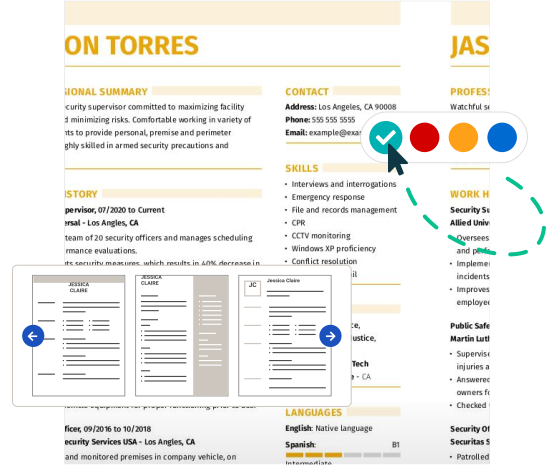
4. Use colors and design
Incorporating color and design elements into your resume can elevate its appearance and help you make a strong impression as a steel worker. A well-structured resume not only showcases your experience but also reflects your personal brand.
Begin by selecting an appropriate template that suits your professional image. The combination resume format is a great choice, as it allows you to feature both your skills and work history prominently. This layout emphasizes your qualifications while making it easy for potential employers to navigate the content.
Next, choose a professional color scheme that complements the industry while maintaining readability. Opt for darker shades like charcoal or deep blue, especially when using these colors in section headers or borders. These colors convey strength and reliability without overwhelming the reader.
Avoid overly bright colors or any hues that can hinder visibility, such as neon tones. Additionally, steer clear of colors commonly associated with competitors to maintain a unique feel.
By thoughtfully integrating design elements, you create a polished resume that captures attention while clearly presenting your qualifications for the role of steel worker.
5. Keep your resume length to 1-2 pages
Resumes should ideally be one page long. This concise format ensures that recruiters can quickly identify your key qualifications and experience, as they often spend mere seconds on each resume. Focus on including the most relevant positions and achievements that align with the job you're targeting. Avoid cluttering your resume with repetitive tasks or roles that do not directly support your application.
However, there are instances where a two-page resume may be warranted. If you have extensive experience over many years, particularly in senior roles like management or executive positions, additional space allows you to highlight significant contributions and skills. Similarly, academic professionals might opt for a CV to detail their research and publications comprehensively. Always tailor your document to reflect the needs of the position you seek.
FAQ
Do I need to include a cover letter with my resume?
Even if a cover letter isn’t required for your application, writing a cover letter can significantly improve your profile. It offers insights into your personality and qualifications that a resume alone may not convey. This additional context often helps you stand out among other applicants.
If you're unsure where to begin, check out our collection of cover letter examples for diverse industries and roles. These samples can spark ideas for your own letter. When you’re ready to create yours, use our Cover Letter Builder for easy, step-by-step assistance.
What is the best resume format?
Choosing the right resume format depends on your unique situation. The three main formats are chronological, functional, and combination. Each of these serves a purpose that aligns with different career stages and job-seeking strategies.
The chronological format, which showcases work history, is ideal for those with extensive experience. In contrast, the functional format highlights skills and qualifications, making it suitable for entry-level job seekers or those re-entering the workforce. For mid-career professionals or individuals transitioning to new fields, the combination format balances work experience with skills, offering a strong choice.
How long should my Steel Worker resume be?
As a steel worker, your resume should ideally be one page long. Employers in the manufacturing industry often sift through numerous applications quickly. A concise, focused resume allows your essential skills and experiences to shine.
Highlight relevant work history, emphasizing recent positions and specific projects that demonstrate your capabilities in steel fabrication or welding. Remove any unrelated job experiences or outdated certifications that do not apply to the role you're pursuing.
A two-page resume may be suitable if you have extensive experience, specialized skills, or leadership roles such as foreman or supervisor. In these situations, showcasing your comprehensive background can provide added value to potential employers.
How far back should my work history go?
When updating your resume, aim to include work experience from the last 10 years. This timeframe keeps your resume focused and relevant. If you have extensive experience or have held multiple roles, consider excluding older positions that do not directly relate to the job you're applying for. Highlighting relevant skills and accomplishments will strengthen your application and showcase your expertise as a steel worker, making it clear why you’re the best fit for the role.
Should I use the same resume for every job?
Using the same resume for every job application is not advisable. Customization is key to standing out in a competitive job market. Each position may require different skills or experiences, and tailoring your resume can highlight your suitability for each role.
Start by carefully reading the job description and noting specific keywords that are mentioned. Incorporate these keywords into your resume where relevant, especially in your skills and experience sections. This is important as many employers use ATS that filter resumes based on keyword matches before they reach human eyes. By personalizing your applications, you increase your chances of making a strong impression and landing an interview.
Build a custom resume in minutes with our professional templates and expert tips.
More Resources

By Gabriela Barcenas | CPRW, Career Writer

By Natalia Merced | CPRW, Career Writer

By Natalia Merced | CPRW, Career Writer

By Natalia Merced | CPRW, Career Writer

By Gabriela Barcenas | CPRW, Career Writer