-
-
Sort through our administrative resume examples to see what works best for you.
-
Our sales resume examples can help you write the best possible resume.
-
Explore our food service resume examples to show your skills effectively.
-
Start crafting your job-winning resume with our teaching resume examples.
-
-
-
Use our administrative cover letter examples for ideas on writing your own.
-
Use our sales cover letter examples to effectively show your sales accumen.
-
Write your job-winning cover letter following our nursing cover letter examples.
-
Learn to tell your story in education using our teaching cover letter examples.
-





- Our customers have been hired by*


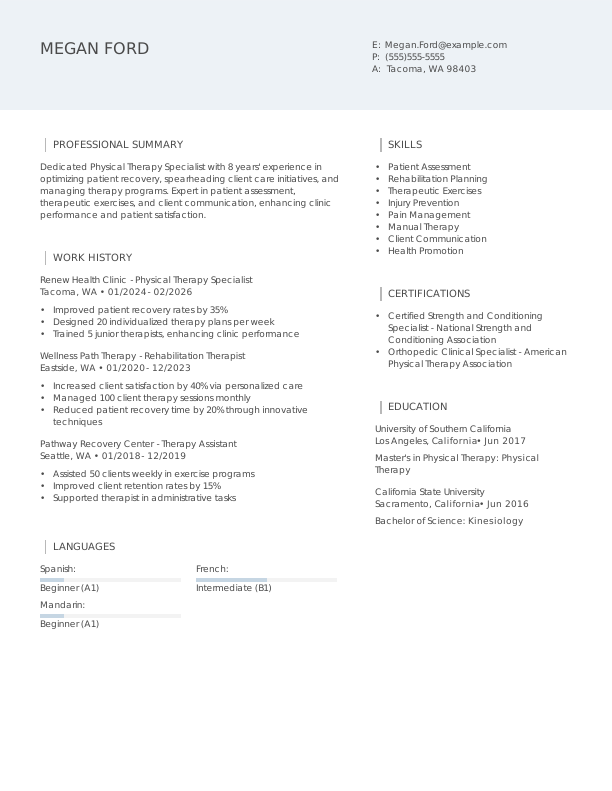
Entry-Level Physical Therapy Resume
This resume example highlights the essential skills and achievements that connect with recent graduates and career changers aiming to grow in the physical therapy field.

Why this resume works:
A skills-focused resume format is helpful for physical therapists entering the field, returning after a break, or transitioning careers. This approach allows applicants to showcase essential skills such as patient assessment and therapeutic techniques rather than dwelling on gaps in employment history, thereby improving their appeal to potential employers.

Mid-Career Physical Therapy Resume
This physical therapy resume example is ideal for experienced professionals aiming to elevate their practice, showcasing significant accomplishments and specialized skills that improve patient care and recovery outcomes.
Why this resume works:
Mid-career physical therapists can highlight their contributions by noting a 30% reduction in recovery time through innovative treatment methods or achieving an 80% improvement in patient mobility via tailored therapy plans. Additionally, they could mention designing rehab strategies that led to a 92% success rate in functional outcomes for patients.

Experienced Physical Therapy Resume
This physical therapy resume example is perfect for experienced professionals ready to elevate their careers into leadership and specialized roles.
Why this resume works:
Leadership roles and advanced certifications underscore the ability to manage complex scenarios.

Looking for something else?
Create Your Standout Resume Today
Use our resume examples for inspiration on organization, color, and design—and learn how to effectively summarize your physical therapy skills and experience with confidence.
How to Write a Physical Therapy Resume
Learning how to write a resume is essential for showcasing your unique value as a physical therapist. It involves not only listing your qualifications but also highlighting what sets you apart in the field.
In the sections that follow, you will find clear guidance on each component of your resume, including contact information, education, and work history. Additionally, you'll discover valuable resume tips to help you craft a standout document that captures your professional essence.
Start with your contact info
The header section contains all your contact information and should be prominently placed at the top of your resume. Begin with your name in a bold, larger font to ensure it grabs attention. This is important for making a strong first impression as recruiters sift through numerous applications.
Include important details such as your email address, phone number, and location. While it's not necessary to provide your complete address, mentioning your city, state, and ZIP code helps confirm your eligibility for the job and supports applicant tracking systems (ATS) in processing your information correctly.
Consider adding links to relevant certifications or an online portfolio if they improve your application. Depending on the specific role in physical therapy you're applying for, showcasing additional credentials or an online presence can demonstrate your expertise and commitment to professional growth, setting you apart from other job seekers.
Write a strong professional summary
A professional summary is a brief statement that appears right under your contact information on a physical therapy resume. It serves as an initial introduction to your qualifications and sets the tone for the rest of your application.
In this section, include key skills, relevant experience, and your passion for helping patients recover. Tailoring this summary to match the specific job description increases its impact and shows potential employers that you understand their needs.
Consider reviewing various resume summary examples to gain insights into effective phrasing and structure. These examples can provide inspiration and help you craft a compelling narrative about your career in physical therapy.
Strong vs weak physical therapy summary
Strong

"Dedicated and empathetic physical therapist with over six years of experience in outpatient settings. Proven track record of developing personalized rehabilitation programs that improve mobility and reduce pain, resulting in a 30% improvement in patient recovery times. Proficient in manual therapy techniques, therapeutic exercise, and patient education. Licensed and certified in CPR and advanced biomechanics. Recognized for fostering strong relationships with patients to aid their recovery journey."
Why this example works: This summary effectively portrays the applicant's experience, highlights measurable achievements such as improved recovery times, emphasizes relevant skills like manual therapy, and incorporates important keywords related to physical therapy.
Weak

"Physical therapist seeking a position to assist patients in recovery. I have experience in various settings and enjoy helping others improve their mobility."
Why this example doesn't work: This professional summary is generic and lacks specific details about the applicant's skills, achievements, or relevant experience that would make them a strong job seeker for a physical therapy role.

Emphasize essential interpersonal skills like empathy and collaboration on your physical therapy resume. Provide specific examples illustrating how these abilities led to successful patient outcomes or improved teamwork, showcasing your capacity to build positive relationships within healthcare settings.
Share your work history
Your work history is, arguably, the central and most important part of your resume. Listing your roles in reverse chronological order allows employers to see your most relevant experience first. This format not only highlights your recent positions but also showcases your growth and advancements over time.
When detailing your work experience, focus on:
- Job title and facility name
- Employment dates (month and year)
- Daily responsibilities (What tasks did you perform regularly?)
- Key accomplishments (Did you improve patient recovery or optimize treatment plans?)
- Quantifiable results (For instance, "increased patient mobility by 30% within three weeks.")
Finally, always use action verbs to vividly illustrate your contributions.
Strong vs weak physical therapy work history
Strong
Physical Therapist, Wellness Rehabilitation Center
2018–2023
- Developed personalized treatment plans for over 150 patients with diverse musculoskeletal conditions.
- Implemented innovative therapeutic techniques that improved patient mobility by an average of 40%.
- Led workshops on injury prevention strategies, resulting in a 25% decrease in workplace injuries among participants.
Why this example works: A strong work history showcases your achievements and specific responsibilities, providing a detailed view of your skills and experience. It emphasizes measurable outcomes and specialized physical therapy methods that reflect both clinical skill and leadership qualities.
Weak
Physical Therapist
Health First Rehab
- Helped patients with exercises and treatments.
- Documented patient progress.
Why this example doesn't work: This entry is ineffective due to its lack of specificity regarding the type of physical therapy provided or the patient demographics.
Add your resume to LinkedIn to improve your professional profile. Showcase your expertise in physical therapy by adding relevant certifications and specialties. Engage with industry-related content and connect with other professionals to expand your network, making it easier for recruiters to discover your skills and experience.
Highlight your key skills
The skills section of your resume is essential for demonstrating your strengths and qualifications in physical therapy. Here's a rundown of various skill types and their significance in improving your candidacy:
- Soft skills are personal attributes that highlight how you collaborate with others—such as empathy, active listening, and encouragement. For those in physical therapy, skills like motivational support and effective communication are important as they help build patient trust and facilitate recovery progress.
- Hard skills in physical therapy involve specific technical abilities gained through formal education and hands-on experience. These skills include manual therapy techniques, therapeutic exercise prescription, gait training, and using modalities like ultrasound or electrical stimulation.
- Technical skills for a physical therapy resume include skill in patient management software and therapeutic modalities. Examples are using the Optima Therapy Management System, administering ultrasound equipment, and employing the Biodex Balance System for rehabilitation assessments.
For new physical therapy professionals, position your skills section near the top of your resume to highlight your abilities despite limited experience. Conversely, experienced therapists should place their skills section after their work history, allowing their experience to showcase their competencies.
Top 15 skills for your physical therapy resume
When crafting your resume, it’s important to highlight skills that resonate with employers in physical therapy. Focus on a mix of soft and hard skills that showcase your qualifications. Don't forget to include transferable skills, which can be valuable across different roles and settings.
Below is a list of the top 15 skills for physical therapists, based on what JobHero users have found most relevant when creating their resumes. This selection reflects the essential abilities you should consider emphasizing in your application.
Build your education section
The education section of your resume should reflect your experience level and industry standards. Seasoned physical therapy professionals can minimize the emphasis on education, particularly if they have extensive work history. In such cases, it's advisable to position this section towards the bottom or omit it altogether if not directly relevant.
Conversely, for recent graduates or those transitioning into specialized fields within physical therapy, education becomes an important aspect of your qualifications. Highlight your degree prominently at the top of your resume and consider including relevant coursework, clinical experiences, and certifications that showcase your readiness for practice.
Tailoring the education section to fit your background helps convey your suitability for the role effectively. Be sure to align it with job requirements while maintaining clarity throughout your resume.
20 action verbs to add to your resume
Using action verbs in your resume significantly improves its impact by clearly articulating your experiences and responsibilities while fostering a dynamic tone. This approach helps potential employers quickly grasp your qualifications.
When crafting your resume for physical therapy roles, prioritize those action verbs that directly relate to the profession and align with the essential skills highlighted in job postings.
- Evaluated
- Diagnosed
- Developed
- Implemented
- Facilitated
- Coordinated
- Monitored
- Educated
- Assisted
- Motivated
- Supported
- Guided
- Adjusted
- Collaborated
- Promoted
- Documented
- Maintained
- Communicated
- Advocated
- Counseled
Consider additional resume sections
While your core resume provides the most critical information, adding targeted sections can showcase your unique qualifications. These sections help hiring managers quickly identify your clinical expertise, certifications, and achievements beyond standard resume sections.
Here are optional sections we tend to see on physical therapy resumes:
- Specialty areas: Highlight specific treatment areas such as orthopedics, pediatrics, or sports rehabilitation where you excel.
- Licenses and certifications: List your state licensure and any relevant certifications like Orthopedic Clinical Specialist (OCS) or Certified Sports Physical Therapist (CSPT).
- Continuing education: Document workshops, courses, or training that illustrate your commitment to professional growth in physical therapy.
- Patient outcomes: Share metrics or specific examples of successful patient rehabilitation cases you've managed.
- Professional organizations: Mention memberships with associations like the American Physical Therapy Association (APTA) to demonstrate engagement in the field.
5 Tips for Formatting Your Resume
Proper resume formatting is essential for job seekers aiming to attract recruiters and navigate ATS filters. By incorporating ATS-friendly resume templates, applicants can improve their resumes' structure, making them more appealing and increasing the likelihood of capturing attention in a competitive job market.
1. Watch your line spacing and margins
Proper spacing helps your resume look clean and organized, improving readability and making a positive impression on hiring managers. It's important to balance aesthetics with content density. Here's what works best:
- Keep margins between 0.5″ to 1.0″ to ensure text isn’t cramped.
- Use single spacing between paragraphs for clear separation of ideas.
- Increase the space to 1.5″ or double-space between sections for a distinct layout.
2. Use a professional font
Selecting the right resume font is important as it impacts readability and professionalism. Opt for these professional fonts:
- Arial
- Calibri
- Helvetica
- Georgia
- Garamond
- Verdana
Consider using a bolder or larger font for your name at the top to improve visibility and add a personal touch.
3. Organize your resume sections
A resume should be clear and easy to navigate. Use bullet points to convey your experience in a direct manner. Start each bullet point with a strong action verb that emphasizes your key responsibilities, achievements, or skills. For example, you could state "Developed personalized rehabilitation programs for patients with orthopedic injuries."
Highlight measurable outcomes, such as "Increased patient recovery rates by 30% through targeted therapy interventions." This approach not only improves clarity but also showcases your contributions.
To ensure your resume meets current hiring standards, use an ATS resume checker. This tool can verify that your formatting and keywords align with what employers are looking for in physical therapy professionals today.
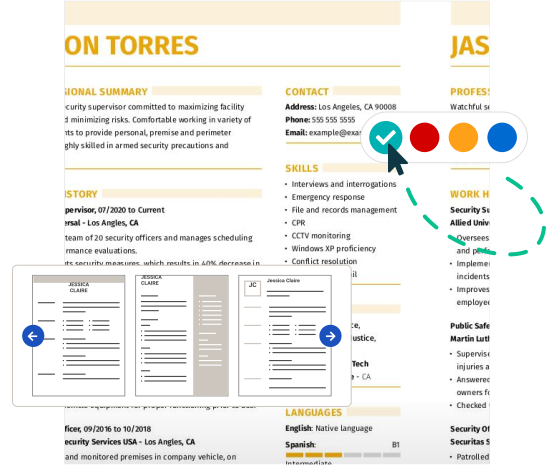
4. Use colors and design
Incorporating color and design elements in your resume can improve its overall impact while showcasing your individuality. A well-structured resume not only captures attention but also directs the reader to key information.
Begin by choosing a template that suits your professional identity. The combination resume format is especially useful, as it highlights both skills and work history prominently. This layout can help you draw focus to your qualifications.
Next, select a color scheme that presents a polished image. Opt for colors like deep blue or forest green, which convey professionalism and reliability. These shades can be used in section headers or as subtle accents throughout the document.
Steer clear of overly bright colors that detract from clarity and readability. Avoid hues that may have negative connotations or are associated with competitors, as these could leave an unfavorable impression.
Thoughtful use of design elements will not only improve the aesthetic appeal of your resume but also reflect your commitment to presenting yourself professionally in the field of physical therapy.
As a physical therapist, your resume is an opportunity to showcase not only your qualifications but also your compassionate approach to care. Use clear, professional fonts and a clean layout to ensure readability. Incorporate subtle design elements like icons or lines that can improve the visual appeal without overwhelming the content.
Tailor your resume style based on the setting you’re applying for. A clinical position may call for a more traditional look, while a role in a wellness center could allow for softer colors and more creative layouts. The goal is to reflect both your professionalism and your unique personality as a caregiver.
5. Keep your resume length to 1-2 pages
Resumes should ideally be one page long. This length keeps your information concise and allows recruiters to quickly identify your qualifications. Aim to include only the most relevant experiences and skills that align with the job you're targeting. Focus on achievements rather than listing responsibilities, as this showcases your impact.
In some instances, extending your resume to two pages is acceptable. For example, if you have extensive experience in physical therapy or are applying for a senior role, more space can better highlight your expertise and contributions. Additionally, academic positions often require a CV instead of a resume, which provides a comprehensive view of your professional history, publications, and research.
Keep it clear and tailored to ensure it stands out in a competitive field.
FAQ
Do I need to include a cover letter with my resume?
Even if you're not required to submit one, writing a cover letter can significantly improve your application. It offers a unique opportunity to showcase your personality and highlight key achievements that make you the perfect fit for the role. By doing this, you set yourself apart from other applicants who may only submit a resume.
To get started, explore our extensive collection of cover letter examples tailored for various industries and positions. When you're ready to create your own, consider using our cover letter builder, which guides you through every step of the process to ensure your submission stands out.
What is the best resume format?
Choosing the right resume format depends on your individual needs and career stage. The three primary formats are chronological, functional, and combination. Each one serves a specific purpose that can strengthen your job application.
The chronological format is ideal for those with extensive experience because it emphasizes work history. The functional format highlights skills and education, making it a great option for recent graduates or people changing careers. The combination format mixes both approaches, providing a balanced view of skills and experience for mid-level professionals or individuals transitioning between fields.
How long should my Physical Therapy resume be?
For physical therapy professionals, your resume should ideally be one page long, particularly if you have under 10 years of experience. Hiring managers often sift through numerous resumes quickly, so a succinct and well-structured single page helps highlight your essential qualifications.
Emphasize relevant clinical experiences, certifications, and skills that directly relate to the job you're targeting. Remove outdated techniques or detailed descriptions of non-PT roles that don’t align with your career.
Consider a two-page resume only if you're an experienced therapist applying for advanced positions such as clinical director or specialized roles. In these instances, your extensive credentials and achievements warrant the additional space to showcase your expertise.
Should I use a resume template or design my own?
For most job seekers, using a professionally crafted resume template is highly recommended. These templates simplify the process of creating your resume and ensure that it has an ATS-friendly structure, which is important for getting noticed by employers.
However, if you’re in a creative profession or have specific design preferences, crafting your own unique template can help express your individuality. Just remember to adhere to key formatting guidelines to maintain clarity and professionalism throughout your resume.
Build a custom resume in minutes with our professional templates and expert tips.
Gabriela Hernandez
CPRW, Career WriterGabriela is a Certified Professional Resume Writer (CPRW) and member of the Professional Association of Resume Writers & Career Coaches and has worked in the career industry for more than four years providing comprehensive guidance on resume writing and job search strategies for individuals across diverse career paths. She holds a bachelor's in journalism and is passionate about helping job seekers present their professional story effectively through well-crafted resumes and cover letters that demonstrate their value, skills, and experience to potential employers. Some of her work has been featured on JobHero’s resume examples career center.
More Resources


By Natalia Merced | CPRW, Career Writer


By Gabriela Barcenas | CPRW, Career Writer

By Natalia Merced | CPRW, Career Writer
By Gabriela Barcenas | CPRW, Career Writer

By Natalia Merced | CPRW, Career Writer