-
-
Sort through our administrative resume examples to see what works best for you.
-
Our sales resume examples can help you write the best possible resume.
-
Explore our food service resume examples to show your skills effectively.
-
Start crafting your job-winning resume with our teaching resume examples.
-
-
-
Use our administrative cover letter examples for ideas on writing your own.
-
Use our sales cover letter examples to effectively show your sales accumen.
-
Write your job-winning cover letter following our nursing cover letter examples.
-
Learn to tell your story in education using our teaching cover letter examples.
-





- Our customers have been hired by*


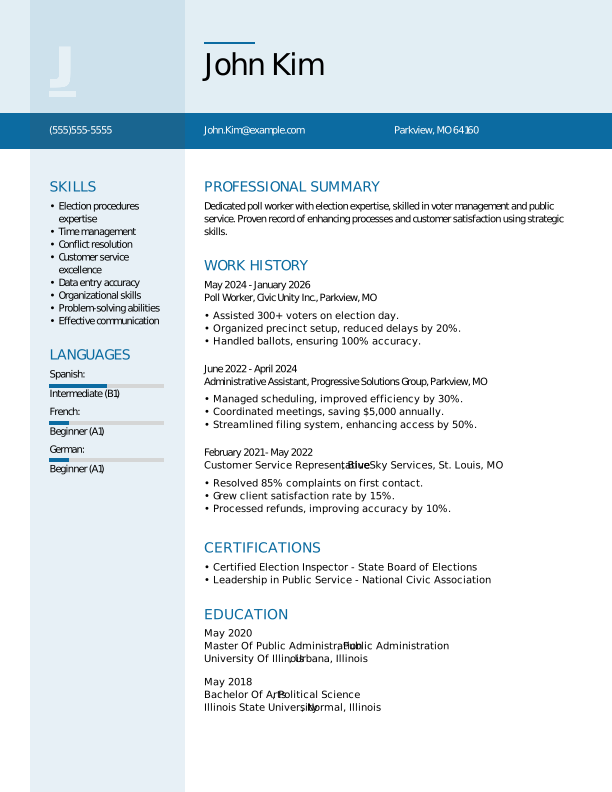
Entry-Level Poll Worker Resume
This resume example effectively demonstrates the applicant's hands-on experience and essential skills, making it ideal for career changers looking to excel as poll workers in civic engagement roles.

Why this resume works:
A strong academic foundation shows the candidate is well-prepared to transition into this role.

Mid-Career Poll Worker Resume
This poll worker resume is ideal for experienced professionals aiming to advance in voter registration and election management roles.
Why this resume works:
Highlights impact through high-volume voter assistance, accurate verification, and on-site issue resolution.

Experienced Poll Worker Resume
This poll worker resume example highlights the extensive experience and proven leadership skills necessary for advancing into senior electoral management roles.
Why this resume works:
Leadership roles and advanced certifications underscore the ability to manage complex scenarios.

Looking for something else?
Create Your Standout Resume Today
Use our resume examples for inspiration on organization, color, and design—and learn how to effectively summarize your poll worker skills and experience with confidence.
How to Write a Poll Worker Resume
Mastering how to write a resume is important for highlighting your unique value as a poll worker, rather than merely listing your duties. By focusing on your contributions and skills, you can create a narrative that stands out to election officials.
In the upcoming sections, we will provide step-by-step guidance with useful resume tips specifically for poll workers. This includes advice on formatting, emphasizing relevant experience, and showcasing your dedication to civic duty.
Start with your contact info
The header section contains all your contact information, prominently displayed at the top of your resume. Start by placing your name in a bold, larger font to catch the attention of hiring officials. Consider using a simple design with clear lines and adequate spacing to improve readability.
Next, include essential contact details such as your email address, phone number, and general location: city and state will suffice. This information is vital for election officials to reach you easily and ensures compliance with local regulations regarding polling staff.
Additionally, you may want to include links to any relevant training certifications or online profiles that showcase your experience as a poll worker. These resources can provide further context about your qualifications and commitment to facilitating fair elections, thereby strengthening your application.
Write a strong professional summary
A professional summary is a brief introduction that highlights your qualifications and skills. It appears right after your contact information, making it one of the first things hiring managers see when reviewing your resume.
In this section, you should include key achievements and relevant experiences tailored to the job you're applying for. Customizing your summary helps showcase how you fit into the specific role and organization.
To craft a compelling summary, refer to resume summary examples available online. These can provide valuable insights on structure and content to make your own stand out.
Strong vs weak poll worker summary
Strong

"Detail-oriented poll worker with three years of experience facilitating smooth election processes. Proven ability to manage voter check-ins and ensure compliance with electoral regulations, contributing to a 95% on-time voter processing rate. Skilled in conflict resolution and providing clear instructions to voters, fostering a positive voting experience. Certified in election administration best practices."
Why this example works: This summary effectively outlines the job seeker's relevant experience, highlights measurable achievements such as the high voter processing rate, emphasizes key skills like conflict resolution, and includes industry-specific keywords related to election operations.
Weak

"Poll worker seeking a position to assist with elections. I have some experience in community service and like being involved in civic activities."
Why this example doesn't work: This summary is weak because it contains vague language and fails to highlight specific skills, relevant experience, or measurable achievements related to the role of a poll worker.

Craft a personal mission statement for a poll worker by reflecting on the importance of civic engagement and community support. Emphasize how your dedication to fair elections reflects the values of integrity and transparency that employers look for in their election personnel.
Share your work history
Your work history is, arguably, the central and most important part of your resume. Listing your experience in reverse-chronological order allows employers to easily see your most relevant qualifications at a glance. This format effectively showcases your career growth and highlights the skills you’ve developed over time.
When listing your work history, focus on:
- Job title and polling location name
- Dates of service (month and year)
- Daily responsibilities (What tasks did you perform during elections?)
- Contributions (Did you assist voters or resolve issues?)
- Outcomes (For instance, "helped ensure a smooth voting process for 200+ voters.")
Finally, use action verbs to convey your experiences dynamically.
Strong vs weak poll worker work history
Strong
Poll Worker, City Election Office
2020–2023
- Facilitated the voting process for over 1,500 voters during local elections, ensuring compliance with state regulations.
- Trained a team of 10 new poll workers, improving their skills in voter assistance and election protocols.
- Managed the distribution of ballots and handled inquiries, resulting in a 95% satisfaction rate from voters surveyed.
Why this example works: The applicant includes specific accomplishments and quantifiable outcomes in their work history. This allows hiring managers to better assess the applicant’s expertise, skills, and fit for the role.
Weak
Poll Worker
Local Election Office
- Helped set up the polling place and assisted voters.
- Checked in voters and provided ballots.
Why this example doesn't work: This entry is ineffective because it does not specify the election type or date, lacks details about specific duties performed, and provides no context for the job seeker's contributions or challenges faced.
If you have over 10 years of experience as a poll worker, using a chronological resume format is ideal. This structure allows you to clearly demonstrate your extensive background and the growth in your responsibilities, making it easier for employers to see your commitment and expertise in election processes.
Highlight your key skills
The skills section of your resume is vital for demonstrating your strengths as a poll worker. Here's a rundown of various skills and their significance in improving your application:
- Soft skills are personal attributes that show how you work with others—such as patience, attention to detail, and strong communication. For poll workers, these qualities help ensure smooth election processes and provide clear assistance to voters while fostering a respectful environment.
- Hard skills for a poll worker are specific abilities gained through training and experience. Examples include understanding election laws, operating voting machines efficiently, paying close attention to detail, and having effective communication skills.
- Technical skills for a poll worker include skill with electronic voting machines, voter registration systems, and ballot scanning equipment. Familiarity with tools such as Hart InterCivic and Dominion Voting Systems can improve your effectiveness in ensuring smooth electoral processes.
For first-time poll workers, list your skills near the top of your resume to highlight your strengths despite limited experience. If you have a background in elections or community service, place your skills section after detailing your work history to showcase practical application of those abilities.
Top 15 skills for your poll worker resume
When preparing your resume for a poll worker position, it’s important to highlight skills that align with the demands of the role. Focus on mixing soft skills such as communication and problem-solving with technical skills related to election processes. Including transferable skills will also improve your appeal, showcasing your ability to adapt in various situations.
Here’s a list of the top 15 skills for poll workers based on insights from JobHero users. These sought-after skills reflect what employers look for in job seekers, ensuring you present yourself effectively in this essential civic role.
Build your education section
When crafting a resume for a poll worker position, the education section's importance varies by experience. Seasoned professionals should prioritize their work history over education, especially if they lack specific degree requirements. In such cases, consider placing your education at the bottom or omitting it entirely to spotlight relevant skills and experience.
Conversely, recent graduates or those entering specialized roles should highlight their educational background prominently. Position this section at the top of your resume and include relevant coursework or certifications that demonstrate your qualifications for the role.
For applicants transitioning from different fields, it's essential to showcase any training related to voting processes or civic engagement. This can improve your application by demonstrating preparedness and commitment to serving the community effectively.
20 action verbs to add to your resume
Using action verbs in resumes for poll workers strengthens their application by clearly communicating relevant experience and generating an engaging tone. These verbs help illustrate specific responsibilities and achievements, making the job seeker's contributions more vivid.
Selecting action verbs that align with essential skills in election-related job postings is important. This ensures applicants effectively demonstrate relevant capabilities like organization, communication, and reliability, improving their suitability for poll worker roles.
- Facilitated
- Counted
- Verified
- Guided
- Engaged
- Supported
- Observed
- Informed
- Assured
- Participated
- Executed
- Trained
- Evaluated
- Resolved
- Coordinated
- Oversaw
- Documented
- Communicated
- Promoted
- Contributed
Consider additional resume sections
While your core resume provides the most critical information, adding targeted sections can showcase your unique qualifications. These sections help hiring managers quickly identify your skills, experiences, and contributions beyond standard resume entries.
Here are optional sections we tend to see on poll worker resumes:
- Election experience: Detail specific elections you've worked in, including roles and responsibilities held during those events.
- Training certifications: List any training received related to election procedures, voter assistance, or conflict resolution.
- Community involvement: Highlight volunteer work or community service that reflects your commitment to civic engagement.
- Technical skills: Mention familiarity with voting equipment or software used during election processes.
- Languages: Include any additional languages you speak that could assist in communicating with diverse voters.
5 Tips for Formatting Your Resume
Proper resume formatting is important for job seekers aiming to grab recruiters' attention and navigate through ATS filters effectively. Using ATS-friendly resume templates can significantly improve your chances of standing out in a competitive job market.
1. Watch your line spacing and margins
Proper spacing helps your resume look clean and organized, making it easier for hiring managers to read and understand your qualifications. Good spacing ensures sections stand out without overwhelming the page, allowing key information to shine. Here’s what works best:
- Keep margins between 0.5″ to 1.0″.
- Use single spacing between paragraphs and bullet points.
- Increase space to 1.5″ or double-space between sections for clarity.
2. Use a professional font
Selecting the right resume font is important as it impacts readability and first impressions. Here are some professional font options to consider:
- Helvetica
- Garamond
- Verdana
- Cambria
- Trebuchet MS
- Book Antiqua
To make your name stand out at the top of your resume, consider using a slightly larger or bolder font style.
3. Organize your resume sections
A resume for a poll worker should be clear and easy to read. Use bullet points to outline your specific responsibilities and achievements during elections. Start each point with a strong action verb, such as "Facilitated voter check-in processes, ensuring a smooth experience for over 500 voters," to illustrate your contributions effectively.
Highlight measurable accomplishments that demonstrate your impact. For instance, "Trained and supervised a team of 10 volunteers, improving polling station efficiency by 25%" shows how you improved operations while showcasing leadership skills.
To ensure compatibility with applicant tracking systems (ATS), use an ATS resume checker. This will help you identify potential issues with formatting or keywords that could hinder your application from being recognized by employers.
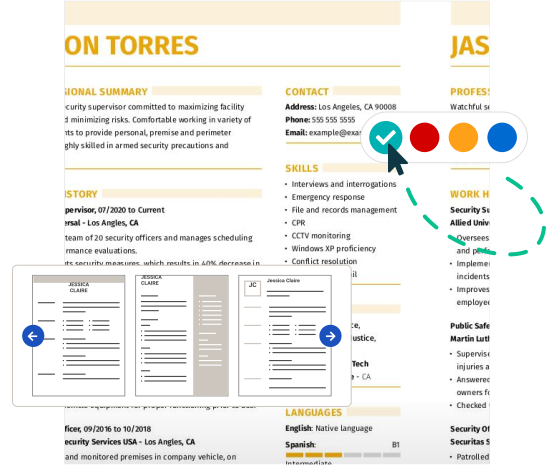
4. Use colors and design
Using color and design elements in your resume can make it stand out while clearly presenting your qualifications. A well-crafted resume not only showcases your skills but also reflects your personality.
Begin by selecting a resume template that resonates with you. The combination resume format is particularly effective, as it features a prominent colored section where you can highlight relevant skills alongside your work history.
Next, choose a professional color scheme. Opt for colors like deep blue or dark green, which convey trust and stability. These can be used strategically to improve headers or separate sections without overwhelming the reader.
It's essential to avoid using overly bright colors or combinations that might detract from readability. Additionally, stay clear of colors associated with political parties or competitors to maintain neutrality and professionalism. By thoughtfully integrating color and design, you'll create an eye-catching resume that leaves a lasting impression on potential employers.
5. Keep your resume length to 1-2 pages
Resumes should typically be one page long. Hiring managers often glance at resumes for under 10 seconds, making it essential to present your information clearly and succinctly. Focus on including the most relevant experiences and skills that align with the job you’re targeting. Avoid redundancy by not repeating similar tasks across different roles.
In certain situations, a two-page resume is acceptable. For example, if you have extensive experience in your field or are applying for senior-level positions, more space may be necessary to detail your achievements. In academia or specialized industries, a CV might be preferable as it allows for a comprehensive overview of your publications and research contributions.
FAQ
Do I need to include a cover letter with my resume?
Even if it's not mandatory, writing a cover letter can greatly improve your application. It offers a chance to elaborate on your skills and experiences, giving you an edge in the hiring process. To ensure you craft an effective one, explore various cover letter examples that match different roles and industries. These examples can provide inspiration for structuring your own letter. Additionally, our Cover Letter Builder offers step-by-step assistance to create a personalized document that highlights your strengths.
What is the best resume format?
Choosing the right resume format depends on your unique career situation and goals. The three primary formats are chronological, functional, and combination, each serving different purposes for various job seekers.
The chronological format is ideal for those with a solid work history as it emphasizes employment dates. The functional format suits individuals new to the workforce by showcasing skills over experience. Meanwhile, the combination format appeals to mid-career professionals or those changing fields since it merges skills and work history effectively.
How long should my poll worker resume be?
When crafting your poll worker resume, aim for a one-page format, especially if you have less than 10 years of experience. Election boards often sift through numerous resumes quickly, so a concise and organized page highlights your essential qualifications effectively.
Concentrate on relevant experience such as prior election work or community service that showcases your commitment to civic engagement. Highlight specific skills like attention to detail and strong communication abilities. Remove unrelated job experiences and excessive details about past roles that do not pertain to polling duties.
Consider using a two-page resume only if you have significant election expertise or are applying for supervisory positions within the polling framework. In these situations, showcasing your extensive background can warrant the additional length.
What’s the difference between a resume and a CV?
A resume is typically a concise, one-page document that highlights your relevant skills and work experience tailored to a specific job application. In contrast, a CV (Curriculum Vitae) is more comprehensive and can span two to six pages, providing an in-depth overview of your entire academic and professional history. It includes details like education, publications, presentations, and professional affiliations, making it ideal for roles in academia or research.
Understanding these distinctions helps you choose the right format for your career goals. To guide your writing process effectively, consider reviewing CV examples. Additionally, learning how to write a CV can offer further insights into crafting a compelling document.
Build a custom resume in minutes with our professional templates and expert tips.
Natalia Merced
CPRW, Career WriterNatalia is a Certified Professional Resume Writer (CPRW) and member of the Professional Association of Resume Writers & Career Coaches and has worked in the career industry for more than two years providing comprehensive guidance on resume writing and job search strategies for individuals across diverse career paths. She holds a master's degree in counseling psychology and a bachelor's degree in public relations and advertising and is passionate about helping job seekers present their professional story effectively through well-crafted resumes and cover letters that demonstrate their value, skills, and experience to potential employers. Some of her work has been featured on JobHero's resume examples career center.
More Resources


By Gabriela Barcenas | CPRW, Career Writer

By Natalia Merced | CPRW, Career Writer



By Gabriela Barcenas | CPRW, Career Writer