-
-
Sort through our administrative resume examples to see what works best for you.
-
Our sales resume examples can help you write the best possible resume.
-
Explore our food service resume examples to show your skills effectively.
-
Start crafting your job-winning resume with our teaching resume examples.
-
-
-
Use our administrative cover letter examples for ideas on writing your own.
-
Use our sales cover letter examples to effectively show your sales accumen.
-
Write your job-winning cover letter following our nursing cover letter examples.
-
Learn to tell your story in education using our teaching cover letter examples.
-





- Our customers have been hired by*


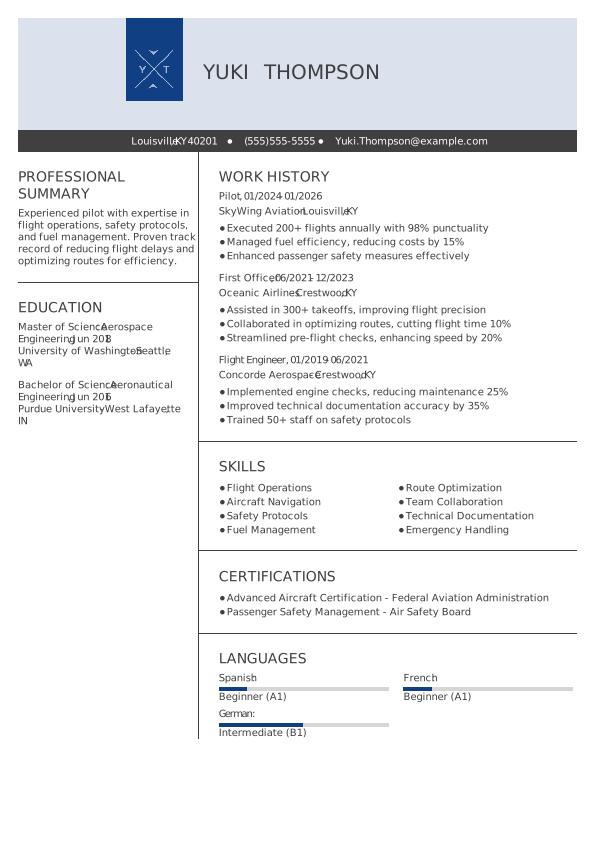
Entry-Level Pilot Resume
This resume example demonstrates the essential skills and relevant experience needed for career changers aiming to establish themselves as proficient pilots in the aviation industry.

Why this resume works:
A strong academic foundation shows the candidate is well-prepared to transition into this role.

Mid-Career Pilot Resume
This pilot resume example is ideal for experienced aviators aiming to elevate their careers through demonstrated achievements in flight operations and safety excellence.
Why this resume works:
Mid-career pilots can highlight achievements such as improving on-time departures by 98% through optimized flight scheduling.

Experienced Pilot Resume
This pilot resume example is perfect for seasoned aviators looking to elevate their careers into leadership or specialized roles.
Why this resume works:
Leadership roles and advanced certifications underscore the ability to manage complex scenarios.

Looking for something else?
Create Your Standout Resume Today
Use our resume examples for inspiration on organization, color, and design—and learn how to summarize your pilot skills and experience with confidence.
How to Write a Pilot Resume
Mastering how to write a resume is important for pilots to showcase their unique value beyond just listing flight hours and certifications. By emphasizing personal experiences and skills, you can create a more engaging profile that stands out to employers.
In the upcoming sections, we will guide you through each step of writing your resume, offering essential resume tips on formatting, highlighting relevant experience, and demonstrating your qualifications.
Start with your contact info
The header section contains all your contact information, prominently displayed at the top of your resume. Start with your name in bold and larger font to ensure it catches the recruiter's eye. A clean, professional layout with adequate spacing will improve readability and make a strong first impression.
Next, include essential contact details such as your email address, phone number, and location; just city and state are sufficient. This information is important for recruiters to contact you directly and helps applicant tracking systems (ATS) match applicants to specific job locations.
Lastly, consider adding links to relevant certifications or specialized training programs if applicable. Additionally, including a link to an online portfolio or website showcasing your flight experience can provide deeper insights into your qualifications and set you apart from other applicants by demonstrating your expertise in aviation.
Write a strong professional summary
A professional summary is a brief overview of your qualifications and skills, located right after your contact details on your resume. It serves as the first impression for recruiters, highlighting who you are as a job seeker. For resume summary examples, explore resources that align with your industry and career level.
This section should encapsulate your key experiences and attributes while being tailored to match the specific job description and company culture. Customization shows employers that you are genuinely interested in the position.
To improve your summary, look for examples online that resonate with your style and profession. These samples can provide valuable insights into formatting and content selection for maximum impact.
Strong vs weak pilot summary
Strong

"Experienced pilot with over eight years of flying commercial and private aircraft. Proven expertise in flight planning, navigation, and safety protocols, ensuring compliance with all aviation regulations. Skilled in managing diverse flight operations while maintaining a flawless safety record. Certified by FAA and experienced in multi-engine jets and turboprop aircraft."
Why this example works: This summary succinctly highlights the applicant’s extensive experience, measurable achievements like a flawless safety record, specific skills related to aviation such as flight planning and navigation, and includes relevant certifications that align with industry expectations.
Weak

"Pilot seeking opportunities to fly and use my aviation skills. I have some flight experience and look forward to working with a team."
Why this example doesn't work: This professional summary is weak because it lacks specific details about the pilot's qualifications, relevant experiences, and measurable achievements in aviation.

Emphasize important interpersonal skills like teamwork and adaptability on your pilot resume. Incorporate specific examples from past flying experiences where these abilities improved safety or crew coordination, demonstrating your capability to collaborate in high-pressure situations.
Share your work history
Your work history is, arguably, the central and most important part of your resume. List your most recent roles in reverse chronological order. If you’ve held numerous positions, select the ones most relevant to the job you’re applying for.
When listing your work history, focus on:
- Job title and company name
- Dates of employment (month and year)
- Key responsibilities (What did you do on a daily basis?)
- Achievements and contributions (What did you accomplish? Did you improve processes, reduce costs, or increase efficiency?)
- Measurable results (Use numbers when possible, such as "reduced patient wait times by 15%.")
Finally, when describing your achievements, use action verbs to make your work history come alive.
Strong vs weak pilot work history
Strong
Pilot, SkyHigh Airlines
2018–2023
- Successfully completed over 1,500 flight hours with a 100% safety record.
- Led a team of co-pilots and cabin crew during high-stress situations, improving passenger satisfaction ratings by 25%.
- Contributed to the development of new training protocols that decreased onboarding time for new pilots by 15%.
Why this example works: This work history showcases specific achievements and responsibilities, offering quantifiable results and specialized skills that reflect both technical expertise and leadership qualities.
Weak
Pilot
[Company Name]
- Flew airplanes.
- Handled cockpit tasks.
Why this example doesn't work: This entry is ineffective because it lacks specifics such as the type of aircraft flown, flight hours logged, or routes managed.
Highlight your leadership skills in your pilot resume by including specific examples like "Supervised flight crews during operations" or "Mentored junior pilots through training programs." These phrases demonstrate your ability to lead teams and ensure safety in high-pressure situations.
Highlight your key skills
The skills section of your resume is essential for demonstrating your qualifications as a pilot. Here's a rundown of key skill areas and their significance in showcasing your expertise:
- Soft skills are personal attributes that show how you interact with others—like teamwork, communication, and decision-making. Pilots need qualities such as situational awareness and leadership, as these are important for ensuring safety and effective collaboration in the cockpit.
- When discussing hard skills for a pilot, these are specific competencies that are developed through specialized training and hands-on experience. Some examples include navigation skill, aircraft operations, emergency procedures, and understanding of aviation regulations.
- Technical skills essential for pilots include expertise with flight management systems, navigation tools, and communication equipment. Examples of relevant technology are the Garmin G1000 avionics system, ForeFlight mobile app for flight planning, and the Honeywell Primus 1000 radar system.
For new pilots, position your skills section near the top of your resume to highlight relevant abilities in lieu of extensive experience. For seasoned pilots, place the skills section after your work history, allowing your experience to showcase your competencies.
Top 15 skills for your pilot resume
When creating your pilot resume, it’s essential to present a mix of technical skills like navigation and aircraft systems knowledge alongside soft skills such as teamwork and communication. Highlighting transferable skills is also important, as they demonstrate your ability to adapt in different flying environments or roles.
Here’s a list of the 15 most popular skills for pilots, based on feedback from JobHero users. These skills represent what hiring managers look for in job seekers and can significantly improve your resume’s appeal in this competitive field.
Build your education section
The education section's significance varies by experience level and industry. Seasoned pilots with extensive flight hours should prioritize their work history, showcasing their operational expertise over formal education. In such cases, consider placing the education section toward the end of your resume or omitting it if it doesn't strengthen your application.
For professionals transitioning into aviation from other fields, highlighting relevant training and certifications is important. This could include pilot licenses or specialized courses that demonstrate your competence. Position this information prominently to capture a hiring manager’s attention.
Recent graduates entering the aviation sector should place their education at the top of their resume, as it's likely their most substantial qualification. Include details like GPA, honors, and any relevant projects to improve visibility and appeal in a competitive job market.
20 action verbs to add to your resume
Using action verbs in your resume improves its strength by communicating your experience and creating a dynamic tone. These verbs draw attention to your achievements, making it easier for hiring managers to see your qualifications at a glance.
When applying for pilot positions, select action verbs that align with critical skills highlighted in job postings. This targeted approach demonstrates your suitability for the role and showcases relevant expertise.
- Aviated
- Navigated
- Executed
- Orchestrated
- Supervised
- Trained
- Coordinated
- Assured
- Facilitated
- Communicated
- Evaluated
- Analyzed
- Monitored
- Collaborated
- Responded
- Documented
- Maintained
- Inspected
- Advised
- Supported
Consider additional resume sections
While your core resume provides the most critical information, adding targeted sections can showcase your unique qualifications. These sections help hiring managers quickly identify your aviation skills, certifications, and achievements beyond standard resume sections.
Here are optional sections we tend to see on pilot resumes:
- Flight experience: Detail total flight hours, types of aircraft flown, and specific mission types (commercial, cargo, private) to highlight your operational background.
- Certifications and ratings: List all relevant pilot licenses (Private Pilot License, Commercial Pilot License) and additional ratings (Instrument Rating, Multi-Engine Rating).
- Training and education: Highlight any flight school training or aviation-related degrees that demonstrate your educational commitment.
- Safety records: Include any notable safety achievements or awards that show your commitment to safe flying practices.
- Professional memberships: Mention affiliations with aviation organizations like the Aircraft Owners and Pilots Association (AOPA) or regional pilot associations.
5 Tips for Formatting Your Resume
Proper resume formatting is important for job seekers as it improves readability and captures the attention of recruiters. Using ATS-friendly resume templates not only improves engagement but also increases the chances that your application will pass through automated filters.
1. Watch your line spacing and margins
Proper spacing helps your resume look clean and organized, making it easier for hiring managers to read. A well-spaced resume not only improves readability but also presents a professional image.
- Keep margins between 0.5" to 1.0", depending on how much space you need.
- Use single spacing between paragraphs and bullet points.
- Increase the space to 1.5" or double-space between sections.
2. Use a professional font
Choosing the resume font is important since it influences both readability and first impressions. Using professional fonts guarantees clarity and elegance, such as:
- Helvetica
- Garamond
- Verdana
- Cambria
- Book Antiqua
- Trebuchet MS
Consider using a slightly more distinctive font for your name at the top of your resume to make a memorable impact.
3. Organize your resume sections
A resume for a pilot should be clear and concise, making use of bullet points to improve readability. Begin each bullet with a strong action verb that captures your skills and responsibilities. For instance, "Executed over 1,500 flight hours safely as captain," showcases both your experience and commitment to safety.
Highlight measurable accomplishments to stand out. An example could be, "Increased fuel efficiency by 15% through optimized flight planning," which not only demonstrates your expertise but also quantifies your contribution to cost savings.
To ensure your resume is ATS-friendly, use an ATS resume checker. This tool will help identify any formatting or keyword issues that could affect your application's visibility in the hiring process.
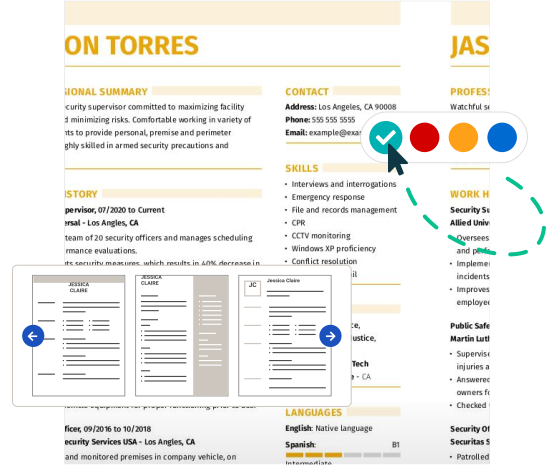
4. Use colors and design
Using color and design elements in your resume can significantly improve its effectiveness, showcasing your unique professional identity as a pilot. A well-designed resume not only stands out but also directs attention to your most important qualifications.
Begin by exploring various pre-made resume templates. Look for options that suit the aviation industry, and consider using the combination resume format, which highlights skills prominently alongside your flight experience.
Next, select a professional color scheme that reflects the seriousness of your profession. Opt for subtle colors like navy or deep grey, which can convey trustworthiness and competence. Use these colors to create visual breaks between sections or highlight headings.
Avoid bright or flashy colors that might distract from your achievements. Additionally, steer clear of any color associations with competitors or those that could compromise readability. Focus on presenting a clean and polished image that resonates with potential employers in aviation.
5. Keep your resume length to 1-2 pages
Most resumes should be limited to one page. This format ensures your resume is concise, focused, and easy to read for recruiters who often skim through resumes quickly. Highlight only the most relevant experiences and skills that align with the job you're applying for. Avoid redundancy by not repeating similar tasks in different roles.
In specific scenarios, extending your resume to two pages may be beneficial. This applies if you have extensive experience, especially when applying for senior roles or specialized positions where depth of experience is important.
Alternatively, academic or research-focused applications may require a CV instead of a traditional resume due to their comprehensive nature.
FAQ
Do I need to include a cover letter with my resume?
Writing a cover letter can significantly improve your job application, even if it's not explicitly required. It allows you to highlight key skills and experiences that may catch the employer's attention. By providing additional context about your qualifications, you increase your chances of standing out among job seekers.
If you're unsure where to begin, our collection of cover letter examples can help spark ideas tailored to various industries. Once you feel inspired, use our Cover Letter Builder for an easy, step-by-step approach to crafting your document.
What is the best resume format?
Selecting the appropriate resume format depends on your career stage and what aspects you wish to emphasize. The three primary formats are chronological, functional, and combination, each catering to different needs for diverse job seekers.
The chronological format is well-suited for individuals with substantial experience, highlighting a clear work history. On the other hand, the functional format targets skills and qualifications, making it an excellent choice for recent graduates or those transitioning into new careers.
Lastly, the combination format benefits mid-level professionals or career changers by mixing both skills and experience.
How long should my pilot resume be?
As a pilot, your resume should ideally be one page long, especially if you have less than a decade of flight experience. Aviation recruiters often sift through many resumes quickly, so a concise document helps highlight your essential qualifications.
Emphasize your flying hours, certifications, and relevant experience. Focus on recent flights and specific aircraft types that align with the job you’re targeting. Remove outdated skills or irrelevant work history to maintain clarity.
A two-page resume may be warranted for senior pilots with extensive experience or specialized licenses, especially when applying for captain positions or roles requiring advanced qualifications. In these instances, the added detail can showcase your expertise.
What’s the difference between a resume and a CV?
A resume is typically a concise, one-page document summarizing your key skills and experience relevant to the specific job you’re applying for.
In contrast, a CV (Curriculum Vitae) is more comprehensive, often spanning two to six pages. It encompasses a complete overview of your academic background, work history, publications, presentations, and other professional achievements. CVs are primarily used in academia, research positions, and when applying internationally.
To better understand these differences and how to write a CV, consider looking at CV examples tailored to your field.
Build a custom resume in minutes with our professional templates and expert tips.
Gabriela Hernandez
CPRW, Career WriterGabriela is a Certified Professional Resume Writer (CPRW) and member of the Professional Association of Resume Writers & Career Coaches and has worked in the career industry for more than four years providing comprehensive guidance on resume writing and job search strategies for individuals across diverse career paths. She holds a bachelor's in journalism and is passionate about helping job seekers present their professional story effectively through well-crafted resumes and cover letters that demonstrate their value, skills, and experience to potential employers. Some of her work has been featured on JobHero’s resume examples career center.
More Resources


By Gabriela Barcenas | CPRW, Career Writer


By Natalia Merced | CPRW, Career Writer



By Gabriela Barcenas | CPRW, Career Writer