-
-
Sort through our administrative resume examples to see what works best for you.
-
Our sales resume examples can help you write the best possible resume.
-
Explore our food service resume examples to show your skills effectively.
-
Start crafting your job-winning resume with our teaching resume examples.
-
-
-
Use our administrative cover letter examples for ideas on writing your own.
-
Use our sales cover letter examples to effectively show your sales accumen.
-
Write your job-winning cover letter following our nursing cover letter examples.
-
Learn to tell your story in education using our teaching cover letter examples.
-





- Our customers have been hired by*


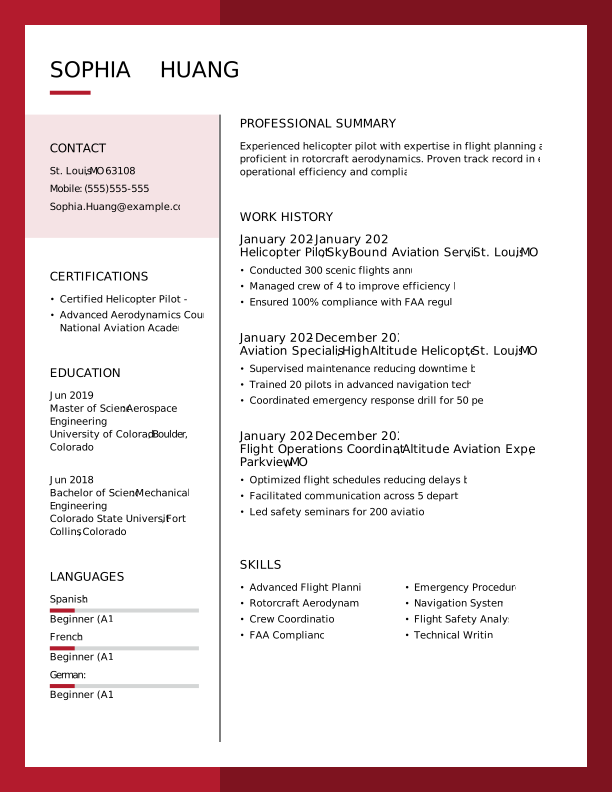
Entry-Level Helicopter Pilot Resume
This resume example showcases the practical experience and essential skills of career changers, making it an ideal fit for those transitioning into helicopter pilot roles.

Why this resume works:
A strong academic foundation shows the candidate is well-prepared to transition into this role.

Mid-Career Helicopter Pilot Resume
This helicopter pilot resume showcases extensive experience in flight operations and safety, making it ideal for professionals aiming to specialize further or advance into leadership roles.
Why this resume works:
This applicant highlights a track record of improving outcomes across multiple settings.

Experienced Helicopter Pilot Resume
This helicopter pilot resume is perfect for experienced aviators looking to elevate their careers into senior flight operations or training roles.
Why this resume works:
Leadership roles and advanced certifications underscore the ability to manage complex scenarios.

Looking for something else?
Create Your Standout Resume Today
Use our resume examples for inspiration on organization, color, and design—and learn how to summarize your helicopter pilot skills and experience with confidence.
How to Write a Helicopter Pilot Resume
Learning how to write a resume is important for showcasing your unique value as a helicopter pilot, rather than merely listing your flight hours and certifications. By emphasizing your experiences and skills, you can create a narrative that stands out in the aviation industry.
In the upcoming sections, we will offer step-by-step guidance with useful resume tips specifically for helicopter pilots. You’ll discover essential advice on structuring your resume and highlighting key achievements that align with job requirements.
Start with your contact info
The header section contains all your contact information, prominently displayed at the top of your resume. Start with your name in a bold, larger font to grab attention immediately. You may also opt for a unique font style or subtle color variations to ensure it stands out against the rest of your resume.
Next, include essential contact details such as your email address, phone number, and location; city and state will suffice. This information is vital for recruiters to reach you quickly and for applicant tracking systems to parse your resume based on location preferences.
Lastly, consider adding links to relevant certifications, such as flight training or aviation safety courses, as well as a personal website showcasing your flying experience or portfolio, if applicable. These additions can improve your application by providing deeper insights into your qualifications and expertise as a helicopter pilot, setting you apart from other applicants.
Write a strong professional summary
A professional summary is a brief overview that appears at the top of your helicopter pilot resume, right after your contact information. It serves as an introduction to who you are and what you bring to the table.
In this section, highlight your key qualifications, relevant skills, and passion for flying. Customizing your summary for each application is important as it helps demonstrate how you are a perfect fit for the specific role and company.
Consider looking at various resume summary examples tailored for helicopter pilots to inspire your own writing. These can provide clarity on structure and content, showcasing your strengths.
Strong vs weak helicopter pilot summary
Strong

"Experienced helicopter pilot with over eight years of flying in diverse environments, including search and rescue missions and aerial firefighting. Demonstrates exceptional skills in navigation, safety protocols, and flight operations under challenging conditions. Holds FAA commercial pilot certification with instrument rating and consistently achieves mission objectives while improving crew coordination. Commended for quick decision-making and adaptability."
Why this example works: This summary highlights the applicant's extensive experience, quantifiable achievements such as successful mission objectives, essential skills like navigation and safety protocols, and incorporates relevant keywords found in aviation job descriptions.
Weak

"Helicopter pilot seeking opportunities to use flying skills and contribute to aviation. I have some experience in flying helicopters and enjoy working with teams."
Why this example doesn't work: This summary is vague and lacks specific details about the pilot's qualifications, flight hours, or specialized training relevant to helicopter operations.

Craft a personal mission statement as a helicopter pilot by emphasizing your commitment to safety and teamwork. Align these values with those of your potential employer, showcasing how your dedication improves operational excellence beyond just flying skills.
Share your work history
Your work history is, arguably, the central and most important part of your resume. List your most recent roles in reverse chronological order. If you’ve held numerous positions, select the ones most relevant to the job you’re applying for.
When listing your work history, focus on:
- Job title and company name
- Dates of employment (month and year)
- Key responsibilities (What did you do on a daily basis?)
- Achievements and contributions (What did you accomplish? Did you improve processes, reduce costs, or increase efficiency?)
- Measurable results (Use numbers when possible, such as "reduced patient wait times by 15%.")
Finally, when describing your achievements, use action verbs to bring your work history to life.
Strong vs weak helicopter pilot work history
Strong
Helicopter Pilot, Air Rescue Inc.
2018–2023
- Completed over 500 rescue missions, reducing response time by 20% through efficient flight planning.
- Maintained a flawless safety record by implementing advanced navigational techniques in adverse weather conditions.
- Mentored a team of five junior pilots, improving their operational skills and achieving full skill within six months.
Why this example works: This work history section details key responsibilities and achievements, demonstrating expertise in piloting and leadership, and includes specific numbers that illustrate success and technical skills.
Weak
Helicopter Pilot
Sky Aviation
- Flew helicopters and maintained logs.
- Assisted with flights.
Why this example doesn't work: This work experience entry is ineffective due to its lack of detail about the type of flying performed, absence of employment dates, and vague descriptions of tasks.
Add your resume to LinkedIn to elevate your visibility in the aviation industry. Highlight your flying hours, certifications, and specialized training in the summary section, and actively engage in aviation groups to connect with potential employers and fellow pilots.
Highlight your key skills
The skills section of your resume is vital for demonstrating your competencies as a helicopter pilot. Here's a rundown of essential skills and their significance in improving your application:
- Soft skills are personal attributes that highlight how you collaborate with others, including communication, decision-making, and adaptability. For helicopter pilots, skills such as teamwork and situational awareness are important because they ensure safety during flights and enable effective coordination with crew members.
- Hard skills for a helicopter pilot are specialized abilities acquired through rigorous training and experience. Examples include flight navigation, emergency procedures, weather interpretation, and aircraft maintenance.
- Having strong technical skills is essential for a helicopter pilot, including expertise with flight management systems, navigation software, and communication equipment. Relevant tools include the Garmin G1000 avionics suite, ForeFlight mobile app for flight planning, and digital transceivers like the BendixKing KX 155.
For new helicopter pilots, place your skills section near the top of your resume to highlight your training and relevant abilities. Experienced pilots should position their skills after their work history, allowing their extensive flight experience to showcase their competencies.
Top 15 skills for your helicopter pilot resume
When creating your resume as a helicopter pilot, it's important to highlight skills that align with the demands of the role. Focus on a mix of technical skills like navigation and aircraft systems knowledge, along with soft skills such as teamwork and communication. Including transferable skills can also demonstrate your adaptability in various aviation-related positions.
Here’s a list of the top 15 skills for helicopter pilots, based on insights from JobHero users. These skills are essential for success in this field and can help you stand out when applying for piloting roles.
Build your education section
The significance of the education section varies by experience and industry. Seasoned helicopter pilots should prioritize their extensive flight hours and operational expertise over educational qualifications. If your experience is robust, consider placing the education section lower on your resume, or omit it entirely if it's not required.
Conversely, for recent graduates or those transitioning into specialized aviation roles, education plays an important role in showcasing qualifications. In this case, position the education section prominently at the top of your resume and include any relevant training, certifications, or flight school accomplishments.
Additionally, pilots entering niche areas such as medical evacuation may benefit from highlighting specific coursework related to emergency procedures or safety protocols. Tailoring your resume to emphasize relevant educational details can improve your appeal to potential employers in these competitive fields.
20 action verbs to add to your resume
Using action verbs in your resume as a helicopter pilot improves the clarity of your experience and creates a dynamic tone. These verbs convey your achievements, making your qualifications stand out to potential employers.
Selecting action verbs that resonate with the skills highlighted in job postings for aviation roles is important. This alignment ensures that your resume captures the attention of hiring managers by showcasing relevant competencies.
- Piloted
- Navigated
- Conducted
- Executed
- Supervised
- Coordinated
- Communicated
- Analyzed
- Maintained
- Inspected
- Trained
- Collaborated
- Responded
- Assisted
- Managed
- Supported
- Advised
- Mapped
- Reviewed
- Documented
Consider additional resume sections
While your core resume provides the most critical information, adding targeted sections can showcase your unique qualifications. These sections help hiring managers quickly identify your flight experience, certifications, and accomplishments beyond standard resume sections.
Here are optional sections we tend to see on helicopter pilot resumes:
- Flight experience: Detail the types of helicopters flown, total flight hours, and specific missions completed (search and rescue, medical transport, etc.).
- Licenses and certifications: List your pilot licenses (private, commercial) and any additional certifications like instrument rating or night vision goggle training.
- Training programs: Highlight specialized training you have undergone such as advanced maneuvering or safety protocols that showcases your skills.
- Safety records: Include any achievements in maintaining a clean safety record or awards for exemplary flying.
- Professional affiliations: Mention memberships in aviation organizations that reflect your commitment to the field.
5 Tips for Formatting Your Resume
Proper resume formatting is important for job seekers aiming to catch the eye of recruiters. Using ATS-friendly resume templates not only improves engagement but also ensures your application passes through automated filters.
1. Space your lines and margins
Proper spacing helps your resume look clean and organized, making it easier for hiring managers to read. It's important to strike a balance between providing enough space and maximizing content.
- Keep margins between 0.5" to 1.0" to allow for clear borders.
- Use single spacing between paragraphs and bullet points for readability.
- Increase the space to 1.5" or double-space between sections to separate distinct areas of your resume.
2. Use a professional font
Choosing the best resume font is important as it affects readability and first impressions. Consider these professional fonts:
- Helvetica
- Garamond
- Verdana
- Cambria
- Trebuchet MS
- Book Antiqua
Consider using a slightly bolder or larger font for your name at the top to draw attention and convey confidence.
3. Organize your resume sections
A resume for a helicopter pilot should be scannable and direct. Use bullet points to outline your flying experience, certifications, and key accomplishments clearly. Start each point with a strong action verb. For example, "Executed over 1,000 flight hours in diverse weather conditions," highlights your experience while showcasing reliability.
Emphasize measurable achievements that reflect your skills. For instance, "Conducted search and rescue missions that resulted in a 90% success rate in locating individuals," demonstrates your capability and effectiveness in critical situations.
To ensure your resume is ATS-friendly, use an ATS resume checker. This tool can help identify any formatting issues or missing keywords relevant to the aviation industry, ensuring your resume passes through automated systems seamlessly.
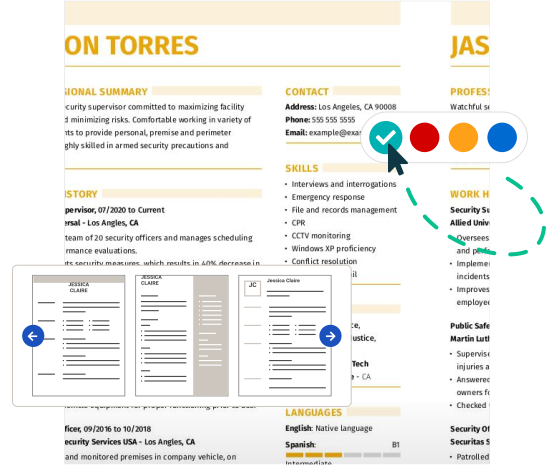
4. Use colors and design
Adding color and design elements to your resume can significantly improve its visual appeal and effectiveness. A well-designed resume not only attracts attention but also directs the reader's focus to essential details about your qualifications.
Begin by selecting a suitable resume template that aligns with your desired layout. The combination resume format is particularly useful as it features a dedicated area for skills, often highlighted with color alongside your experience.
Next, carefully choose your color scheme. Opt for professional shades such as deep blue or dark green, which convey reliability and competence. These colors can be used in headings or section dividers without overwhelming the content.
Avoid using bright or neon colors that may distract from the information presented. Additionally, make sure to steer clear of any colors associated with competitors or those that could reduce legibility. A thoughtful approach to color will help create a polished and memorable resume that stands out in a competitive field.
5. Keep your resume length to 1-2 pages
Resumes should typically be one page long. This format allows you to present your experience clearly and concisely. Most recruiters only spend a few seconds reviewing each resume, making brevity essential for capturing their attention.
Focus on including the most relevant positions and accomplishments that align with the job you're targeting. Avoid listing repetitive tasks across different roles, as this can dilute your impact.
There are instances where a two-page resume is appropriate. For example, if you have extensive experience in aviation or are applying for senior-level positions, more detail may be warranted to showcase your expertise fully.
In specialized fields like academia, consider using a CV instead of a traditional resume, as it allows for a comprehensive overview of your qualifications and contributions.
FAQ
Do I need to include a cover letter with my resume?
Even if a cover letter isn’t required, writing a cover letter can significantly improve your application. It allows you to convey your enthusiasm and provide a deeper insight into your skills and experiences. This extra touch can help you stand out from other applicants.
If you're unsure where to begin, check out our collection of cover letter examples for inspiration that suit various roles. Once you're ready to create your own, use our Cover Letter Builder, which offers easy-to-follow steps to guide you in crafting an effective letter.
What is the best resume format?
Choosing the right resume format is essential and depends on your specific circumstances. The three main formats are chronological, functional, and combination, each serving unique purposes suited to different job seekers.
The chronological format highlights work history and is ideal for those with extensive experience. The functional format emphasizes skills and education, making it perfect for newcomers or those shifting careers.
Lastly, the combination format merges both approaches, which works well for mid-level applicants or individuals looking to transition between industries.
How long should my helicopter pilot resume be?
As a helicopter pilot, your resume should ideally be one page unless you have extensive experience. Aviation recruiters often skim through resumes quickly, so a concise and well-structured format helps spotlight your key qualifications.
Highlight relevant flying hours, certifications, and specialized skills. Focus on recent roles and flights that align closely with the job you're targeting. Remove outdated equipment knowledge or unrelated experiences.
Consider expanding to two pages only if you’re highly experienced or seeking senior positions like chief pilot or instructor. Your broad expertise and accomplishments may warrant the added detail in these cases.
How far back should my work history go?
When updating your resume, aim to include work experience from the last 10 years. This guideline helps keep your application focused and relevant.
If you have significant experience or multiple roles related to helicopter piloting, feel free to exclude older positions that don’t contribute to your current career objectives. Highlighting recent and relevant experiences will strengthen your candidacy for flying jobs.
Build a custom resume in minutes with our professional templates and expert tips.
Gabriela Hernandez
CPRW, Career WriterGabriela is a Certified Professional Resume Writer (CPRW) and member of the Professional Association of Resume Writers & Career Coaches and has worked in the career industry for more than four years providing comprehensive guidance on resume writing and job search strategies for individuals across diverse career paths. She holds a bachelor's in journalism and is passionate about helping job seekers present their professional story effectively through well-crafted resumes and cover letters that demonstrate their value, skills, and experience to potential employers. Some of her work has been featured on JobHero’s resume examples career center.
More Resources


By Gabriela Barcenas | CPRW, Career Writer


By Natalia Merced | CPRW, Career Writer



By Gabriela Barcenas | CPRW, Career Writer