-
-
Sort through our administrative resume examples to see what works best for you.
-
Our sales resume examples can help you write the best possible resume.
-
Explore our food service resume examples to show your skills effectively.
-
Start crafting your job-winning resume with our teaching resume examples.
-
-
-
Use our administrative cover letter examples for ideas on writing your own.
-
Use our sales cover letter examples to effectively show your sales accumen.
-
Write your job-winning cover letter following our nursing cover letter examples.
-
Learn to tell your story in education using our teaching cover letter examples.
-





- Our customers have been hired by*


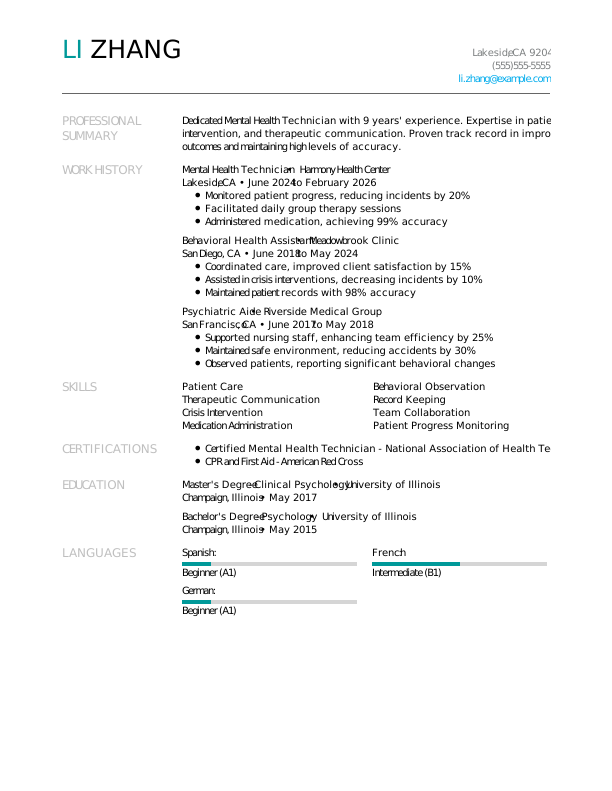
Entry-Level Mental Health Technician Resume
This resume example highlights relevant skills and experience, making it suitable for recent graduates and career changers looking to make a meaningful impact in mental health care.

Why this resume works:
A skills-focused resume format is beneficial for individuals new to the field, returning after a break, or transitioning careers.

Mid-Career Mental Health Technician Resume
This mental health technician resume is ideal for professionals with experience in patient care and team leadership, aiming to advance into specialized roles in mental health services.
Why this resume works:
This applicant highlights a track record of improving outcomes across multiple settings.

Experienced Mental Health Technician Resume
This mental health technician resume showcases extensive experience and proven results, making it perfect for professionals ready to advance into leadership roles.
Why this resume works:
Leadership roles and advanced certifications underscore the ability to manage complex scenarios.

Looking for something else?
Create Your Standout Resume Today
Use our resume examples for inspiration on organization, color, and design—and learn how to effectively summarize your mental health technician skills and experience with confidence.
How to Write a Mental Health Technician Resume
Understanding how to write a resume is essential in highlighting your unique value as a mental health technician, allowing you to present more than your credentials and truly stand out in the healthcare field.
Below, you'll find step-by-step guidance on crafting your resume, covering everything from personal details to professional experience along with additional resume tips that will help you build a compelling profile for potential employers.
Start with your contact info
The header section contains all your contact information and should be prominently displayed at the top of your resume. Start by placing your name in a bold, larger font to ensure it captures attention immediately. This is important for recruiters who quickly scan through numerous applications.
Include key details such as your email address, phone number, and general location. While a full address isn’t necessary, providing your city, state, and ZIP code helps confirm your suitability for the job and aids applicant tracking systems (ATS) in processing your application effectively.
Consider adding links to relevant certifications or an online portfolio if they can improve your application. Depending on the role of a mental health technician, showcasing additional training or resources can demonstrate your qualifications and commitment to the field, potentially differentiating you from other applicants.
Write a strong professional summary
A professional summary is a brief introduction that appears right after your contact information on your resume. It serves as the first impression for recruiters, highlighting your key qualifications and career objectives.
In this summary, include relevant skills and experiences tailored to the mental health technician role. Customizing this section shows employers how you fit their specific needs and increases your chances of standing out among applicants.
You can find numerous resume summary examples online that can guide you in crafting a compelling narrative. These resources provide insight into effective structures and content that resonate with hiring managers.
Strong vs weak mental health technician summary
Strong

"Dedicated mental health technician with over four years of experience supporting patients in acute care settings. Proven ability to de-escalate crises and implement therapeutic interventions that improve patient stability and well-being. Skilled in monitoring vital signs, documenting patient progress, and collaborating with interdisciplinary teams to improve treatment plans. Certified in CPR and First Aid. Recognized for commitment to creating a supportive environment that fosters recovery."
Why this example works: This summary effectively portrays the applicant’s experience, highlights significant accomplishments, emphasizes relevant skills such as crisis intervention and teamwork, and incorporates keywords relevant to mental health positions.
Weak

"Mental health technician seeking a position to help individuals with their mental health needs. I have some experience in the field and enjoy working with people."
Why this example doesn't work: This summary is weak because it uses vague language and fails to detail specific skills, experience, or measurable contributions relevant to the role of a mental health technician.

Highlight interpersonal skills like empathy and teamwork by showcasing instances where these skills improved patient interactions or collaboration with colleagues. Sharing specific examples from past situations illustrates your ability to foster a supportive environment, essential for effective care in mental health settings.
Share your work history
Your work history is, arguably, the central and most important part of your resume. List your most recent roles in reverse-chronological order. This format allows employers to quickly see your latest experiences and understand your career trajectory.
When listing your work history, focus on:
- Job title and facility name
- Dates of employment (month and year)
- Daily responsibilities (What tasks did you perform regularly?)
- Significant contributions (What positive changes did you implement?)
- Quantifiable achievements (For instance, "reduced incident reports by 30%.")
Finally, be sure to use dynamic action verbs to effectively convey your accomplishments.
Strong vs weak mental health technician work history
Strong
Mental Health Technician, Caring Hands Mental Health Center
2018–2023
- Monitored the well-being of 30+ patients in a residential facility, leading to a 25% decrease in incident reports.
- Implemented therapeutic activities that improved patient engagement scores by 40%.
- Collaborated with multidisciplinary teams to develop individualized care plans, improving treatment effectiveness for each patient.
Why this example works: A strong work history vividly details your contributions and achievements, showcasing specific metrics and successes. This not only highlights your technical skills but also illustrates your ability to lead and make a positive impact in mental health settings.
Weak
Mental Health Technician
Willow Creek Hospital
- Monitored patients and helped with daily activities.
- Documented observations and assisted staff.
Why this example doesn't work: This work experience entry is ineffective as it lacks specificity regarding the type of mental health care provided, does not include dates of employment, and presents vague descriptions that could apply to various roles.
Add your resume to LinkedIn to improve your visibility in the mental health field. Incorporate specific keywords related to mental health technician roles into your profile, and engage with industry-related content to connect with recruiters seeking professionals who can make a difference in patient care.
Highlight your key skills
The skills section of your resume is essential for demonstrating your qualifications as a mental health technician. Here's a rundown of key skill areas and their significance in improving your candidacy:
- Soft skills are personal attributes that demonstrate how you engage with others—such as empathy, active listening, and teamwork. For mental health technicians, skills like crisis intervention and emotional support are important as they help build trust with patients and contribute to a positive therapeutic environment.
- Hard skills are specialized abilities acquired through training, education, or hands-on experience in the field of mental health. For a mental health technician, examples include crisis intervention techniques, behavioral assessment, therapeutic communication, and knowledge of psychiatric medications.
- Having technical skills is important for a mental health technician. This includes skill in electronic health record systems like Cerner and Meditech, along with familiarity with telehealth platforms such as Doxy.me. Also, knowledge of crisis intervention tools and therapeutic software plays an important role in patient care.
If you're starting out as a mental health technician, place your skills section near the top of your resume to highlight your qualifications. For those with more experience, position it after your work history to showcase how your background supports your expertise.
Top 15 skills for your mental health technician resume
When crafting your resume as a mental health technician, it’s essential to showcase skills that align with the needs of the role. Highlight a mix of soft, hard, and technical skills that reflect your qualifications. Don’t forget to include transferable skills that can be beneficial across different roles in healthcare.
Below is a list of the top 15 most popular skills for mental health technicians. This selection is based on insights from JobHero users who are creating effective resumes in this field.
Build your education section
The education section of your resume should reflect your experience level and the expectations of the mental health field. For seasoned professionals, it's often best to minimize this section. If you have significant work history, consider placing your education towards the bottom of your resume or omitting it altogether unless specific credentials are mandated for your role.
Conversely, recent graduates or those transitioning into specialized areas should prioritize their educational background. Position this section prominently at the top of the resume and include relevant details such as degrees earned, relevant coursework, and any certifications obtained during training.
Highlighting educational achievements can set applicants apart in a competitive job market. This approach emphasizes commitment to professional growth and can demonstrate foundational knowledge critical for success in a mental health technician role.
20 action verbs to add to your resume
Using action verbs in your resume significantly improves how you communicate experience, making it more powerful and engaging. These verbs convey your responsibilities and achievements, creating a strong impression on potential employers.
When crafting your resume, prioritize action verbs that align with the specific skills highlighted in mental health technician job postings. This targeted approach ensures your qualifications resonate with hiring managers.
- Facilitated
- Supported
- Guided
- Encouraged
- Analyzed
- Resolved
- Trained
- Oversaw
- Promoted
- Integrated
- Improved
- Assured
- Intervened
- Engaged
- Created
- Implemented
- Reviewed
- Sustained
- Advised
- Collaborated
Consider additional resume sections
While your core resume provides the most critical information, adding targeted sections can showcase your unique qualifications. These sections help hiring managers quickly identify your clinical expertise, certifications, and achievements beyond standard resume sections.
Here are optional sections we tend to see on mental health technician resumes:
- Specialized training: Detail any specific training in crisis intervention, behavioral therapies, or psychiatric care that improves your skill set.
- Certifications: Include relevant certifications such as CPR/First Aid or Mental Health First Aid that demonstrate your preparedness for the role.
- Work experience highlights: Summarize effective experiences where you've successfully assisted patients during treatment or rehabilitation.
- Patient interaction skills: Showcase skills like conflict resolution, communication strategies, and patient rapport-building that are important in this role.
- Professional affiliations: Mention memberships in organizations like the National Alliance on Mental Illness (NAMI) to demonstrate commitment to mental health advocacy.
5 Tips for Formatting Your Resume
Proper resume formatting is essential for job seekers, as it not only helps attract the attention of recruiters but also aids in navigating ATS filters. Using ATS-friendly resume templates improves the overall presentation, ensuring that your qualifications are easily recognized and appreciated by hiring managers.
1. Watch your line spacing and margins
Proper spacing helps your resume look clean and organized, ensuring that hiring managers can easily navigate through your qualifications. A well-spaced resume not only improves readability but also creates a professional impression. Here's what works best:
- Keep margins between 0.5″ to 1.0″ for a balanced layout.
- Use single spacing between paragraphs and bullet points to maintain clarity.
- Increase the space to 1.5″ or double-space between sections for better separation.
2. Use a professional font
Choosing the right resume font is important because it affects readability and first impressions. Opt for professional fonts like:
- Arial
- Calibri
- Verdana
- Georgia
- Garamond
- Helvetica
Consider using a bolder or larger font for your name at the top to create a striking focal point.
3. Organize your resume sections
A resume should be clear and easy to read. One of the best ways to achieve this is by using bullet points, breaking down your previous roles into specific tasks rather than lengthy paragraphs.
Begin each bullet point with a strong action verb that emphasizes your key responsibilities and accomplishments. For example, you might say "Facilitated group therapy sessions that improved patient engagement by 30%." Highlighting measurable outcomes demonstrates your impact in previous positions.
To ensure compatibility with applicant tracking systems, use an ATS resume checker. This tool can help verify that your formatting and keywords align with what employers seek in mental health technicians today.
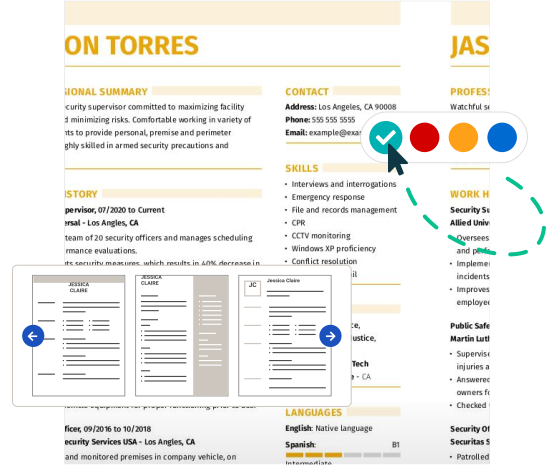
4. Use colors and design
Crafting a visually appealing resume is important for mental health technicians seeking to impress potential employers. Thoughtful use of color and design can make your resume stand out while highlighting key attributes.
Begin by exploring various templates, focusing on those that organize information clearly. The combination resume format is ideal, as it showcases your skills alongside work experience, using design elements like colored columns to draw attention.
Choosing a professional color scheme is essential. Opt for muted tones such as gray or olive green, ensuring that the colors complement each other and improve readability. These shades can be used creatively in headers or section breaks without overwhelming the content.
Avoid overly bright colors that may distract from your qualifications or hinder visibility. Additionally, steer clear of any hues associated with competing organizations to maintain neutrality and professionalism.
Remember, the goal is to create a resume that not only communicates your qualifications but also reflects your dedication and attention to detail as an applicant in the mental health field. An aesthetically pleasing resume will resonate well with employers and set you apart from others in the application process.
5. Keep your resume length to 1-2 pages
Resumes should typically be one page long. This length ensures clarity and keeps the reader engaged, as recruiters often spend only seconds reviewing each resume. Highlight your most relevant experiences and skills to make a strong impression quickly. Focus on positions that align closely with the job you’re applying for and avoid listing similar responsibilities multiple times.
In some situations, extending your resume to two pages may be necessary. For instance, applicants with extensive experience applying for senior-level roles might need additional space to showcase their achievements effectively. Similarly, if you're pursuing academic or research positions, a curriculum vitae (CV) is often preferred due to its comprehensive nature. Always tailor your document to suit the expectations of your industry and role.
FAQ
Do I need to include a cover letter with my resume?
Writing a cover letter can significantly improve your job application, even if it's not mandatory. It allows you to provide deeper insights into your experiences and showcase your personality, making you more memorable to employers. Additionally, it sets the stage for why you're an excellent fit for the position.
To get inspired, explore our collection of cover letter examples that cater to various roles and industries. When you're ready to craft your own, use our Cover Letter Builder for a guided approach that simplifies the process and helps ensure your message shines through.
What is the best resume format?
Choosing the right resume format depends on your individual needs and career stage. The three main formats are chronological, functional, and combination. Each serves a different purpose for various job seekers.
The chronological format is ideal for individuals with extensive experience as it emphasizes work history. The functional format focuses on skills and education, making it suitable for those new to the workforce. Finally, the combination format mixes both work experience and skills, benefiting mid-level job seekers or those transitioning to a new industry.
How long should my Mental Health Technician resume be?
For mental health technician resumes, aim for a single page. Recruiters in the healthcare field often sift through many applications quickly. A concise one-page format highlights your key qualifications and experiences effectively.
Focus on relevant experience in patient care settings, certifications, and skills specific to mental health support. Highlight recent roles or internships that demonstrate your capabilities related to the position. Remove outdated skills or excessive details about non-relevant jobs to keep your resume streamlined.
A two-page resume may be suitable if you have extensive experience or specialized training, particularly when applying for advanced roles like lead technician or program coordinator. In these cases, additional details about your achievements can improve your application.
Should I use the same resume for every job?
It's important for job seekers to customize their resumes for each application. A one-size-fits-all approach often falls flat. Tailoring your resume allows you to spotlight the skills and experiences that align directly with the job requirements.
Use specific keywords from the job posting to improve your chances of passing through ATS that many companies employ. Focus on adjusting your summary and emphasizing relevant achievements that showcase your fit for the role. Even minor modifications can make a significant difference in capturing a hiring manager's attention, so take the time to adapt your resume for every opportunity.
Build a custom resume in minutes with our professional templates and expert tips.
More Resources

By Gabriela Barcenas | CPRW, Career Writer


By Natalia Merced | CPRW, Career Writer

By Natalia Merced | CPRW, Career Writer

By Natalia Merced | CPRW, Career Writer

By Gabriela Barcenas | CPRW, Career Writer