-
-
Sort through our administrative resume examples to see what works best for you.
-
Our sales resume examples can help you write the best possible resume.
-
Explore our food service resume examples to show your skills effectively.
-
Start crafting your job-winning resume with our teaching resume examples.
-
-
-
Use our administrative cover letter examples for ideas on writing your own.
-
Use our sales cover letter examples to effectively show your sales accumen.
-
Write your job-winning cover letter following our nursing cover letter examples.
-
Learn to tell your story in education using our teaching cover letter examples.
-





- Our customers have been hired by*


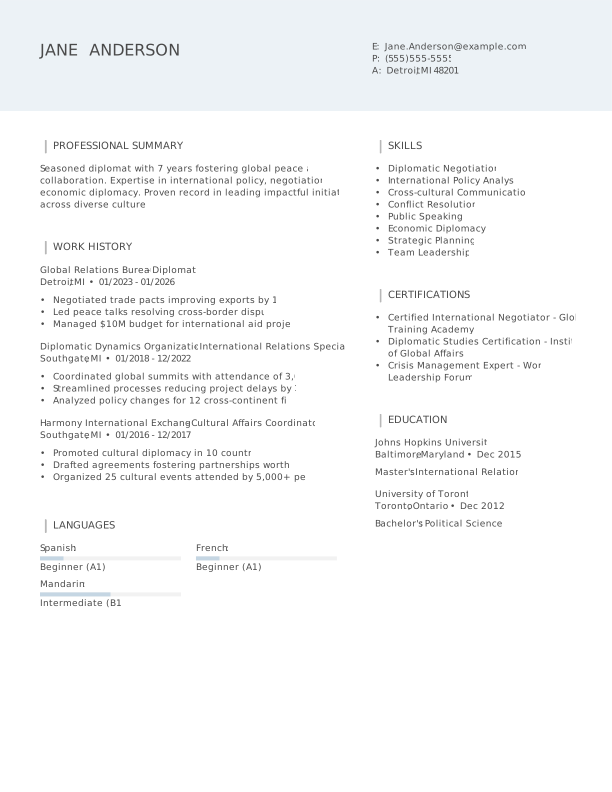
Entry-Level Diplomat Resume
This resume example effectively shows the diplomatic experience and strategic skills of career changers, making it an ideal choice for those transitioning into the field of international relations.

Why this resume works:
Highlights skills like negotiation and cross-cultural communication, emphasizing abilities over experience gaps.

Mid-Career Diplomat Resume
This diplomat resume example is ideal for professionals with a solid foundation in international relations, looking to leverage their experience into effective diplomatic roles that foster global cooperation.
Why this resume works:
This applicant highlights a track record of improving outcomes across multiple settings.

Experienced Diplomat Resume
This diplomat resume example is perfect for experienced professionals seeking to elevate their careers in international relations and leadership roles.
Why this resume works:
Leadership roles and advanced certifications underscore the ability to manage complex scenarios.

Looking for something else?
Create Your Standout Resume Today
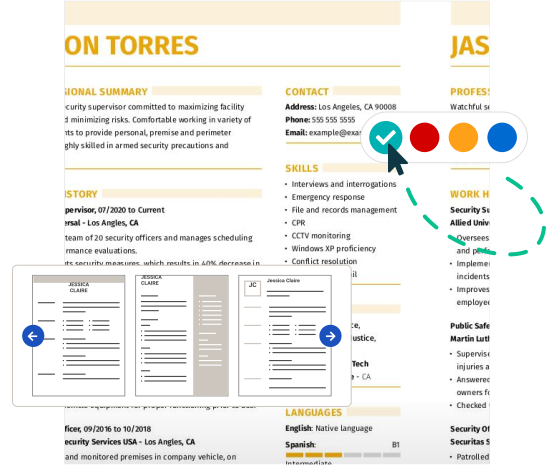
Use our resume examples for inspiration on organization, color, and design—and learn how to effectively summarize your diplomat skills and experience with confidence.
How to Write a Diplomat Resume
Mastering how to write a resume is important for a diplomat, as it allows you to highlight your unique value and experiences beyond mere credentials. Focusing on your skills in negotiation, cultural understanding, and international relations can set you apart from other applicants.
In the upcoming sections, we will guide you step-by-step through the resume creation process. You’ll discover essential resume tips and strategies to effectively showcase your qualifications and achievements in diplomacy.
Start with your contact info
The header section contains all your contact information, prominently displayed at the top of your resume. Start with your name in a bold, larger font to ensure it stands out to recruiters. You may also consider using a clean and professional design that reflects the diplomatic nature of the role, ensuring clarity and readability.
Next, include essential contact details such as your email address, phone number, and city and state. This information is vital for potential employers to reach you quickly regarding interviews or job opportunities. Including geographic details can also help them determine if you are suitable for specific positions based on location.
Lastly, adding links to relevant certifications or language proficiencies can improve your application. If applicable, providing a link to an online portfolio showcasing your work in diplomacy or international relations can further demonstrate your qualifications and unique experiences relevant to the role of a diplomat.
Write a strong professional summary
A professional summary serves as your introduction on a diplomat resume, located just below your contact details. This section is important as it establishes an immediate connection with recruiters and highlights your unique qualifications.
In crafting your summary, focus on showcasing key skills, relevant experiences, and genuine enthusiasm for the diplomatic role you seek. Customizing this section to align with each specific position is essential for standing out among job seekers.
To find inspiration, look at various resume summary examples that can guide you in structuring your own effectively. These resources will help ensure clarity and relevance in presenting yourself as a strong job seeker for any diplomatic opportunity.
Strong vs weak diplomat summary
Strong

"Strategic diplomat with over eight years of experience in international relations and conflict resolution. Proven track record in negotiating treaties and fostering partnerships that improve bilateral cooperation. Skilled in cultural diplomacy, public speaking, and policy analysis, holding a Master’s degree in International Relations. Recognized for effectively representing national interests on global platforms."
Why this example works: This summary concisely describes the job seeker’s extensive experience, highlights measurable achievements such as treaty negotiations, emphasizes essential skills relevant to diplomacy, and incorporates keywords commonly found in diplomatic job descriptions.
Weak

"Diplomat seeking opportunities to use communication and negotiation skills. I have experience in international relations and enjoy working with diverse cultures."
Why this example doesn't work: This professional summary is vague and lacks specific achievements, capabilities, or technical skills that would demonstrate the diplomat's effectiveness in their role.

Highlight your interpersonal skills on a diplomat resume by showcasing abilities like negotiation and cultural sensitivity. Provide specific examples of successful interactions or agreements that illustrate how you navigated complex relationships effectively in diverse settings.
Share your work history
Listing your work experience in reverse chronological order is important for showcasing your most recent and relevant roles first. This structure allows potential employers to quickly assess your career trajectory and understand the skills you’ve acquired over time. It also ensures that your latest accomplishments are front and center, making a strong impression.
When listing your work history, focus on:
- Job title and organization name
- Employment dates (month and year)
- Key responsibilities (What were your daily tasks?)
- Achievements and contributions (What impact did you have?)
- Quantifiable results (For example, "increased diplomatic relations by 30%.")
Finally, use powerful action verbs to improve the descriptions of your experiences.
Strong vs weak diplomat work history
Strong
Diplomat, Ministry of Foreign Affairs
2018–2023
- Negotiated bilateral agreements with four countries, improving trade relations by 25%.
- Facilitated over 30 international conferences, promoting dialogue on global security issues.
- Mentored junior diplomats, resulting in three promotions within the team during my tenure.
Why this example works: A strong work history for a diplomat highlights specific achievements that showcase negotiation skills and international relations expertise. It emphasizes quantifiable outcomes and leadership roles that reflect both strategic thinking and effective communication.
Weak
Diplomat
International Relations Office
- Attended meetings and wrote reports.
- Communicated with various officials.
Why this example doesn't work: This entry is ineffective due to its vague descriptions, lacking specific details about the type of diplomacy practiced or the issues addressed.
For diplomats with over 10 years of experience, a chronological resume format is ideal. It highlights your career trajectory effectively, showcasing significant roles and responsibilities in international relations. This approach allows potential employers to easily see your growth and expertise in the field.
Highlight your key skills
The skills section of your resume is key to demonstrating your strengths as a diplomat. Here's a rundown of various skill types and their significance in improving your candidacy:
- Personal attributes like negotiation, cultural awareness, and active listening are examples of soft skills that demonstrate how you engage with others. These traits are important for diplomats as they foster effective communication and build trust in international relations, ultimately promoting peace and collaboration.
- Hard skills are specific competencies acquired through training, education, or hands-on experience. A diplomat, for example, benefits from negotiation techniques, cultural awareness, foreign language skill, and conflict resolution strategies.
- Technical skills essential for a diplomat include skill with international relations software, negotiation platforms, and data analysis tools. Examples of these are diplomatic communication platforms like DiplomaticWire and data visualization software such as Tableau, which help in presenting complex information clearly.
For diplomats just starting out, highlight your skills section near the top of your resume to showcase your abilities despite limited experience. If you have a robust background, position this section after your work history to let your experience speak for itself.
Top 15 skills for your diplomat resume
When putting together your resume as a diplomat, it's important to focus on skills that align with the demands of international relations. Highlight a mix of soft skills like negotiation and cultural sensitivity, along with hard skills such as policy analysis. Remember to include transferable skills that demonstrate your ability to adapt in diverse environments.
Below is a list of the 15 most valuable skills for diplomats, compiled from insights by JobHero users. These skills are essential for showcasing your qualifications and can help you stand out in the competitive field of diplomacy.
Build your education section
The education section of a diplomat's resume should reflect your experience level and the demands of the position. For seasoned diplomats with extensive work history, it’s advisable to minimize emphasis on education. Place this section lower on your resume or condense it to only highlight the most relevant degrees or certifications.
Conversely, for recent graduates or individuals entering specialized diplomatic fields, education can be a key asset. Highlight your degrees prominently at the top of your resume and include any relevant coursework, internships, or language proficiencies that demonstrate your readiness for the role.
It is essential to tailor this section based on job requirements and personal qualifications. Always prioritize clarity and relevance to ensure hiring managers quickly see why you are an excellent fit for their team.
20 action verbs to add to your resume
Resumes become more compelling when action verbs are employed, as they clearly convey duties and achievements, establishing a dynamic tone. For diplomats, selecting verbs like "negotiated," "facilitated," or "advocated" can vividly depict one's expertise.
Choosing action verbs that resonate with the diplomatic field and align with key skills in job postings is important for improving relevance and appeal to potential employers.
- Negotiated
- Facilitated
- Represented
- Mediated
- Resolved
- Engaged
- Analyzed
- Developed
- Strengthened
- Promoted
- Advocated
- Executed
- Directed
- Influenced
- Guided
- Led
- Improved
- Communicated
- Conveyed
- Consulted
Consider additional resume sections
While your core resume provides the most critical information, adding targeted sections can showcase your unique qualifications. These sections help hiring managers quickly identify your diplomatic skills, experiences, and accomplishments beyond standard resume sections.
Here are optional sections we tend to see on diplomat resumes:
- Languages: List languages you speak fluently, highlighting any relevant certifications or experiences in translation.
- Public speaking engagements: Include notable speeches or presentations you've given at conferences or international forums.
- Professional associations: Mention memberships with organizations related to international relations, such as the International Diplomatic Society.
5 Tips for Formatting Your Resume
Proper resume formatting is important for job seekers as it improves visual appeal and grabs recruiter attention. Using ATS-friendly resume templates can greatly boost your chances of passing automated screenings, ensuring your qualifications are noticed by potential employers.
1. Watch your line spacing and margins
Proper spacing helps your resume look clean and organized, making it easier for recruiters to scan through your qualifications. A well-spaced resume not only improves readability but also reflects professionalism. Here's what works best:
- Keep margins between 0.5″ to 1.0″ to create a neat border.
- Use single spacing between paragraphs and bullet points for clarity.
- Increase the space to 1.5″ or double-space between sections to differentiate them better.
2. Use a professional font
Selecting the right resume font is important as it influences first impressions and readability. Opt for these professional fonts:
- Helvetica
- Garamond
- Verdana
- Trebuchet MS
- Lucida Sans Unicode
- Book Antiqua
Consider using a slightly different or bolder font for your name at the top to improve visibility and personality.
3. Organize your resume sections
A diplomat's resume should be concise and powerful, with bullet points that effectively highlight your roles and achievements. Start each bullet with a strong action verb to emphasize your contributions. For example, "Negotiated trade agreements that increased exports by 15%," showcases both your negotiation skills and tangible results.
Measurable accomplishments are key in setting yourself apart from other applicants. By quantifying your achievements, you demonstrate the real-world impact of your work. An example could be, "Led diplomatic missions resulting in strengthened bilateral relations with five countries."
To ensure compatibility with applicant tracking systems, use an ATS resume checker. This tool helps you optimize your resume's format and keyword usage, improving its chances of successfully passing through digital filters. It ensures that potential employers accurately see your experience and skills.
4. Use colors and design
Using color and design elements in your resume can effectively improve its presentation and communicate your professional persona. A polished resume not only attracts attention but also emphasizes important information.
Begin by searching for pre-made resume templates that resonate with your desired layout. The combination resume format is particularly effective, as it features a prominent colored section that showcases your skills while detailing your experience.
Next, select an appropriate color scheme. Opt for colors that convey professionalism—muted tones or darker shades like deep green or navy blue work well when used to highlight headers or separate sections.
Steer clear of overly bright colors that might distract from the content, and avoid any color schemes linked to direct competitors. It's essential to maintain readability and ensure the visual appeal improves rather than detracts from the information presented on your resume. Crafting a well-designed document can help set you apart in the competitive field of diplomacy.
5. Keep your resume length to 1-2 pages
Resumes should typically be one page long. Hiring managers have limited time to review each application, so clarity and conciseness are essential for capturing their attention. Focus on including your most relevant experiences that directly relate to the position you’re applying for. Avoid redundancy by not listing similar tasks under different roles.
If you have extensive experience or are applying for a senior-level position, a two-page resume may be appropriate to highlight your accomplishments more thoroughly. In academic or research fields, consider using a CV instead of a resume, as it allows for greater detail about your education and publications.
Remember, tailoring your resume to the job is key. Quality over quantity will always serve you better in making a strong impression.
FAQ
Do I need to include a cover letter with my resume?
Writing a cover letter can significantly improve your job application, even when it's not explicitly required. It allows you to showcase your personality and provide context around your skills and experiences. This added touch can help you stand out in a competitive job market.
If you're unsure where to start, take a look at our extensive collection of cover letter examples for inspiration tailored to various fields and positions. Once you've gathered your thoughts, use our Cover Letter Builder for straightforward guidance through the writing process.
What is the best resume format?
Choosing the right resume formats is essential and depends on your individual career circumstances. The three main formats are chronological, functional, and combination, each designed to meet different needs of job seekers.
The chronological format is ideal for those with extensive work history as it emphasizes past roles. The functional format suits individuals entering the workforce or changing careers by highlighting skills over experience. Finally, the combination format serves mid-level job seekers effectively by balancing both work history and skills, making it versatile for various applications.
How long should my diplomat resume be?
As a diplomat, your resume should ideally be one page long. Given the competitive nature of international relations, recruiters appreciate concise documents that highlight your key qualifications swiftly. Focus on relevant diplomatic experience, language skill, and critical skills such as negotiation and conflict resolution.
Emphasize recent positions and effective projects that align with the role you're targeting. It's wise to omit outdated experiences or skills not related to diplomacy, as well as overly detailed descriptions of roles outside this field.
Consider a two-page resume only if you have significant experience or numerous achievements in high-level diplomatic roles. In these cases, the additional space allows you to detail your contributions effectively.
How far back should my work history go?
When preparing your resume, aim to include work experience from the past 10 years. This guideline ensures your information is relevant and effective. However, if you have significant earlier roles that directly relate to your diplomatic career, consider including them. Focus on experiences that showcase relevant skills and accomplishments in diplomacy to improve your application and demonstrate your expertise effectively.
What’s the difference between a resume and a CV?
A resume is a brief document, typically one page long, highlighting your most relevant skills and experiences tailored for a specific job application. It focuses on what makes you the best fit for that position.
In contrast, a CV (Curriculum Vitae) is more comprehensive, usually spanning two to six pages. It includes detailed information about your entire academic and professional history, such as education, work experience, publications, and presentations. A CV is primarily used in academia or research-oriented careers.
To gain further clarity and insight into crafting these documents effectively, consider reviewing CV examples specific to your field. Additionally, learning how to write a CV can provide valuable guidance.
Build a custom resume in minutes with our professional templates and expert tips.
Natalia Merced
CPRW, Career WriterNatalia is a Certified Professional Resume Writer (CPRW) and member of the Professional Association of Resume Writers & Career Coaches and has worked in the career industry for more than two years providing comprehensive guidance on resume writing and job search strategies for individuals across diverse career paths. She holds a master's degree in counseling psychology and a bachelor's degree in public relations and advertising and is passionate about helping job seekers present their professional story effectively through well-crafted resumes and cover letters that demonstrate their value, skills, and experience to potential employers. Some of her work has been featured on JobHero's resume examples career center.
More Resources


By Gabriela Barcenas | CPRW, Career Writer

By Natalia Merced | CPRW, Career Writer


By Gabriela Barcenas | CPRW, Career Writer