-
-
Sort through our administrative resume examples to see what works best for you.
-
Our sales resume examples can help you write the best possible resume.
-
Explore our food service resume examples to show your skills effectively.
-
Start crafting your job-winning resume with our teaching resume examples.
-
-
-
Use our administrative cover letter examples for ideas on writing your own.
-
Use our sales cover letter examples to effectively show your sales accumen.
-
Write your job-winning cover letter following our nursing cover letter examples.
-
Learn to tell your story in education using our teaching cover letter examples.
-





- Our customers have been hired by*


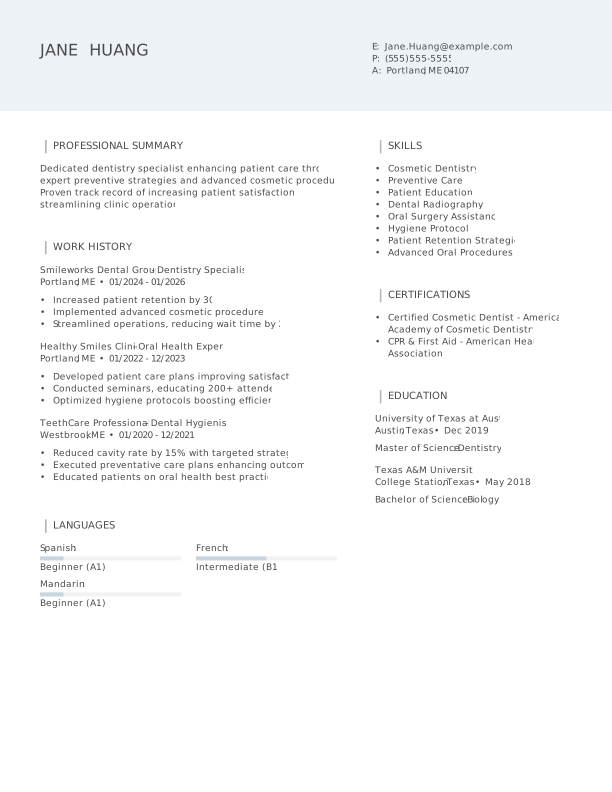
Entry-Level Dentistry Resume
This resume example expertly highlights essential skills and achievements, making it ideal for recent graduates and career changers entering the field of dentistry.

Why this resume works:
A skills-focused resume format is beneficial for new dental professionals, those re-entering the field, or career changers. This approach allows job seekers to highlight their clinical diagnostics and patient care skills instead of dwelling on gaps in experience. Emphasizing teamwork and healthcare technology can effectively showcase their qualifications.

Mid-Career Dentistry Resume
This dentistry resume example is perfect for experienced professionals eager to elevate their careers through specialized roles that improve patient care and operational efficiency.
Why this resume works:
This applicant highlights a track record of improving outcomes across multiple settings.

Experienced Dentistry Resume
Ideal for seasoned dentistry professionals ready to leverage extensive leadership and efficiency capabilities towards senior roles in clinical advancement.
Why this resume works:
Leadership roles and advanced certifications underscore the ability to manage complex scenarios.

Looking for something else?
Create Your Standout Resume Today
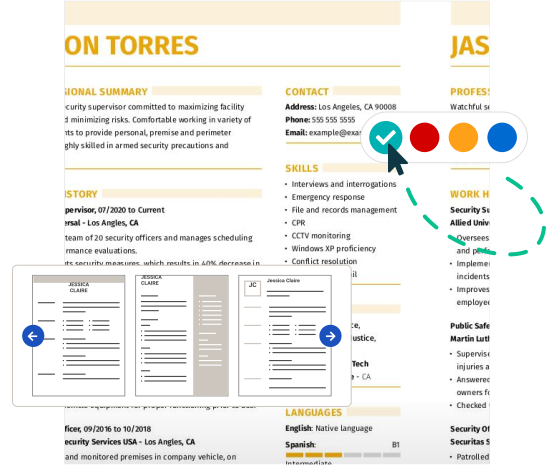
Use our resume examples for inspiration on organization, color, and design—and learn how to effectively summarize your dentistry skills and experience with confidence.
How to Write a Dentistry Resume
Learning how to write a resume is important for showcasing your unique value in dentistry, rather than just listing your credentials. By emphasizing your specific skills and experiences, you can create a resume that stands out to potential employers.
In the following sections, we will outline step-by-step guidance with essential resume tips tailored for dental professionals. You’ll receive advice covering everything from structuring your information to highlighting key achievements and qualifications effectively.
Start with your contact info
The header section contains all your contact information, prominently displayed at the top of your resume. Start with your name in a bold and larger font to ensure it stands out. You might choose a clean, professional font that reflects the nature of the dentistry field, making it visually appealing without being too flashy.
Next, include essential contact details such as your email address, phone number, and location; city and state are sufficient. This information is important for recruiters to reach you easily and helps applicant tracking systems identify qualified job seekers based on their geographic area.
Lastly, consider adding links to relevant certifications or specialized training programs along with a personal website showcasing your work if applicable. These additional resources can improve your application by providing insights into your qualifications and expertise in dentistry, setting you apart from other applicants effectively.
Write a strong professional summary
A professional summary serves as your initial introduction on a dentistry resume, positioned right beneath your contact details. This is the first section recruiters will see after your name, making it important for capturing their attention.
In this summary, you should highlight your qualifications, key skills, and genuine interest in the position. Customizing this section to align with the specific job and employer can significantly improve its impact.
To craft a compelling summary, refer to various resume summary examples that demonstrate effective organization and content inclusion. These resources can inspire you to create a standout summary tailored to your unique experience in dentistry.
Strong vs weak dentistry summary
Strong

"Experienced dentist with over eight years in general dentistry, specializing in restorative and cosmetic procedures. Proven success in improving patient satisfaction through effective communication and tailored treatment plans, resulting in a 95% patient retention rate. Skilled in the latest dental technologies and techniques, holding certifications in sedation dentistry and oral surgery. Recognized for leadership in community outreach programs promoting oral health."
Why this example works: This summary effectively conveys the job seeker’s extensive experience, measurable achievements like high patient retention rates, highlights specific skills such as restorative procedures, and includes relevant keywords from dental job descriptions.
Weak

"Dentist seeking a position to use my skills and support patients. I have experience in general dentistry and strive to provide quality care."
Why this example doesn't work: This professional summary is weak as it lacks specific details about the dentist's actual qualifications, expertise, and accomplishments relevant to the dental field.

Craft a personal mission statement that reflects your commitment to patient care in dentistry, ensuring it resonates with the values of your prospective employer. Highlight how your dedication to improving oral health and fostering positive patient relationships improves their practice beyond just dental skills.
Share your work history
Your work history is, arguably, the central and most important part of your resume. List your most recent roles in reverse chronological order. If you’ve held numerous positions, select the ones most relevant to the job you’re applying for.
When listing your work history, focus on:
- Job title and company name
- Dates of employment (month and year)
- Key responsibilities (What did you do on a daily basis?)
- Achievements and contributions (What did you accomplish? Did you improve processes, reduce costs, or increase efficiency?)
- Measurable results (Use numbers when possible, such as "reduced patient wait times by 15%.")
Finally, when describing your achievements, use action verbs to make your work history come alive.
Strong vs weak dentistry work history
Strong
Dentist, Bright Smiles Dental Clinic
2018–2023
- Performed over 1,000 dental examinations and treatments, achieving a patient satisfaction rate of 95%.
- Implemented a new patient follow-up system that improved appointment attendance by 20%.
- Mentored two dental hygienists, improving their skills in patient care and treatment protocols.
Why this example works: A strong work history highlights specific tasks and achievements that showcase your capabilities. Including measurable outcomes and specialized dental procedures illustrates both your clinical skill and leadership qualities.
Weak
Dentist
Smile Dental Clinic
- Performed dental check-ups and treatments.
- Managed patient files.
Why this example doesn't work: This work experience entry is ineffective because it lacks specificity regarding the types of treatments performed or any particular area of dentistry. It provides no information about the duration of employment, fails to highlight any specific accomplishments, and uses vague language that does not help employers assess skills or expertise.
Consider using a chronological resume format if you have over 10 years in dentistry. This approach highlights your extensive experience and how your skills have developed, allowing employers to easily recognize your growth and contributions in the field.
Highlight your key skills
The skills section of your resume is essential for showcasing your strengths in dentistry. Here's a rundown of different types of skills and why they matter in your professional journey:
- Soft skills are personal attributes that demonstrate how you collaborate with others—such as communication, patience, and empathy. In dentistry, qualities like active listening and attention to detail are important as they build trust with patients and ensure high-quality care throughout their treatment experience.
- Technical abilities in hard skills within dentistry are gained through education and hands-on experience. Key examples include dental radiography, orthodontic assessment, periodontal therapy, and restorative procedures.
- Technical skills in dentistry encompass your skill with various tools and technologies. Key examples include dental imaging software such as Dexis, CAD/CAM systems like CEREC, and patient management platforms including Dentrix.
For those starting in dentistry, place your skills section near the top of your resume to showcase your abilities despite limited experience. If you have extensive experience, position this section after your work history, allowing your practical background to highlight your competencies.
Top 15 skills for your dentistry resume
When putting together your resume for a career in dentistry, it’s essential to showcase skills that align with the expectations of potential employers. Focus on a mix of soft skills, such as patient communication and teamwork, along with hard skills like skill in dental procedures. Including transferable skills can improve your appeal in various roles within the healthcare field.
Here are the top 15 skills popular among JobHero users for those in dentistry. Highlighting these abilities not only demonstrates your qualifications but also helps you stand out in a competitive job market.
Build your education section
For dental professionals with extensive experience, the emphasis should be on work history rather than education. With years in practice, detailing clinical skills and patient outcomes will take precedence. In this context, consider placing your education section further down or omitting it entirely if your qualifications are already well established.
Conversely, recent graduates entering the field of dentistry should spotlight their educational achievements prominently at the top of their resumes. Highlighting degrees, relevant coursework, internships, and any honors can showcase a solid foundation in dental knowledge that employers will value.
Additionally, those pursuing specialized roles within dentistry should also prioritize their education section. This includes including certifications or training specific to specialties like orthodontics or oral surgery to demonstrate expertise and commitment to continued learning in the field.
20 action verbs to add to your resume
In dentistry, action verbs improve resumes by clearly illustrating your experience and achievements. They help convey your accomplishments in a dynamic manner, making your application more engaging to potential employers.
When crafting your resume, select action verbs that resonate with dental skills highlighted in job postings. This alignment demonstrates your understanding of the role and showcases your relevant qualifications effectively.
- Diagnosed
- Treated
- Performed
- Examined
- Consulted
- Restored
- Educated
- Administered
- Managed
- Evaluated
- Coordinated
- Monitored
- Assisted
- Documented
- Collaborated
- Communicated
- Maintained
- Supported
- Scheduled
- Followed
Consider additional resume sections
While your core resume provides the most critical information, adding targeted sections can showcase your unique qualifications. These sections help hiring managers quickly identify your clinical expertise, certifications, and achievements beyond standard resume sections.
Here are optional sections we tend to see on dentistry resumes:
- Areas of specialization: Mention specific fields such as orthodontics, periodontics, or cosmetic dentistry where you have extensive experience.
- Licensure and certifications: Detail your dental license details along with any additional certifications like sedation dentistry or laser therapy.
- Continuing education: Highlight recent courses, workshops, or training that demonstrate your commitment to staying updated in dental practices.
- Patient care achievements: Describe improvements in patient outcomes, satisfaction scores, or treatment success rates you've contributed to.
- Professional memberships: Include affiliations with organizations like the American Dental Association or specialty dental associations.
5 Tips for Formatting Your Resume
Proper resume formatting is important for job seekers as it improves readability and captures recruiters' attention. Using ATS-friendly resume templates can significantly improve your chances of getting through applicant tracking systems while ensuring your qualifications shine through clearly.
1. Watch your line spacing and margins
Proper spacing helps your resume look clean and organized, making it easier for hiring managers to read. A well-spaced resume can highlight your key achievements effectively while ensuring that the content does not feel cramped. Here's what works best:
- Keep margins between 0.5″ to 1.0″, depending on how much space you need.
- Use single spacing between paragraphs and bullet points.
- Raise the space to 1.5″ or double-space between sections.
2. Use a professional font
Selecting the right resume font for your resume is important as it influences readability and first impressions. Here are some professional font options to consider:
- Helvetica
- Garamond
- Verdana
- Cambria
- Book Antiqua
- Trebuchet MS
Consider a slightly more distinctive font for your name at the top of your resume to improve its visibility and personality.
3. Organize your resume sections
A resume for a dentistry professional should be clear and easy to read. Use bullet points to effectively outline your experiences, avoiding lengthy descriptions. Start each bullet with a strong action verb that conveys your responsibilities and achievements. For example, "Performed over 300 successful root canals, achieving a 95% patient satisfaction rate," highlights both your skill level and the positive outcome.
Highlight measurable accomplishments to demonstrate your impact in previous roles. Statements like, "Implemented a new patient scheduling system that reduced cancellations by 40%," provide tangible evidence of your contributions to the practice’s efficiency.
To ensure your resume is ATS-compatible, it is beneficial to use an ATS resume checker. This tool can help identify any necessary keywords or formatting adjustments, increasing the likelihood that hiring managers will successfully receive your application.
4. Use colors and design
In the field of dentistry, a well-designed resume can set you apart by effectively showcasing your skills and qualifications. Using color and design elements strategically not only improves readability but also adds character to your presentation.
Begin by selecting a resume template that resonates with your professional style. The combination resume format is particularly useful in this context, as it allows for a clearly defined section for skills alongside work experience, making it easy for hiring managers to see your qualifications at a glance.
When choosing a color scheme, opt for colors that evoke professionalism and trustworthiness. Soft greens or muted blues can be excellent choices, reflecting the calming environment of dental care. Darker tones like navy or charcoal gray can also lend an air of sophistication when used in headers or section dividers.
Avoid using overly bright colors that may distract from your content or hinder readability. Additionally, steer clear of any colors commonly associated with competitors to maintain originality and professionalism in your application. By thoughtfully applying these design elements, you can create a compelling resume that stands out in the competitive field of dentistry.
For those in the field of dentistry, your resume should highlight both your clinical expertise and the caring nature of your practice. While it's important to maintain a professional layout, incorporating subtle design elements can help convey your personal style. Consider using clean lines and a calming color palette that reflects the soothing environment you create for patients.
For instance, a warm blue or green can evoke trust and comfort, making it suitable for a family dental practice. In contrast, if you work in cosmetic dentistry, feel free to showcase a more vibrant design that illustrates creativity while ensuring clarity remains paramount. Tailor your choices based on the type of practice you’re applying to, maintaining professionalism throughout.
5. Keep your resume length to 1-2 pages
Resumes are most effective when kept to one page. Hiring managers often have limited time to review applications, so a concise format makes it easier for them to quickly identify your qualifications. Focus on including only the most relevant experience and skills that align with the job you’re targeting. Highlight achievements rather than just listing duties, and avoid redundancy in your roles.
In some situations, extending your resume to two pages can be beneficial. If you have extensive experience or are applying for senior-level positions, a longer format may be necessary to showcase your accomplishments fully. Additionally, academic roles typically require a CV instead of a traditional resume due to the need for more detailed information about publications and research contributions.
FAQ
Do I need to include a cover letter with my resume?
Writing a cover letter is important, even when it's not explicitly required. This document allows you to highlight your unique qualifications and articulate your passion for the position. By taking the time to craft an engaging cover letter, you improve your application and make a lasting impression on potential employers.
To help you get started, explore our collection of cover letter examples that offer inspiration tailored to various roles and industries. When you're ready to create your own, try our Cover Letter Builder for easy, step-by-step assistance in drafting a compelling narrative that showcases your skills effectively.
What is the best resume format?
Selecting the appropriate resume format hinges on your unique career requirements. The three primary formats to consider are chronological, functional, and combination. Each one serves a distinct purpose to help you effectively present your qualifications.
The chronological format is perfect for individuals with extensive experience since it clearly showcases their work history. The functional format, emphasizing skills and education, suits recent graduates or those switching careers. Lastly, the combination format mixes both elements, making it appealing to mid-level professionals who wish to highlight their experience alongside relevant skills.
How long should my Dentistry resume be?
For dental professionals, your resume should ideally be one page, especially if you have under a decade of experience. Recruiters in the dental field often sift through numerous resumes quickly, making a concise and well-structured single page important for highlighting your key qualifications.
Emphasize relevant dental experience, certifications, and skills that match the job description. Focus on recent positions and clinical experiences that relate directly to the role you're pursuing. Remove outdated practices, unrelated volunteer activities, or overly detailed descriptions from non-dental jobs.
A two-page resume may be suitable if you are an experienced dentist with extensive credentials or leadership roles. In these scenarios, your additional accomplishments warrant the extra length to showcase your expertise effectively.
Should I use a resume template or design my own?
For most job seekers in dentistry, using a professionally crafted resume template is highly recommended. These templates simplify the writing process and ensure your resume is ATS-friendly, improving your chances of getting noticed by employers.
However, if you’re a dental artist or have distinct design needs, creating your own template could be beneficial. Just make sure to adhere to essential guidelines for clarity and professionalism.
What’s the difference between a resume and a CV?
A resume is typically a concise document, usually one page, that highlights your most relevant skills and experiences tailored for a specific job application.
In contrast, a CV (Curriculum Vitae) is more comprehensive and can span two to six pages. It includes your entire academic and professional history, such as degrees, research work, publications, and presentations. CVs are primarily used in academia or when applying for positions in research.
To gain clarity on how to write a CV, consider reviewing CV examples relevant to your field.
Build a custom resume in minutes with our professional templates and expert tips.
Gabriela Barcenas
CPRW, Career WriterGabriela is a Certified Professional Resume Writer (CPRW) and member of the Professional Association of Resume Writers & Career Coaches and has worked in the career industry for more than seven years providing comprehensive guidance on resume writing and job search strategies for individuals across diverse career paths. She holds a bachelor's degree in English and creative writing and is passionate about helping job seekers present their professional story effectively through well-crafted resumes and cover letters that demonstrate their value, skills, and experience to potential employers. Some of her work has been featured on JobHero's resume examples career center.
More Resources


By Natalia Merced | CPRW, Career Writer

By Gabriela Barcenas | CPRW, Career Writer

By Natalia Merced | CPRW, Career Writer
By Gabriela Barcenas | CPRW, Career Writer

By Natalia Merced | CPRW, Career Writer