-
-
Sort through our administrative resume examples to see what works best for you.
-
Our sales resume examples can help you write the best possible resume.
-
Explore our food service resume examples to show your skills effectively.
-
Start crafting your job-winning resume with our teaching resume examples.
-
-
-
Use our administrative cover letter examples for ideas on writing your own.
-
Use our sales cover letter examples to effectively show your sales accumen.
-
Write your job-winning cover letter following our nursing cover letter examples.
-
Learn to tell your story in education using our teaching cover letter examples.
-





- Our customers have been hired by*


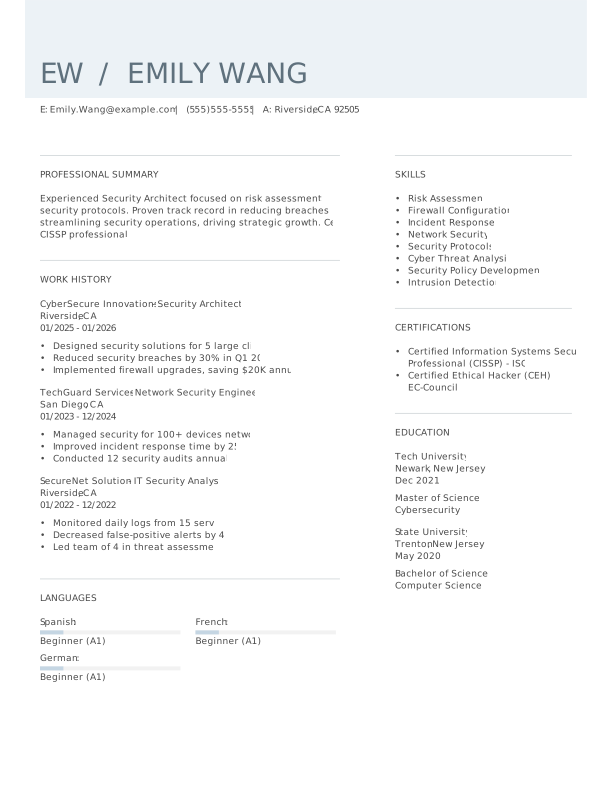
Entry-Level Security Architect Resume
This resume example showcases the relevant skills and accomplishments of those career changers, making it an ideal choice for individuals transitioning into security architect positions.

Why this resume works:
A strong academic foundation shows the candidate is well-prepared to transition into this role.

Mid-Career Security Architect Resume
This resume example is perfect for security architects with experience seeking to elevate their careers and specialize further in advanced cybersecurity strategies.
Why this resume works:
Mid-career security architects can highlight achievements like decreasing security breach incidents by 40% through strategic policy implementations.

Experienced Security Architect Resume
This security architect resume example is perfect for experienced professionals eager to advance into strategic leadership roles within the cybersecurity field.
Why this resume works:
Leadership roles and advanced certifications underscore the ability to manage complex scenarios.

Looking for something else?
Create Your Standout Resume Today
Use our resume examples for inspiration on organization, color, and design—and learn how to summarize your security architect skills and experience with confidence.
How to Write a Security Architect Resume
Mastering how to write a resume is important for a security architect, as it allows you to showcase your unique value rather than just listing technical skills and certifications. By highlighting your experience and problem-solving abilities, you can stand out in a competitive field.
In the sections that follow, we will guide you through the step-by-step process of how to write a resume specifically for security architecture roles. Expect practical resume tips on structuring your resume, detailing your projects, and emphasizing relevant expertise.
Start with your contact info
The header section contains all your contact information, prominently displayed at the top of your resume. Start by placing your name in a bold, larger font to ensure it captures attention immediately. You may want to choose a professional font or use a subtle background color that improves visibility while maintaining a clean look.
Next, include key contact details such as your email address, phone number, and location; city and state are sufficient for recruiters. This information is essential not only for easy communication but also for applicant tracking systems (ATS) that help employers filter job seekers based on geographic relevance.
Lastly, consider adding links to relevant certifications or specialized training programs, along with an online portfolio if applicable. These links can provide valuable insights into your expertise and projects, further demonstrating your qualifications and making you stand out in the competitive field of security architecture.
Write a strong professional summary
A professional summary serves as your introduction on a security architect resume, appearing right below your contact details. This section is important as it sets the tone for your application and gives recruiters their first impression of you.
In this summary, include key qualifications, relevant skills, and express your passion for the role. Tailoring your summary to fit the specific job description can significantly improve its impact and relevance to potential employers.
Consider reviewing various resume summary examples that illustrate effective approaches to crafting this section. They can provide valuable insights into structure and content that resonate with hiring managers in the field of cybersecurity.
Strong vs weak security architect summary
Strong

"Experienced security architect with over eight years in designing and implementing robust security frameworks for enterprise environments. Proven track record of reducing vulnerabilities by 30% through strategic risk assessments and security enhancements. Skilled in cloud security, network architecture, and compliance standards, holding certifications such as CISSP and CCSP. Recognized for leading cross-functional teams to achieve seamless integration of security measures."
Why this example works: This summary highlights the job seeker's extensive experience, quantifies accomplishments through vulnerability reduction, emphasizes key skills like cloud security and compliance, and incorporates relevant keywords found in security job descriptions.
Weak

"Security architect seeking opportunities to use my skills in cybersecurity. I have experience in various security projects and enjoy collaborating with teams."
Why this example doesn't work: This professional summary is vague and lacks specific details about the job seeker's technical expertise, measurable achievements, or relevant experience in the field of security architecture.

Craft a personal mission statement that highlights your commitment to security best practices and how they resonate with the organization's dedication to protecting sensitive information. This approach not only showcases your technical expertise but also emphasizes your alignment with their core values of integrity and trustworthiness.
Share your work history
Your work history is important on your resume, and listing it in reverse chronological order showcases your most relevant experience first. This approach allows employers to easily follow your career trajectory and assess your qualifications at a glance. Additionally, it emphasizes the skills you've gained in your most recent roles, which can be pivotal for a security architect position.
When detailing your work history, focus on:
- Job title and organization name
- Dates of employment (month and year)
- Core responsibilities (What were your daily tasks?)
- Key achievements (Did you improve security protocols or mitigate risks?)
- Quantifiable impacts (For example, "reduced security incidents by 30%.")
Finally, make sure to use powerful action verbs to vividly convey your contributions.
Strong vs weak security architect work history
Strong
Security Architect, Tech Solutions Inc.
2018–2023
- Designed and implemented security frameworks that reduced breaches by 40% year-on-year.
- Conducted vulnerability assessments and penetration tests, identifying critical weaknesses that led to an overhaul of IT policies.
- Led a team of five in developing security protocols, achieving compliance with ISO 27001 standards within one year.
Why this example works: The applicant includes specific accomplishments and quantifiable outcomes in their work history. This allows hiring managers to better assess the applicant’s expertise, skills, and fit for the role.
Weak
Security Architect
Tech Solutions Inc.
- Developed security policies and guidelines.
- Monitored system vulnerabilities.
Why this example doesn't work: This work experience entry is ineffective as it lacks specific details about the projects or systems involved, provides no timeframe for employment, and uses vague task descriptions.
Security architects with over 10 years of experience should consider a chronological resume format. This approach highlights your career growth and showcases your extensive expertise in designing secure systems, making it easier for potential employers to recognize your valuable contributions over time.
Highlight your key skills
The skills section of your resume is essential for demonstrating your strengths as a security architect. Here's a rundown of key skills and their significance in improving your application:
- Soft skills are personal attributes that show how you collaborate with others, such as critical thinking, communication, and teamwork. For security architects, traits like analytical reasoning and adaptability are important as they navigate complex security challenges and ensure effective solutions within organizations.
- Hard skills for a security architect involve specific technical abilities acquired through training and experience. These include network security design, risk analysis, vulnerability assessment, and compliance management.
- Technical skills for a security architect encompass expertise with specific tools and technologies essential for safeguarding information systems. Examples include using firewalls like Cisco ASA, employing intrusion detection systems such as Snort, and using cloud security platforms like AWS Security Hub.
For new security architects, position your skills section at the top of your resume to highlight your abilities despite limited experience. Experienced professionals should place this section after their work history to showcase how their past roles reflect their expertise.
Top 15 skills for your security architect resume
When building your resume as a security architect, it's important to select skills that align with the demands of the field. Focus on a mix of technical skills, such as network security and threat analysis, along with soft skills like problem-solving and communication. Including transferable skills can also demonstrate your adaptability in different situations.
Here’s a list of the top 15 most popular skills for security architects based on insights from JobHero users. These skills reflect what employers prioritize in job seekers and can improve your resume's appeal by showcasing your relevant expertise.
Build your education section
The education section's importance varies by experience level and industry. For seasoned security architects with extensive work history, it is often best to emphasize practical experience over academic credentials. You may choose to position your education towards the end of your resume or omit it if your qualifications are robust.
Conversely, recent graduates or professionals transitioning into security architecture should highlight their educational background prominently. Position this section at the top, showcasing degrees, certifications, and relevant courses that demonstrate foundational knowledge in security principles.
For those entering specialized areas within security architecture, specific training or coursework can be vital. Ensure to detail any relevant projects or internships that further illustrate your qualifications and commitment to the field.
20 action verbs to add to your resume
Using action verbs in your resume as a security architect improves clarity and impact, showcasing your experience while engaging the reader. These verbs convey your accomplishments more dynamically, making your qualifications stand out.
When selecting action verbs, prioritize those that align with important skills outlined in job postings. This targeted approach ensures your resume resonates with hiring managers and highlights your fit for the role.
- Secured
- Architected
- Analyzed
- Designed
- Developed
- Conducted
- Implemented
- Evaluated
- Collaborated
- Tested
- Reviewed
- Optimized
- Managed
- Facilitated
- Monitored
- Guided
- Documented
- Presented
- Supported
- Advised
Consider additional resume sections
While your core resume provides the most critical information, adding targeted sections can showcase your unique qualifications. These sections help hiring managers quickly identify your expertise, certifications, and accomplishments beyond standard resume sections.
Here are optional sections we tend to see on security architect resumes:
- Technical skills: List specific technologies and tools you are proficient in such as firewalls, intrusion detection systems, and encryption protocols.
- Certifications: Detail relevant certifications like CISSP, CISM, or CEH that validate your expertise in cybersecurity.
- Projects: Highlight significant projects where you’ve implemented security solutions or designed architecture that improved system integrity.
- Publications and presentations: Include any articles, whitepapers, or talks you've delivered at conferences related to security practices.
- Professional memberships: Mention affiliations with organizations like ISACA or (ISC)² that reflect your commitment to the field.
5 Tips for Formatting Your Resume
Proper resume formatting is important for job seekers as it improves visibility and keeps recruiters engaged. Using ATS-friendly resume templates ensures your application not only captures attention but also successfully navigates automated screening processes.
1. Watch your line spacing and margins
Proper spacing helps your resume look clean and organized, making it easier for hiring managers to read. A well-spaced resume conveys professionalism and attention to detail. Here's what works best:
- Keep margins between 0.5″ to 1.0″ for a balanced look.
- Use single spacing between paragraphs and bullet points for clarity.
- Increase space to 1.5″ or double-space between sections to differentiate them clearly.
2. Use a professional font
Selecting the right resume font is important as it impacts readability and first impressions. Opt for these professional fonts:
- Helvetica
- Garamond
- Verdana
- Trebuchet MS
- Book Antiqua
- Century Gothic
Consider using a slightly bolder font for your name at the top to improve visibility and give a personal touch.
3. Organize your resume sections
A resume for a security architect should be clear and organized. Use bullet points to outline your responsibilities and achievements, making it easy for hiring managers to scan your qualifications. Start each bullet with a strong action verb, such as "Designed" or "Implemented," to convey your proactive role in improving security measures.
Highlight measurable accomplishments that demonstrate your impact in previous positions. For example, saying "Developed a new security framework that reduced vulnerabilities by 40%" provides tangible evidence of your effectiveness and expertise in the field. This approach not only showcases your skills but also attracts attention from potential employers.
To ensure compatibility with applicant tracking systems (ATS), use an ATS resume checker. This tool can help verify that you are using industry-specific keywords and appropriate formatting, increasing the chances of your resume being seen by decision-makers.
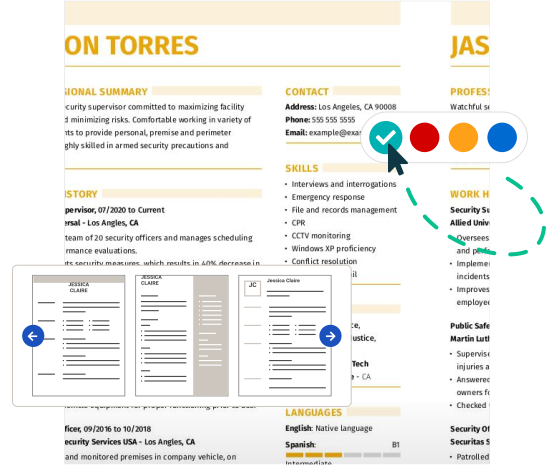
4. Use colors and design
Using color and design elements in your resume can elevate its effectiveness and help you stand out in the competitive field of security architecture. A thoughtfully designed resume not only makes a strong first impression but also highlights your key skills.
Begin by selecting a resume template that suits your style, emphasizing clarity and organization. The combination resume format is particularly useful here, as it features a dedicated colored section for showcasing your skills next to your professional experience.
Next, choose a color scheme that reflects professionalism. Opt for subdued colors like dark green or slate gray that provide a sophisticated touch without overwhelming the reader. These colors work well for headings or borders to create visual separation between sections.
It's important to avoid bright or overly flashy colors, as they can detract from readability and professionalism. Additionally, steer clear of colors associated with competitors or those that may have negative connotations. Focus on creating an attractive yet polished representation of your qualifications in the cybersecurity domain.
5. Keep your resume length to 1-2 pages
Resumes should ideally be one page long. This length allows you to present your qualifications clearly and directly, which is important since recruiters typically spend only a few seconds reviewing each resume. Focus on showcasing your most relevant experiences and skills, ensuring that every detail aligns with the job you're pursuing.
If you have extensive experience or are applying for senior-level positions, a two-page resume may be appropriate. In these cases, it's essential to highlight significant accomplishments that demonstrate your expertise and impact in the field.
Alternatively, academic roles usually require a CV instead of a resume, as they provide space for detailed publications and research contributions.
Remember, clarity and relevance are key. Aim to convey your professional narrative succinctly while making it easy for hiring managers to see why you’re the right fit.
FAQ
Do I need to include a cover letter with my resume?
Writing a cover letter can significantly improve your job application, even when it’s not explicitly required. It allows you to showcase your unique qualifications and personality, helping you stand out in a competitive field. By providing additional context about your skills and experiences, you create a more compelling applicant profile.
If you're unsure where to start, take a look at our cover letter examples for inspiration, tailored to various industries and positions. When you're ready to craft your own, our Cover Letter Builder offers easy-to-follow guidance to help you through the process smoothly.
What is the best resume format?
Choosing the right resume format is important and largely depends on your career situation. The three primary formats are chronological, functional, and combination, each catering to different job seekers' needs.
The chronological format is ideal for experienced professionals, showcasing a clear work history. Emphasizing skills and education, the functional format suits those new to the workforce or changing careers.
By merging both experience and skills, the combination format works well for mid-level applicants or those transitioning between industries.
How long should my Security Architect resume be?
As a security architect, your resume should ideally be one page long, particularly if you have less than a decade of experience. Hiring managers often sift through numerous resumes quickly, so keeping your document concise ensures that your most relevant skills and qualifications stand out.
Highlight your key experiences, certifications, and technical skills that align with the job description. Focus on recent projects and roles that demonstrate your expertise in security frameworks and architecture design. Remove outdated technologies or roles that don't directly relate to security architecture.
Consider extending to two pages only if you have significant experience, specialized certifications, or are applying for senior positions such as lead architect or chief information security officer. In these cases, additional details can showcase your breadth of knowledge and accomplishments.
Should I use the same resume for every job?
Yes, job seekers should customize their resumes for each application. Tailoring your resume is important because it allows you to highlight the skills and experiences that align directly with the job description. Start by carefully reading the job posting and identifying key qualifications or keywords. Then, adjust your summary and work history to reflect those elements.
Remember that many employers use ATS, which filters resumes based on these specific terms before they reach hiring managers.
By incorporating relevant keywords from the job listing, you increase your chances of passing this initial screening. A customized resume not only shows your attention to detail but also demonstrates a genuine interest in the position.
Build a custom resume in minutes with our professional templates and expert tips.
Natalia Merced
CPRW, Career WriterNatalia is a Certified Professional Resume Writer (CPRW) and member of the Professional Association of Resume Writers & Career Coaches and has worked in the career industry for more than two years providing comprehensive guidance on resume writing and job search strategies for individuals across diverse career paths. She holds a master's degree in counseling psychology and a bachelor's degree in public relations and advertising and is passionate about helping job seekers present their professional story effectively through well-crafted resumes and cover letters that demonstrate their value, skills, and experience to potential employers. Some of her work has been featured on JobHero's resume examples career center.
More Resources


By Gabriela Barcenas | CPRW, Career Writer

By Natalia Merced | CPRW, Career Writer



By Gabriela Barcenas | CPRW, Career Writer