-
-
Sort through our administrative resume examples to see what works best for you.
-
Our sales resume examples can help you write the best possible resume.
-
Explore our food service resume examples to show your skills effectively.
-
Start crafting your job-winning resume with our teaching resume examples.
-
-
-
Use our administrative cover letter examples for ideas on writing your own.
-
Use our sales cover letter examples to effectively show your sales accumen.
-
Write your job-winning cover letter following our nursing cover letter examples.
-
Learn to tell your story in education using our teaching cover letter examples.
-





- Our customers have been hired by*


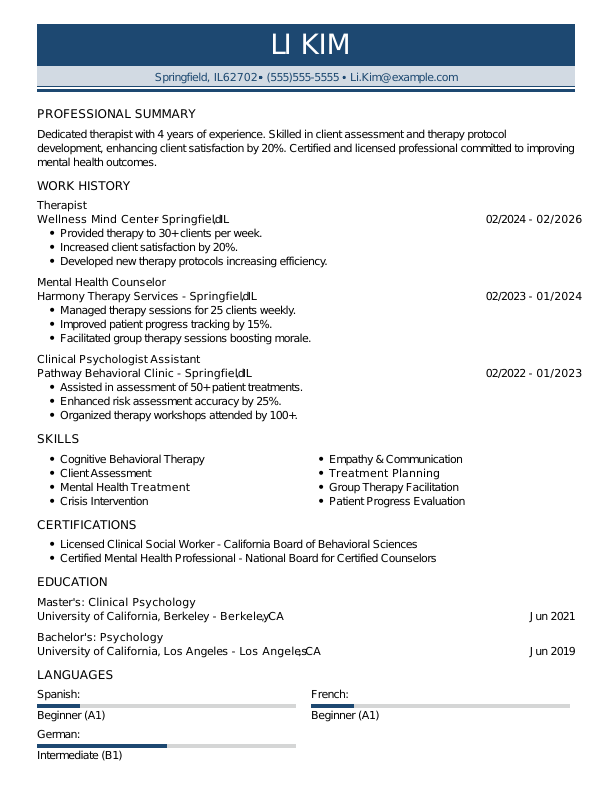
Entry-Level Therapist Resume
This resume example emphasizes relevant skills and experiences that appeal to recent graduates and career changers aiming to establish a fulfilling career in therapy.

Why this resume works:
A skills-focused resume format is particularly beneficial for new therapists, those returning to the field, or individuals shifting careers.

Mid-Career Therapist Resume
This resume example is perfect for therapists with a solid background who aim to elevate their careers through specialized roles or advanced therapeutic practices.
Why this resume works:
This applicant highlights a track record of improving outcomes across multiple settings.

Experienced Therapist Resume
This therapist resume example showcases a strong track record of clinical success and leadership achievements, ideal for experienced professionals pursuing advanced roles.
Why this resume works:
Leadership roles and advanced certifications underscore the ability to manage complex scenarios.

Looking for something else?
Create Your Standout Resume Today
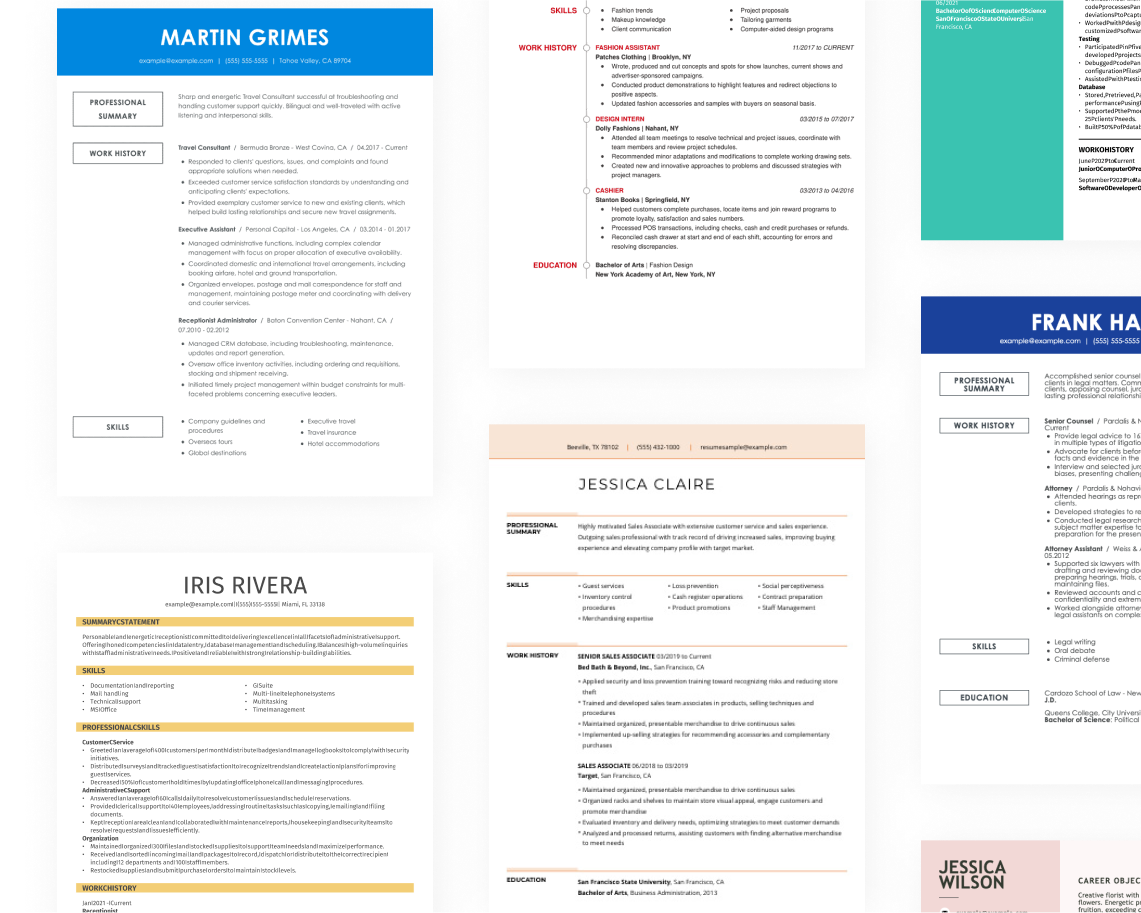
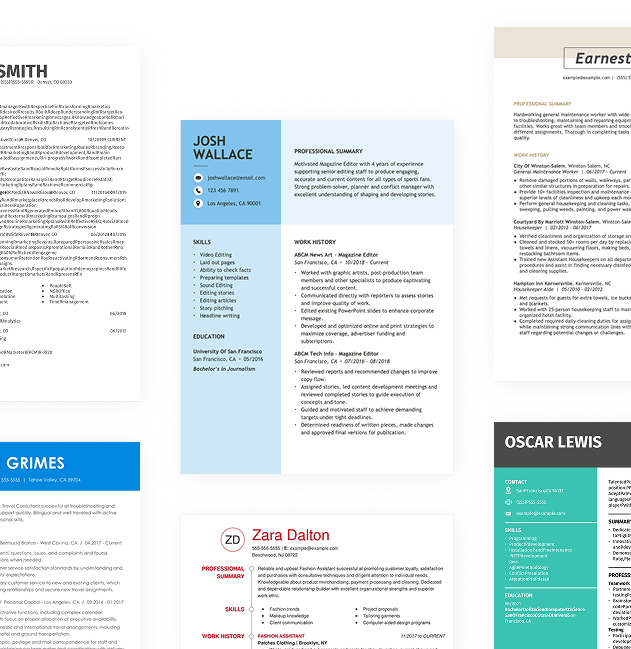
Use our resume examples for inspiration on organization, color, and design—and learn how to effectively summarize your therapist skills and experience with confidence.
How to Write a Therapist Resume
Learning how to write a resume is essential for showcasing your unique value as a therapist, focusing on your skills and experiences rather than simply listing credentials.
In the following sections, you will find detailed guidance on crafting each part of your resume, from contact information to work history. Additionally, you will discover resume tips that support you in creating a standout application that captures the attention of potential employers.
Start with your contact info
The header section contains all your contact information and should be prominently displayed at the top of your resume. Start with your name in a bold, larger font to ensure it captures attention immediately. A clean design will improve visibility and make it easy for recruiters to identify you among numerous applications.
Include key details such as your email address, phone number, and location. While a full address isn’t necessary, providing your city, state, and ZIP code is important for confirming that you're within reach for potential employment. This information also aids applicant tracking systems (ATS) in sorting through applicants effectively.
You may also opt to include links to relevant certifications or an online portfolio if they showcase your qualifications as a therapist. Including these resources can improve your application by highlighting additional skills or experiences that demonstrate your expertise in the field of therapy.
Write a strong professional summary
A professional summary serves as your introduction on a therapist resume, located right beneath your contact details. This section is key because it’s the first thing potential employers will see after your name.
In this summary, include your qualifications and core skills while expressing your passion for helping others. To make a strong impression, tailor the content to reflect the specific role and organization you’re targeting.
Explore various resume summary examples to inspire your writing. These samples can guide you in structuring your own summary, ensuring that it resonates with potential employers.
Strong vs weak therapist summary
Strong

"Empathetic, licensed therapist with over seven years of experience in individual and group counseling. Demonstrated ability to create tailored treatment plans that improve client mental health outcomes by 30%. Proficient in cognitive-behavioral therapy and mindfulness techniques, with a strong focus on building trusting relationships. Certified in trauma-informed care and licensed clinical social work. Acknowledged for contributions to community mental health initiatives."
Why this example works: This summary effectively outlines the applicant's background, highlights quantifiable achievements, emphasizes role-specific skills like CBT and mindfulness, and incorporates relevant keywords found in therapy job postings.
Weak

"Therapist seeking a position to use my experience and support clients. I have worked in various settings and enjoy helping others improve their mental health."
Why this example doesn't work: This professional summary is weak and generic, failing to provide specific details about the therapist's qualifications, areas of expertise, or measurable achievements.

When crafting your personal mission statement as a therapist, reflect on your core beliefs about mental health and well-being. Ensure it resonates with the values of your prospective employer by showcasing how your approach to client care improves their vision while also highlighting your unique contributions beyond mere credentials.
Share your work history
Listing your work history in reverse-chronological order is essential for presenting your most recent and relevant experience first. This format allows hiring managers to quickly assess your qualifications while showcasing your career growth. Also, it helps you highlight the skills and expertise you’ve developed over time.
When listing your work history, focus on:
- Job title and organization name
- Employment dates (month and year)
- Primary duties (What responsibilities did you handle daily?)
- Notable achievements (Did you improve patient care or improve therapeutic outcomes?)
- Quantifiable outcomes (For example, "increased client retention rates by 30%.")
Finally, use strong action verbs to vividly describe your contributions and experiences.
Strong vs weak therapist work history
Strong
Therapist, Wellness Center
2018–2023
- Conducted over 300 individual therapy sessions, achieving a client satisfaction rate of 95%.
- Developed and implemented personalized treatment plans that led to a 40% improvement in client mental health scores.
- Facilitated group therapy sessions, fostering a supportive environment that encouraged participation and reduced dropout rates by 20%.
Why this example works: A strong work history section for a therapist highlights specific client outcomes and therapeutic techniques. Including quantifiable results showcases your impact on clients" well-being, demonstrating both your clinical skills and leadership capabilities.
Weak
Therapist
Wellness Center
- Helped clients with various issues.
- Conducted sessions and wrote notes.
Why this example doesn't work: This entry is ineffective because it lacks specificity about the type of therapy provided or the populations served, has no dates of employment, and uses vague descriptions that could apply to any mental health professional.
If you have more than 10 years of experience as a therapist, opt for a chronological resume format. This approach showcases your extensive background and career advancements, making it easier for potential employers to see how you've evolved in your field over time.
Highlight your key skills
The skills section of your resume is essential for demonstrating your qualifications as a therapist. Here's a rundown of various skill types and their significance in improving your candidacy for the role:
- Soft skills are personal attributes that reflect how you engage with others, such as empathy, active listening, and patience. For therapists, qualities like trust-building and emotional resilience are important as they create a safe space for clients to explore their feelings and promote healing in the therapeutic process.
- Hard skills refer to specialized techniques and knowledge acquired through formal training or hands-on experience. Therapists, for instance, use skills like psychological assessment, treatment planning, crisis intervention, and therapeutic communication.
- Technical skills for therapists include skill in electronic health record (EHR) systems like TherapyNotes and SimplePractice, as well as using teletherapy platforms such as Zoom and Doxy.me. Knowledge of technical skills like assessment tools and treatment planning software is also important for client management.
For new therapists, it's best to place your skills section near the top of your resume to highlight your strengths despite limited experience. If you're an experienced therapist, position this section after your work history to showcase how your experience reflects your skill set.
Top 15 skills for your therapist resume
Selecting the right skills for your resume is essential to showcase your qualifications as a therapist. Focus on highlighting a mix of soft skills, such as empathy and communication, along with hard skills like assessment techniques. Don’t forget to include transferable skills that can help you stand out in different settings or roles.
Below is a list of the top 15 skills valued by therapists according to JobHero users. These skills reflect what employers are looking for and will help you present yourself confidently in your job search.
Build your education section
The education section of your resume should reflect your experience and relevance in the therapy field. For seasoned therapists with extensive work history, it's best to prioritize your professional achievements and client outcomes over educational details. Consider placing this section toward the end or minimizing it if your degrees are not central to your qualifications.
Conversely, for recent graduates or those transitioning into specialized therapeutic areas, education is a key asset. Highlight your degree prominently at the top of your resume and include relevant coursework, internships, and any special training that can set you apart.
In all cases, tailor your education presentation to align with industry standards while ensuring clarity and engagement in your overall resume layout.
20 action verbs to add to your resume
Using action verbs on your resume improves its strength by communicating your experience and creating a dynamic tone. This approach captures attention while highlighting your contributions in a compelling manner.
When selecting action verbs, prioritize those relevant to the therapist role that reflect key skills outlined in job postings. Tailoring your language ensures alignment with employer expectations.
- Counseled
- Supported
- Facilitated
- Guided
- Intervened
- Diagnosed
- Reflected
- Motivated
- Empowered
- Collaborated
- Educated
- Advocated
- Monitored
- Evaluated
- Assisted
- Documented
- Communicated
- Analyzed
- Responded
- Maintained
Consider additional resume sections
While your core resume provides the most critical information, adding targeted sections can showcase your unique qualifications. These sections help hiring managers quickly identify your clinical expertise, certifications, and achievements beyond standard resume sections.
Here are optional sections we tend to see on therapist resumes:
- Therapeutic specialties: List specific therapeutic practices you've mastered (cognitive-behavioral therapy, art therapy, etc.) to highlight your expertise.
- Licensure and certifications: Detail your therapy license(s), state registrations, and any specialized certifications (LPC, LCSW, etc.).
- Professional development: Highlight relevant workshops or training that demonstrate your commitment to advancing your therapeutic skills.
- Client success stories: Provide examples of how you've positively impacted clients' lives through measurable outcomes.
- Memberships and affiliations: Include memberships in professional organizations that reflect your dedication to the field of therapy.
5 Tips for Formatting Your Resume
Proper resume formatting is essential for job seekers to attract recruiters' attention and navigate ATS filters. By using ATS-friendly resume templates, applicants can ensure their resumes are both visually appealing and optimized with the right elements, improving the likelihood of making a strong impression during the hiring process.
1. Watch your line spacing and margins
Proper spacing helps your resume look clean and organized, making it easier for potential employers to read. Striking the right balance between space and content is important for a professional appearance.
- Maintain margins of 0.5" to 1.0" to ensure readability while providing enough content space.
- Use single spacing within paragraphs and bullet points to keep information compact yet accessible.
- Increase spacing to 1.5" or double-space between sections for clear separation and improved organization.
2. Use a professional font
Selecting the right resume font for your resume significantly influences its presentation and readability. Opt for professional fonts such as:
- Helvetica
- Garamond
- Verdana
- Cambria
- Trebuchet MS
- Book Antiqua
Consider using a bolder or larger font for your name at the top to improve visibility and personal branding.
3. Organize your resume sections
A resume must be easy to read and navigate. Use bullet points to present your experience clearly. Each point should begin with a strong action verb that captures a key responsibility, accomplishment, or skill. For instance, "Facilitated group therapy sessions that led to a 30% increase in client engagement."
Highlight measurable achievements whenever possible, such as "Developed individualized treatment plans resulting in improved patient outcomes." This precise format improves readability while demonstrating your impact.
To ensure compliance with current hiring practices, take advantage of an ATS resume checker. This tool can help verify that your formatting and keywords meet the requirements sought by employers looking for therapists today.
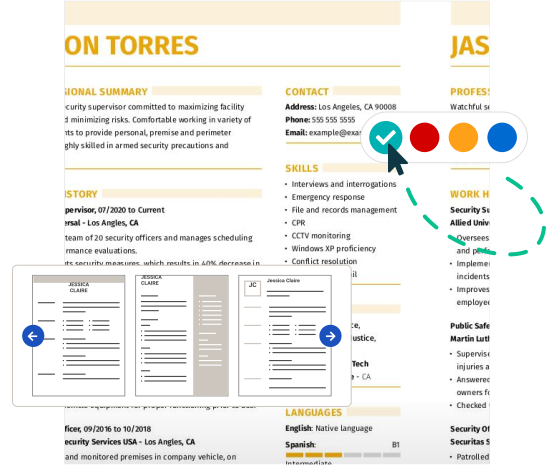
4. Use colors and design
Incorporating color and design elements into your resume can elevate its impact and help you stand out as a therapist. A thoughtfully designed resume not only showcases your qualifications but also reflects your personality.
Begin by selecting a resume template that suits your organizational preferences. The combination resume format is ideal for therapists, featuring sections that highlight both skills and professional experience prominently. This layout allows potential employers to quickly grasp your competencies.
Next, choose a color scheme that communicates professionalism. Opt for subdued colors like teal or deep gray, which convey calmness while maintaining readability. These hues work well when used in headers or section dividers without overwhelming the content.
Avoid bright colors or any shades that compromise legibility. It’s wise to steer clear of colors linked to competitors or those with negative connotations, as they may detract from the professionalism of your application.
By integrating thoughtful design choices, you improve the overall presentation of your resume, making it not only visually appealing but also a true reflection of your capabilities as a therapist.
5. Keep your resume length to 1-2 pages
Resumes should typically be one page long. This length ensures that your most strong experiences and skills are front and center. Recruiters often have only a few seconds to glance at each resume, so clarity and focus are essential for standing out.
Limit your content to the most relevant positions, emphasizing accomplishments rather than listing duties. Avoid redundancies by not repeating similar tasks under different roles.
In certain scenarios, such as applying for senior leadership positions or academic roles, extending your resume to two pages—or even using a CV—may be appropriate. This allows you to showcase extensive experience or detailed qualifications that align with the demands of those positions. Always tailor your document to fit the specific role you’re targeting while maintaining brevity and clarity.
FAQ
Do I need to include a cover letter with my resume?
Writing a cover letter is an essential step in the job application process, even if it’s not explicitly required. It provides you with an opportunity to highlight your unique qualifications and personality, setting you apart from other applicants. A compelling cover letter can offer context to your resume and showcase your enthusiasm for the position.
To help you get started, explore our collection of cover letter examples that reflect various industries and roles for inspiration. When you're ready to create your own, consider using our Cover Letter Builder for easy, step-by-step assistance in crafting a letter that truly represents you.
What is the best resume format?
Choosing the right resume format depends on your individual career needs. The three main formats are chronological, functional, and combination. Each serves a distinct purpose for various job seekers based on their experience and career goals.
The chronological format is ideal for those with extensive work history, as it emphasizes past roles and employment dates. The functional format is best suited for individuals entering the workforce or changing careers, focusing instead on relevant skills and education. The combination format works well for mid-level professionals or those transitioning between fields, mixing both experience and skill highlights to present a well-rounded profile.
How long should my Therapist resume be?
As a therapist, your resume should generally be one page, especially if you have under 10 years of experience. Hiring managers in the mental health field often skim through numerous resumes quickly, so keeping it concise ensures your qualifications stand out.
Highlight your most relevant therapy experience, certifications, and skills. Focus on recent roles and any specialized training that aligns with the position you're pursuing. Remove outdated techniques, excessive volunteer work unrelated to therapy, or detailed descriptions of non-therapeutic jobs.
Consider extending to two pages only if you possess extensive experience or are applying for senior positions like clinical director or lead therapist. In these instances, the breadth of your accomplishments and diverse expertise warrants the extra space.
Do I need to include references on my resume?
Including references on your resume is generally unnecessary. However, if you have particularly strong endorsements from well-respected professionals in your field, showcasing them can strengthen your application. Just be prepared to provide them when requested during the hiring process.
Build a custom resume in minutes with our professional templates and expert tips.
More Resources

By Gabriela Barcenas | CPRW, Career Writer


By Natalia Merced | CPRW, Career Writer

By Natalia Merced | CPRW, Career Writer

By Natalia Merced | CPRW, Career Writer

By Gabriela Barcenas | CPRW, Career Writer