-
-
Sort through our administrative resume examples to see what works best for you.
-
Our sales resume examples can help you write the best possible resume.
-
Explore our food service resume examples to show your skills effectively.
-
Start crafting your job-winning resume with our teaching resume examples.
-
-
-
Use our administrative cover letter examples for ideas on writing your own.
-
Use our sales cover letter examples to effectively show your sales accumen.
-
Write your job-winning cover letter following our nursing cover letter examples.
-
Learn to tell your story in education using our teaching cover letter examples.
-





- Our customers have been hired by*


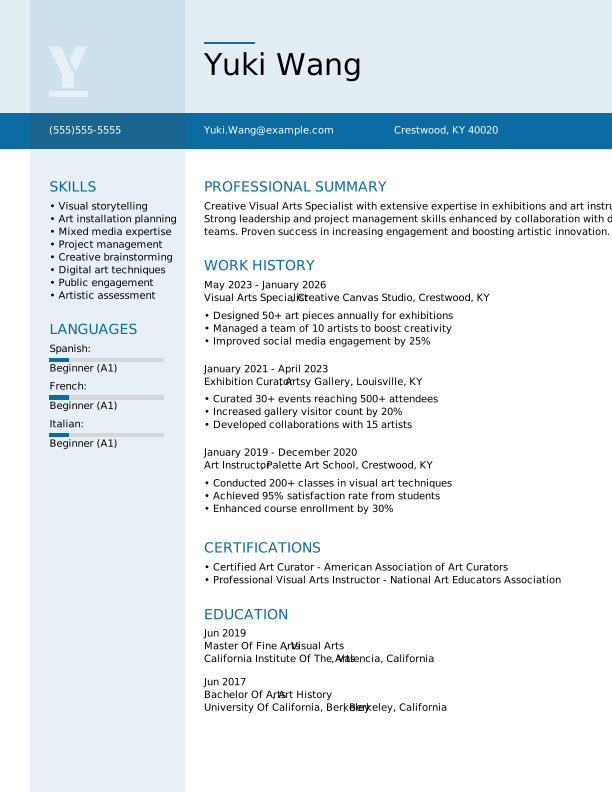
Entry-Level Arts Resume
This resume example showcases the artistic achievements and relevant skills of career changers, making it an ideal choice for those transitioning into the arts industry.

Why this resume works:
A strong academic foundation shows the candidate is well-prepared to transition into this role.

Mid-Career Arts Resume
This arts resume example is perfect for creative professionals with a solid foundation looking to elevate their careers by taking on leadership roles and driving effective projects.
Why this resume works:
This applicant highlights a track record of improving outcomes across multiple settings.

Experienced Arts Resume
This arts resume example is perfect for professionals with extensive experience, looking to transition into senior leadership roles in creative industries.
Why this resume works:
Leadership roles and advanced certifications underscore the ability to manage complex scenarios.

Looking for something else?
Create Your Standout Resume Today
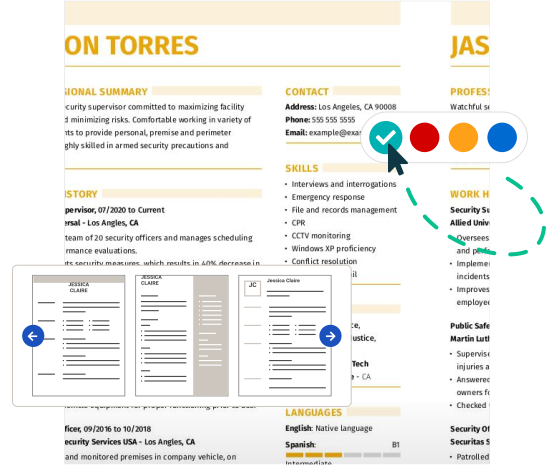
Use our resume examples for inspiration on organization, color, and design—and learn how to summarize your arts skills and experience with confidence.
How to Write an Arts Resume
Mastering how to write a resume is important for expressing your unique value as an arts professional, beyond merely listing your qualifications. It allows you to weave a narrative that highlights your creative journey and achievements.
In the upcoming sections, you'll receive step-by-step resume tips for the arts field. We’ll cover everything from structuring your document to emphasizing your artistic contributions and showcasing your portfolio.
Start with your contact info
The header section contains all your contact information, prominently displayed at the top of your resume. Start with your name in a bold, larger font to ensure it captures attention immediately. You may also experiment with creative typography or subtle design elements that reflect your artistic style while keeping it professional.
Next, include essential contact details such as your email address, phone number, and location; city and state are sufficient. This information is vital for potential employers to reach you easily and helps streamline communication regarding job opportunities in the arts field.
Additionally, consider adding links to relevant online portfolios, personal websites, or social media profiles that showcase your work. These resources can provide deeper insights into your artistic skills and projects, improving your application by demonstrating your creativity and experience.
Write a strong professional summary
A professional summary is a brief overview of your qualifications and skills, typically located just below your contact information on your resume. It serves as the first impression for recruiters, setting the tone for the rest of your application.
In this section, you should highlight key achievements and relevant experiences that align with the job you're pursuing. Customizing your summary for each position shows employers that you’ve taken the time to understand their needs and how you fit into them.
To craft an effective professional summary, consider reviewing resume summary examples from successful resumes in your field. These can inspire you to create a compelling narrative that resonates with hiring managers.
Strong vs weak arts summary
Strong

"Creative and innovative arts professional with over eight years of experience in visual arts education and community engagement. Proven ability to design and implement powerful art programs that improve student creativity and foster cultural appreciation. Skilled in various mediums including painting, sculpture, and digital art, with a strong portfolio showcasing award-winning projects. Certified in Art Education methods and committed to promoting inclusivity through the arts."
Why this example works: This summary describes the applicant’s experience, highlights measurable achievements like award-winning projects, emphasizes role-specific skills such as program design, and incorporates relevant keywords associated with arts education.
Weak

"Artist seeking opportunities to showcase my creativity and skills. I have experience in various art forms and enjoy collaborating with others."
Why this example doesn't work: This professional summary is weak because it is generic and does not highlight any specific artistic skills, experiences, or notable accomplishments relevant to the role.

Craft a personal mission statement that reflects your artistic vision while aligning with the values of the organization you want to join. Show how your creative approach demonstrates your skills and contributes to improving the organization's culture and community engagement.
Share your work history
Your work history is, arguably, the central and most important part of your resume. List your most recent roles in reverse chronological order. If you’ve held numerous positions, select the ones most relevant to the job you’re applying for.
When listing your work history, focus on:
- Job title and company name
- Dates of employment (month and year)
- Key responsibilities (What did you do on a daily basis?)
- Achievements and contributions (What did you accomplish? Did you improve processes, reduce costs, or increase efficiency?)
- Measurable results (Use numbers when possible, such as "reduced patient wait times by 15%.")
Finally, when describing your achievements, use action verbs to make your work history come alive.
Strong vs weak arts work history
Strong
Visual Artist, Creative Studio
2018–2023
- Produced over 150 original pieces of artwork displayed in local galleries, increasing gallery foot traffic by 40%.
- Collaborated with a team of five artists on community projects that engaged over 500 participants, fostering a love for the arts.
- Conducted art workshops that boosted participant skill levels, with 90% of attendees reporting improvement in their techniques.
Why this example works: The applicant includes specific accomplishments and quantifiable outcomes in their work history. This allows hiring managers to better assess the applicant’s expertise, skills, and fit for the role.
Weak
Artist
Creative Studio
- Worked on various art projects.
- Collaborated with team members.
Why this example doesn't work: This entry is ineffective as it provides no details about the type of art created or specific roles within projects, lacks dates of employment, and describes overly generic tasks that do not convey unique contributions.
Consider a chronological resume format if you have over 10 years of experience in the arts. This approach highlights your career trajectory, showcasing your growth and expertise in various artistic roles while making it easy for employers to see your accomplishments over time.
Highlight your key skills
The skills section of your resume is essential for showcasing your artistic strengths and capabilities. Here's a rundown of various skill types in the arts and their significance in improving your profile:
- Soft skills are personal attributes that highlight how you collaborate with others, such as creativity, communication, and adaptability. In the arts, qualities like teamwork and emotional expression are important because they improve collaboration on projects and help convey powerful messages through creative work.
- Hard skills in the arts refer to specific techniques and abilities acquired through education or practice. Examples include skill in digital design software, mastery of traditional painting methods, knowledge of art history, and experience with sculpting materials.
- Technical skills in the arts encompass skills with various software and tools that improve creativity and production. Examples include Adobe Creative Suite (Photoshop, Illustrator), digital audio workstations like Ableton Live, and 3D modeling platforms such as Blender.
For those starting their careers in the arts, position your skills section at the top of your resume to highlight your creative talents despite limited experience. If you have a rich background, place this section after your work history to showcase how your experiences reflect your abilities.
Top 15 skills for your arts resume
When crafting your resume for a career in the arts, it's essential to showcase skills that mix your creative talents with practical experiences. Highlighting transferable skills, like teamwork and communication, can demonstrate your ability to collaborate on artistic projects.
Below is a list of the 15 most popular skills for arts professionals, derived from JobHero user insights. These are important for making your resume stand out and ensuring it aligns with what employers seek in job seekers within the arts sector.
Build your education section
The education section of your resume should reflect your experience level and industry standards. For seasoned professionals, extensive work history often takes precedence over educational qualifications. In this case, consider placing your education section lower on the resume or omitting it entirely if not directly relevant to the roles you seek.
Conversely, for recent graduates or individuals entering specialized fields, education can be a key selling point. It is advisable to position this section at the top of your resume. Highlight relevant coursework, internships, and certifications that align with the job requirements to bolster your candidacy.
Ultimately, tailoring the education section according to these guidelines will help present your qualifications and improve your appeal to potential employers in the arts sector.
20 action verbs to add to your resume
Using action verbs on your resume significantly improves its strength by clearly communicating your experience and creating an engaging tone. These dynamic words capture attention and showcase your accomplishments more effectively.
When applying for arts positions, prioritize action verbs that resonate with the skills highlighted in job postings. This alignment demonstrates your suitability for the role and emphasizes your relevant capabilities.
- Created
- Designed
- Produced
- Curated
- Presented
- Exhibited
- Facilitated
- Inspired
- Collaborated
- Drafted
- Directed
- Innovated
- Transformed
- Refined
- Analyzed
- Conducted
- Promoted
- Evaluated
- Mentored
- Improved
Consider additional resume sections
While your core resume provides the most critical information, adding targeted sections can showcase your unique qualifications. These sections help hiring managers quickly identify your skills, experiences, and achievements beyond standard resume sections.
Here are optional sections we tend to see on arts resumes:
- Artistic specialties: List specific mediums or styles you excel in (painting, sculpture, digital art, etc.) to demonstrate your creative range.
- Exhibitions and shows: Detail any galleries, exhibitions, or shows where your work has been displayed, highlighting significant achievements.
- Awards and honors: Include any accolades or recognition received for your artistic contributions that show your talent.
- Professional development: Outline workshops or courses you've attended that improve your skills and keep you current in the arts.
- Memberships and affiliations: Mention memberships in art organizations or collectives that reflect your commitment to the arts community.
5 Tips for Formatting Your Resume
Proper resume formatting is essential for job seekers as it not only captures the attention of recruiters but also ensures smooth navigation through applicant tracking systems. Using ATS-friendly resume templates can help you stand out and get noticed in a competitive job market.
1. Watch your line spacing and margins
Proper spacing helps your resume look clean and organized, making it easier for hiring managers to read your information quickly. A well-spaced resume demonstrates professionalism and attention to detail. Here's what works best:
- Keep margins between 0.5″ to 1.0″ to ensure clarity and room for notes.
- Use single spacing between paragraphs and bullet points for a compact appearance.
- Increase the space to 1.5″ or double-space between sections to clearly differentiate each part of your resume.
2. Use a professional font
Choosing the right resume font is important because it impacts both readability and the first impression your resume makes. Consider using professional fonts such as:
- Helvetica
- Garamond
- Verdana
- Cambria
- Trebuchet MS
- Book Antiqua
Consider using a slightly more decorative font for your name at the top to create an inviting yet professional appearance.
3. Organize your resume sections
A resume for arts professionals should be clear and visually appealing. Use bullet points to succinctly outline your creative achievements and relevant experiences. Begin each point with an action verb, such as "Designed," "Created," or "Collaborated," to convey your active role in projects.
Highlight measurable accomplishments that demonstrate your impact in the arts field. For instance, "Organized a community art exhibit attended by over 300 people" not only showcases your organizational skills but also quantifies your success in engaging the public.
To ensure your resume passes through applicant tracking systems, use an ATS resume checker. This tool can highlight any formatting issues or missing keywords specific to the arts sector, which helps you improve your chances of being noticed by hiring managers.
4. Use colors and design
In the arts, a resume should reflect creativity while maintaining professionalism. Using color and design elements can help your resume stand out and convey your unique artistic identity.
Begin by selecting a pre-made resume template that resonates with your style. The combination resume format is particularly effective for artists, allowing you to feature a visually striking skills section alongside your work experience.
When choosing a color scheme, think about colors that represent your artistic voice yet remain professional. Soft pastels or muted tones can create an inviting look, while bold colors like deep teal or maroon may emphasize key areas without overwhelming the reader.
Be mindful of overly bright or neon colors, as they can detract from your content. Additionally, avoid any palettes associated with competitors or those that could reduce readability. Aim for a balance that showcases your creativity while ensuring clarity and professionalism in presentation.
5. Keep your resume length to 1-2 pages
Resumes should typically be one page long. This length allows you to present your qualifications clearly and concisely, which is important since hiring managers often skim resumes quickly. Focus on including recent and relevant job experiences that align with the position you seek. Avoid clutter by omitting repetitive tasks or outdated roles.
In specific situations, a two-page resume may be appropriate, such as for professionals with extensive experience applying for senior-level positions. Additionally, if you're in academia or research, consider using a CV to provide a comprehensive overview of your work and publications. Always tailor your document to highlight what matters most to each employer.
FAQ
Do I need to include a cover letter with my resume?
Writing a cover letter can be a powerful tool in your job search, even if it’s not required. It allows you to showcase your personality and provide context for your qualifications. A thoughtful cover letter can help you stand out from other applicants and highlight your unique skills.
If you're unsure where to begin, check out our collection of cover letter examples for inspiration tailored to various industries. When you're ready to craft your own, our Cover Letter Builder will guide you through the process step by step, making it easier for you to create a compelling narrative about yourself.
What is the best resume format?
Choosing the right resume format depends on your individual needs. The three main formats are chronological, functional, and combination, each serving distinct purposes for different job seekers.
The chronological format is ideal for those with extensive experience, as it emphasizes work history. Conversely, the functional format showcases skills and education, making it suitable for recent graduates or those changing careers.
Lastly, the combination format strikes a balance between experience and skills, catering well to mid-level professionals or individuals transitioning into new industries.
How long should my arts resume be?
When crafting your arts resume, aim for a one-page format. This is especially important if you have less than 10 years of experience. Recruiters often sift through many resumes quickly, so a concise and well-structured page highlights your main accomplishments effectively.
Emphasize your most relevant artistic experiences, exhibitions, and skills. Include recent projects or collaborations that align with the position you're targeting. Remove any irrelevant roles or outdated experiences that don't pertain to the arts.
Consider extending to a two-page resume only if you are an experienced artist with a wide array of exhibitions or significant projects, particularly when applying for higher-level positions in art direction or curation. In such cases, additional details about your journey can be beneficial.
How far back should my work history go?
When updating your resume, aim to include work experience from the last 10 years. This helps maintain a focused narrative on your relevant skills and achievements in the arts.
If you have held numerous positions or gained significant expertise over time, feel free to exclude older roles that don’t directly relate to your current goals. Highlight experiences that showcase your creativity and contributions to the field for a stronger impact.
Build a custom resume in minutes with our professional templates and expert tips.
Gabriela Hernandez
CPRW, Career WriterGabriela is a Certified Professional Resume Writer (CPRW) and member of the Professional Association of Resume Writers & Career Coaches and has worked in the career industry for more than four years providing comprehensive guidance on resume writing and job search strategies for individuals across diverse career paths. She holds a bachelor's in journalism and is passionate about helping job seekers present their professional story effectively through well-crafted resumes and cover letters that demonstrate their value, skills, and experience to potential employers. Some of her work has been featured on JobHero’s resume examples career center.
More Resources


By Gabriela Barcenas | CPRW, Career Writer


By Natalia Merced | CPRW, Career Writer



By Gabriela Barcenas | CPRW, Career Writer