-
-
Sort through our administrative resume examples to see what works best for you.
-
Our sales resume examples can help you write the best possible resume.
-
Explore our food service resume examples to show your skills effectively.
-
Start crafting your job-winning resume with our teaching resume examples.
-
-
-
Use our administrative cover letter examples for ideas on writing your own.
-
Use our sales cover letter examples to effectively show your sales accumen.
-
Write your job-winning cover letter following our nursing cover letter examples.
-
Learn to tell your story in education using our teaching cover letter examples.
-






- Our customers have been hired by*


Entry-Level Warehouse Manager Resume
This resume example demonstrates the leadership and analytical skills of career changers, making it a strong asset for recent graduates pursuing success as warehouse managers.

Why this resume works:
A skills-focused resume helps new or returning warehouse managers emphasize skills like inventory management and logistics over work history gaps.

Mid-Career Warehouse Manager Resume
This resume example is perfect for warehouse managers with a solid track record, seeking to leverage their experience in supply chain optimization to advance their careers in logistics leadership.
Why this resume works:
This applicant highlights a track record of improving outcomes across multiple settings.

Experienced Warehouse Manager Resume
This warehouse manager resume example is perfect for experienced applicants looking to advance into higher leadership roles within logistics and supply chain management.
Why this resume works:
Leadership roles and advanced certifications underscore the ability to manage complex scenarios.

Looking for something else?
Create Your Standout Resume Today
Use our resume examples for inspiration on organization, color, and design—and learn how to effectively summarize your warehouse manager skills and experience with confidence.
How to Write a Warehouse Manager Resume
Learning how to write a resume is important for showcasing your unique value as a warehouse manager, rather than simply listing your qualifications. By emphasizing your leadership skills and operational expertise, you can create a strong impression on potential employers.
In the upcoming sections, we will guide you through how to write a resume step by step, covering key areas such as work history and skills. We will also provide resume tips to ensure your resume stands out in a competitive job market.
Start with your contact info
The header section contains all your contact information, prominently displayed at the top of your resume. Start with your name in a bold, larger font to ensure it catches the eye of hiring managers. You may also choose to use a contrasting color or unique design element that aligns with industry standards while maintaining professionalism.
Next, include essential contact details such as your email address, phone number, and location; city and state are sufficient. Providing this information is vital for recruiters to reach you efficiently and allows applicant tracking systems (ATS) to sort job seekers based on their geographical relevance.
Lastly, consider adding links to relevant certifications or training programs, along with any professional online presence like a LinkedIn profile or portfolio. These additions can improve your application by showcasing your expertise and experiences that align with the warehouse manager role, giving you an edge over other job seekers.
Write a strong professional summary
A professional summary serves as your initial pitch to potential employers, positioned immediately after your contact details. It provides a snapshot of who you're and sets the tone for the rest of your resume.
In this section, you should highlight your key achievements and relevant skills, tailoring it specifically to the warehouse manager role you seek. This customization improves your chances by aligning your qualifications with the employer's needs.
To refine your summary, explore various resume summary examples online. These can guide you on effective phrasing and organization, ensuring that your summary stands out in a competitive job market.
Strong vs weak warehouse manager summary
Strong

"Results-driven warehouse manager with over seven years of experience in logistics and supply chain management. Proven track record in optimizing inventory systems, reducing operational costs by 15%, and improving team productivity through effective training programs. Skilled in managing large teams, implementing safety protocols, and using warehouse management software. Certified in OSHA standards and lean management practices."
Why this example works: This summary effectively describes the applicant's extensive experience, highlights measurable achievements like cost reduction, showcases essential skills such as team management and safety protocols, and incorporates relevant keywords found in warehouse management job descriptions.
Weak

"Warehouse manager seeking a position to use my skills in inventory management and team leadership. I have experience overseeing warehouse operations and enjoy working in a collaborative environment."
Why this example doesn't work: This summary is weak as it does not provide specific examples of achievements or detailed skills that demonstrate the job seeker's expertise in warehouse management.

Develop a personal mission statement that reflects your leadership in warehouse operations and aligns with the company's commitment to efficiency and safety. This approach shows how your management philosophy improves team performance while contributing positively to the organization's overall goals, demonstrating value beyond your logistical expertise.
Share your work history
Your work history is, arguably, the central and most important part of your resume. List your most recent roles in reverse-chronological order. If you’ve held numerous positions, select the ones most relevant to the job you’re applying for.
When listing your work history, focus on:
- Job title and company name
- Dates of employment (month and year)
- Key responsibilities (What did you do on a daily basis?)
- Achievements and contributions (What did you accomplish? Did you improve processes, reduce costs, or increase efficiency?)
- Measurable results (Use numbers when possible, such as "reduced patient wait times by 15%.")
Finally, when describing your achievements, use action verbs to make your work history come alive.
Strong vs weak warehouse manager work history
Strong
Warehouse Manager, Global Logistics Inc.
2018–2023
- Oversaw daily operations of a 100,000 square foot warehouse, improving efficiency by 25% through process optimization.
- Managed a team of 20 staff members, implementing training programs that reduced onboarding time by 40%.
- Coordinated inventory management systems that decreased stock discrepancies by 15%, ensuring accurate product availability.
Why this example works: This strong work history for a warehouse manager highlights specific achievements and quantifiable outcomes. It illustrates your ability to improve operational efficiency and team productivity while showcasing your expertise in inventory control and leadership.
Weak
Warehouse Manager
Logistics Corp
- Oversaw warehouse operations and managed staff.
- Handled inventory and shipments.
Why this example doesn't work: This entry is ineffective as it does not specify the size of the warehouse or the number of employees managed, provides no dates of employment, and includes vague descriptions that lack depth.
Add your resume to LinkedIn to improve your visibility as a warehouse manager. Focus on showcasing your leadership skills and experience with inventory management systems. Join logistics and supply chain groups to network with industry professionals, making it easier for recruiters to find you and recognize your qualifications.
Highlight your key skills
The skills section of your resume is essential for demonstrating your qualifications as a warehouse manager. Here's a rundown of key skills and their significance in improving your candidacy for the role:
- Personal attributes, known as soft skills, demonstrate how you collaborate with others—such as teamwork, problem-solving, and effective communication. In the role of warehouse manager, skills like conflict resolution and adaptability are important because they help maintain a smooth operation and foster a positive work environment while ensuring efficiency in daily tasks.
- Hard skills are specific competencies acquired through training or experience in warehouse management, such as inventory control, equipment operation, safety compliance, and logistics coordination.
- Technical skills for a warehouse manager include expertise with inventory management systems such as SAP or Oracle NetSuite. Experience operating warehouse equipment like forklifts and barcode scanners is also important. Additionally, familiarity with logistics software plays a key role in optimizing supply chain processes.
For warehouse managers starting out, position your skills section near the top of your resume to highlight abilities despite limited experience. If you have a solid work history, include the skills section following your job details to showcase how your experience reflects those skills.
Top 15 skills for your warehouse manager resume
When putting together your resume, it’s essential to highlight skills that align with the needs of warehouse management. Focus on a mix of soft skills like leadership and teamwork, alongside hard skills such as inventory control and logistics. Including transferable skills can also show your adaptability in various work settings.
Here’s a list of the top 15 skills for warehouse managers based on popular choices among JobHero users. These skills will help you stand out to potential employers and illustrate your qualifications clearly.
Build your education section
When crafting your resume, the education section should reflect your experience level and industry standards. Seasoned warehouse managers can prioritize their extensive work history over educational credentials, especially if their roles do not mandate specific degrees. In such cases, consider placing your education section toward the bottom or omitting it entirely.
For those new to the field or recent graduates, education holds significant weight and should be prominently featured at the top of your resume. Include details about your degree, relevant coursework, and any certifications that showcase your qualifications for warehouse management.
In specialized sectors within warehousing, such as logistics or inventory control, highlight relevant educational achievements to strengthen your candidacy further. This emphasis on education can help you stand out in competitive job markets.
20 action verbs to add to your resume
Using action verbs on your resume greatly improves its impact by conveying your experience while establishing a dynamic tone. These strong verbs highlight your contributions and responsibilities, making your qualifications clearer to potential employers.
For a warehouse manager position, prioritize action verbs that reflect relevant skills such as "managed," "coordinated," or "optimized." Aligning your language with job descriptions will show that you possess the necessary expertise for the role.
- Oversaw
- Scheduled
- Optimized
- Trained
- Directed
- Facilitated
- Executed
- Analyzed
- Reviewed
- Led
- Coached
- Streamlined
- Controlled
- Allocated
- Balanced
- Inspected
- Organized
- Improved
- Evaluated
- Maintained
Consider additional resume sections
While your core resume provides the most critical information, adding targeted sections can showcase your unique qualifications. These sections help hiring managers quickly identify your leadership skills, operational expertise, and accomplishments beyond standard resume entries.
Here are optional sections we tend to see on warehouse manager resumes:
- Certifications and training: List relevant certifications such as OSHA safety training or Six Sigma to demonstrate your commitment to professional development.
- Technology skills: Highlight any warehouse management systems (WMS) or software tools you're adept at using.
- Process improvements: Describe successful initiatives you've implemented that resulted in increased efficiency or cost savings.
- Team leadership: Include examples of how you've effectively managed teams or driven employee engagement within the warehouse setting.
5 Tips for Formatting Your Resume
Proper resume formatting is important for job seekers as it improves readability and keeps recruiters engaged. Using ATS-friendly resume templates can significantly improve your chances of passing automated filters, ensuring your qualifications reach hiring managers.
1. Watch your line spacing and margins
Proper spacing helps your resume look clean and organized, making it easier for hiring managers to read and digest your qualifications. Good spacing not only improves visual appeal but also guides the reader's eye through your accomplishments. Here's what works best:
- Keep margins between 0.5″ to 1.0″ to ensure information fits neatly on the page.
- Use single spacing between paragraphs and bullet points for clarity and readability.
- Increase space to 1.5″ or double-space between sections to clearly delineate different areas of expertise.
2. Use a professional font
Selecting the right font for your resume is important as it impacts readability and professionalism. Here are some recommended resume font options to consider:
Result:
- Helvetica
- Garamond
- Trebuchet MS
- Book Antiqua
- Verdana
- Century Gothic
Consider using a slightly bolder or larger font for your name at the top of your resume to create a focal point that captures attention.
3. Organize your resume sections
A resume for a warehouse manager should be clear and organized. Use bullet points to list your responsibilities and achievements, making it easy for hiring managers to scan. Begin each bullet with a strong action verb that conveys your role clearly.
For instance, "Oversaw daily operations of a 50,000 sq. ft. warehouse, improving efficiency by 20%," demonstrates both leadership and measurable results.
Highlight accomplishments that are quantifiable to showcase your impact. Consider including statements like "Implemented a new inventory tracking system that reduced stock discrepancies by 15%." This highlights not only what you achieved but also the positive change you brought to the operation.
To make sure your resume aligns with industry standards, use an ATS resume checker. It will help confirm that your formatting and keywords are optimized, increasing the likelihood of catching recruiters' attention.
4. Use colors and design
A well-crafted resume for a warehouse manager can greatly benefit from the use of color and design elements, making it stand out while clearly communicating your qualifications. A visually appealing resume not only grabs attention but also helps highlight key skills and experiences relevant to the role.
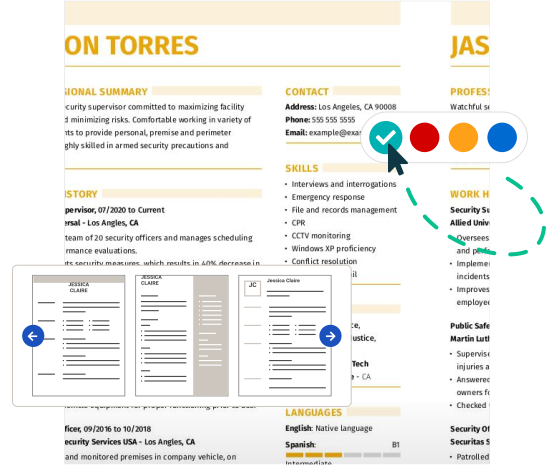
Begin by selecting a suitable pre-made resume template that allows you to organize information clearly. The combination resume format works particularly well for this position because it emphasizes both your work history and core competencies in an easily digestible layout, often featuring a colored sidebar to draw attention to your skills.
Next, choose a professional color scheme. Opt for colors that evoke reliability and stability, such as deep blues or earthy greens. Using these tones for headings or section dividers creates a clean look. You might also incorporate subtle accents in shades like gray to ensure readability.
Avoid overly bright colors or busy patterns that could distract from the content. Additionally, steer clear of colors linked with competitors or those carrying negative connotations within the industry. Focus on crafting a polished presentation of your qualifications that resonates with hiring managers.
5. Keep your resume length to 1-2 pages
Resumes should be clear, concise, and effective. A one-page format is typically ideal because hiring managers often spend only seconds reviewing each resume. Keeping it brief allows you to highlight the most relevant experiences without overwhelming the reader. Focus on your recent positions and achievements that relate directly to the job you're pursuing.
If you have extensive experience, especially in senior roles or specialized fields, a two-page resume may be warranted to adequately showcase your contributions. In academia or research-driven positions, consider using a CV instead of a traditional resume, as these documents provide more space for detailed accomplishments and publications.
Prioritize clarity and relevance over length to make your application stand out effectively.
FAQ
Do I need to include a cover letter with my resume?
Even if the job description doesn’t explicitly ask for it, writing a cover letter can significantly improve your application. It offers you the chance to showcase your skills and experiences in a more personal way, making you memorable to hiring managers. To kickstart your process, explore our collection of cover letter examples that cater to various professions and situations. These samples can ignite your creativity and help you understand what works best. When you're ready to craft your own, our Cover Letter Builder will guide you through each step, ensuring you create a compelling narrative that highlights your qualifications.
What is the best resume format?
Choosing the right resume format largely depends on your individual circumstances and career goals. The three primary formats are chronological, functional, and combination, each serving a unique purpose for job seekers at different stages of their careers.
The chronological format is ideal for those with extensive experience since it emphasizes work history. On the other hand, the functional format is better suited for newcomers focusing on skills and education. Meanwhile, the combination format strikes a balance between showcasing experience and skills, making it perfect for mid-level applicants or those transitioning to new industries.
How long should my warehouse manager resume be?
As a warehouse manager, your resume should ideally be one page long. This length is effective because hiring managers often scan numerous resumes quickly. A concise format allows them to easily spot your key qualifications and experience.
Focus on highlighting relevant management experience, logistics skills, and any certifications that pertain to warehouse operations. Prioritize recent roles that showcase your leadership abilities and achievements in efficiency or safety improvements. Remove outdated skills or unrelated job details that clutter the page.
Consider a two-page resume if you have extensive experience, multiple certifications, or are applying for high-level positions such as district warehouse manager. In those cases, showcasing all your accomplishments can justify the additional space.
Do I need to include references on my resume?
Including references on your resume is typically not required. It’s best to offer them only when requested. However, if you have particularly strong or relevant references that can improve your application, consider adding them to showcase your connections and support for your candidacy.
Build a custom resume in minutes with our professional templates and expert tips.
More Resources



By Gabriela Barcenas | CPRW, Career Writer
By Gabriela Barcenas | CPRW, Career Writer
By Gabriela Barcenas | CPRW, Career Writer


By Natalia Merced | CPRW, Career Writer