-
-
Sort through our administrative resume examples to see what works best for you.
-
Our sales resume examples can help you write the best possible resume.
-
Explore our food service resume examples to show your skills effectively.
-
Start crafting your job-winning resume with our teaching resume examples.
-
-
-
Use our administrative cover letter examples for ideas on writing your own.
-
Use our sales cover letter examples to effectively show your sales accumen.
-
Write your job-winning cover letter following our nursing cover letter examples.
-
Learn to tell your story in education using our teaching cover letter examples.
-






- Our customers have been hired by*


Entry-Level Medical Assistant Resume
This resume example effectively demonstrates the practical experience and skills of career changers, making it an excellent fit for those transitioning into a medical assistant role.

Why this resume works:
A strong academic foundation shows the candidate is well-prepared to transition into this role.

Mid-Career Medical Assistant Resume
This medical assistant resume example is perfect for professionals with experience who aim to improve their skills and take on greater responsibilities in patient care settings.
Why this resume works:
This applicant highlights a track record of improving outcomes across multiple settings.

Experienced Medical Assistant Resume
This medical assistant resume example is perfect for experienced professionals looking to advance into leadership roles in healthcare settings.
Why this resume works:
Leadership roles and advanced certifications underscore the ability to manage complex scenarios.

Looking for something else?
Create Your Standout Resume Today
Use our resume examples for inspiration on organization, color, and design—and learn how to effectively summarize your medical assistant skills and experience with confidence.
How to Write a Medical Assistant Resume
Learning how to write a resume is important for illustrating your unique value as a medical assistant beyond merely listing your credentials. By emphasizing your skills and experiences, you can create a narrative that stands out to potential employers.
In the upcoming sections, we will guide you through the process with resume tips specifically for medical assistant roles. Expect step-by-step guidance on everything from formatting to effectively showcasing your qualifications and experiences.
Start with your contact info
The header section contains all your contact information, clearly positioned at the top of your resume. Begin with your name in a bold font to ensure it captures attention immediately. You may choose to use a different font style or a subtle color to improve visibility without distracting from the overall professional appearance.
Next, include vital contact details such as your email address, phone number, and location: just city and state will suffice. This information is essential as it allows recruiters to reach you easily while also supporting applicant tracking systems (ATS) that sort resumes based on location preferences.
Additionally, consider incorporating links to relevant certifications or training programs, along with any online portfolio or professional website if applicable. These optional resources can provide further evidence of your qualifications and experience, helping you stand out in a competitive job market by showcasing your skills effectively.
Write a strong professional summary
A professional summary is a brief introduction that appears at the top of your resume, right after your contact information. It serves as a snapshot of who you are as a job seeker and what you bring to the table.
In your summary, highlight key qualifications, skills, and express your enthusiasm for the medical assistant role. Customizing this section for each application shows how you fit the specific needs of the employer.
To craft a strong summary, look for resume summary examples tailored to medical assistants. These can provide inspiration on organization and content that resonates with hiring managers.
Strong vs weak medical assistant summary
Strong

"Detail-oriented medical assistant with over four years of experience in fast-paced clinical environments. Proven ability to support physicians during examinations and procedures while ensuring high-quality patient care and satisfaction. Skilled in managing patient records, administering injections, and performing EKGs, with certifications in CPR and First Aid. Recognized for improving office efficiency and workflow through effective communication and teamwork."
Why this example works: This summary effectively captures the applicant's relevant experience, highlights measurable achievements such as improving office efficiency, showcases specific skills like administering injections and performing EKGs, and incorporates keywords commonly found in medical assistant job descriptions.
Weak

"Medical assistant seeking a position to use my skills and support healthcare providers. I have experience in clinical settings and enjoy working with patients."
Why this example doesn't work: This summary is weak because it lacks specifics about the medical assistant's relevant skills, measurable achievements, and detailed experience in the field.

Highlight interpersonal skills like empathy and teamwork on your medical assistant resume. Use specific examples to illustrate how these skills have positively impacted patient interactions or improved collaboration with healthcare colleagues, demonstrating your ability to thrive in a supportive environment.
Share your work history
Your work history is, arguably, the central and most important part of your resume. List your most recent roles in reverse chronological order. If you’ve held numerous positions, select the ones most relevant to the job you’re applying for.
When listing your work history, focus on:
- Job title and company name
- Dates of employment (month and year)
- Key responsibilities (What did you do on a daily basis?)
- Achievements and contributions (What did you accomplish? Did you improve processes, reduce costs, or increase efficiency?)
- Measurable results (Use numbers when possible, such as "reduced patient wait times by 15%.")
Finally, when describing your achievements, use action verbs to make your work history come alive.
Strong vs weak medical assistant work history
Strong
Medical Assistant, Green Valley Clinic
2018–2023
- Managed patient scheduling, improving appointment adherence by 25%.
- Assisted physicians in over 150 clinical procedures, improving efficiency and patient care.
- Educated patients on post-visit care instructions, increasing satisfaction ratings by 40%.
Why this example works: This robust work history highlights specific tasks and achievements that showcase the candidate's skills. It includes quantifiable results and detailed responsibilities that demonstrate technical skill and the ability to improve patient experiences.
Weak
Medical Assistant
Health Clinic
- Helped with patient check-ins and handled some paperwork.
- Assisted doctors with different tasks.
Why this example doesn't work: This entry is ineffective because it lacks details about specific duties, the medical specialty, or relevant skills. The tasks are too vague and could apply to any assistant role.
If you have over 10 years of experience as a medical assistant, consider using a chronological resume format. This approach highlights your steady career growth and showcases the depth of your expertise in the field, making it easier for employers to see your qualifications at a glance.
Highlight your key skills
The skills section of your resume is essential for demonstrating your qualifications as a medical assistant. Here's a rundown of different types of skills and why they matter in this role:
- Personal attributes, often referred to as soft skills, illustrate how you collaborate with others—like attention to detail, communication, and empathy. For medical assistants, qualities such as multitasking and patient interaction are important because they improve the efficiency of healthcare delivery and improve patient experiences.
- Hard skills are the specific technical abilities that medical assistants acquire through their training and experience. Key examples include taking patient histories, administering injections, performing EKGs, and managing electronic health records.
- Having technical skills as a medical assistant means being skilled in electronic health record (EHR) systems like Epic and NextGen. Familiarity with medical billing software such as MediSoft is also important. Also, experience in using diagnostic equipment, including blood pressure monitors and EKG machines, is essential for the role.
New medical assistants should highlight their skills section right after the professional summary to showcase abilities despite limited experience. For seasoned professionals, placing skills following work history emphasizes proven expertise.
Top 15 skills for your medical assistant resume
When preparing your resume as a medical assistant, it’s essential to showcase skills that align with the expectations of employers. Focus on a combination of soft skills like teamwork and patient care, along with technical skills such as taking vital signs. Remember to include transferable skills to show your adaptability across different healthcare settings.
Here’s a list of the top 15 most popular skills for medical assistants, based on insights from JobHero users. Highlighting these skills can make your resume more appealing and relevant in this competitive job market.
Build your education section
The education section of your resume should reflect your experience and the demands of the medical assistant field. For seasoned professionals, focus primarily on your work history. If you have extensive hands-on experience, consider placing your education section toward the bottom or omitting it if your roles do not require specific degrees.
Conversely, recent graduates or individuals transitioning into specialized areas should prioritize their educational background. Position this section at the top of your resume to highlight relevant coursework, certifications, and clinical experiences that showcase your qualifications.
In summary, tailor the prominence of your education based on your career stage. Ensure that it aligns with industry standards while effectively showcasing your unique strengths and capabilities in a competitive job market.
20 action verbs to add to your resume
Using action verbs in your resume as a medical assistant significantly improves its strength. These verbs articulate your experience clearly, making your accomplishments more engaging and compelling to potential employers.
Additionally, it’s important to choose action verbs that resonate with healthcare roles and align with the skills highlighted in job postings. This targeted approach showcases your qualifications effectively to hiring managers.
- Administered
- Assessed
- Monitored
- Documented
- Coordinated
- Implemented
- Collaborated
- Educated
- Advocated
- Managed
- Evaluated
- Provided
- Assisted
- Supervised
- Delivered
- Maintained
- Communicated
- Responded
- Ensured
- Supported
Consider additional resume sections
While your core resume provides the most critical information, adding targeted sections can showcase your unique qualifications. These sections help hiring managers quickly identify your clinical expertise, certifications, and achievements beyond standard resume sections.
Here are optional sections we tend to see on medical assistant resumes:
- Clinical skills: List specific procedures or patient care tasks you are proficient in (phlebotomy, EKGs, administration of injections, etc.) to highlight your hands-on abilities.
- Certifications and licenses: Detail any relevant certifications such as CMA, RMA, or CPR that demonstrate your qualifications and dedication.
- Continuing education: Highlight workshops or courses you've completed that reflect your commitment to professional development in medical assisting.
- Patient care contributions: Provide examples of how you've improved patient interactions or streamlined administrative processes in a clinical setting.
- Professional affiliations: Include memberships in organizations like the American Association of Medical Assistants to showcase your involvement in the profession.
5 Tips for Formatting Your Resume
Proper resume formatting is important for job seekers as it improves readability and captures recruiters' attention. Using Ats-friendly resume templates can significantly boost your chances of passing automated screenings while maintaining a professional appearance that engages hiring managers.
1. Watch your line spacing and margins
Proper spacing helps your resume look clean and organized, making it easier for hiring managers to read. A well-spaced resume can highlight your qualifications effectively. Here's what works best:
- Keep margins between 0.5″ to 1.0″ to maintain a balanced layout.
- Use single spacing between paragraphs and bullet points for clarity.
- Increase the space to 1.5″ or double-space between sections to create distinct areas of information.
2. Use a professional font
Selecting the right resume font is important as it impacts readability and professionalism. Aim for these trusted fonts:
- Helvetica
- Garamond
- Verdana
- Trebuchet MS
- Segoe UI
- Book Antiqua
Consider using a slightly bolder or larger font for your name at the top of the resume to create a memorable first impression.
3. Organize your resume sections
A resume for a medical assistant should be clear and concise. Use bullet points to effectively showcase your skills and experiences, making it easy for hiring managers to scan your qualifications. Start each bullet with a strong action verb. For instance, "Assisted in patient examinations, improving overall care efficiency," highlights your role in the healthcare process.
Emphasize measurable accomplishments by quantifying your contributions. An example could be, "Managed appointment scheduling that increased patient throughput by 25%," which illustrates not only what you did but also the positive impact of your actions on clinic operations.
Finally, ensure your resume is ATS-compatible by using an ATS resume checker. This tool can help identify critical keywords and formatting issues that may hinder your application from reaching potential employers.
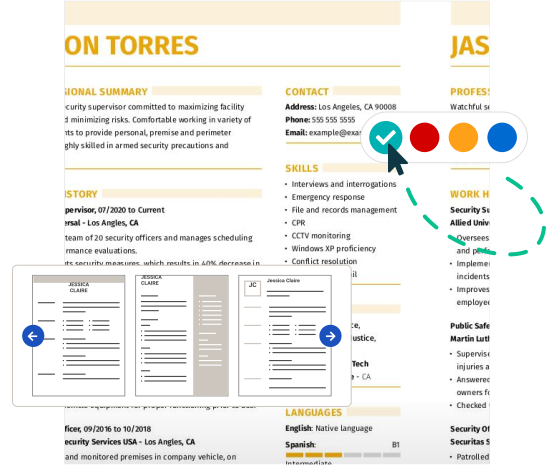
4. Use colors and design
Designing a standout resume can elevate your application and highlight your strengths as a medical assistant. Adding color and thoughtful design elements not only improves its visual appeal but also directs focus to your most relevant skills and experiences.
Begin by selecting from various pre-made templates, finding one that best organizes each section according to your career narrative. The combination resume format is ideal since it often includes a noticeable colored column to emphasize skills alongside job history.
Choose colors that reflect professionalism—opt for subtle shades or deeper hues like charcoal gray or deep teal. These tones maintain a clean appearance while ensuring important information remains front and center.
It's important to avoid bright colors or any hues that reduce readability. Additionally, steer clear of color schemes linked to competitors in the healthcare sector, ensuring your resume reflects exclusively on you and not others in the industry. By integrating these design principles, you ensure your resume effectively communicates your qualifications with clarity and style.
5. Keep your resume length to 1-2 pages
Resumes should typically be one page long. This format ensures clarity and keeps the attention of hiring managers, who often glance at resumes for only a few seconds. Focus on showcasing your most relevant experiences and skills, avoiding repetition of similar tasks across different roles. Prioritize achievements that directly relate to the position you're applying for to create a strong impact.
In some cases, extending your resume to two pages may be necessary. For example, if you have significant experience in healthcare or are seeking senior-level positions, additional space can provide room to highlight your contributions effectively. Alternatively, consider using a CV if you're applying for academic or research-focused roles where detailed information about publications or projects is essential.
FAQ
Do I need to include a cover letter with my resume?
Writing a cover letter is an excellent way to improve your job application, even if it's not mandatory. It allows you to express your enthusiasm and highlight specific qualifications that may not be evident in your resume. By doing so, you can create a stronger connection with potential employers.
To help you get started, explore our collection of cover letter examples tailored for various positions and industries. These examples can spark ideas for crafting your own letter. When you're ready to create yours, our Cover Letter Builder provides a user-friendly approach to guide you through each step of the process.
What is the best resume format?
Choosing the right resume format depends on your career stage and goals. The three main formats are chronological, functional, and combination. Each serves a different purpose tailored to various job seeker needs.
The chronological format suits experienced professionals by emphasizing work history. The functional format is ideal for newcomers as it highlights skills and education. For those transitioning industries or with mid-level experience, the combination format offers a balanced display of skills and experience.
How long should my medical assistant resume be?
As a medical assistant, your resume should ideally fit on one page, particularly if you have under 10 years of experience. Hiring managers often sift through numerous resumes quickly, so a concise format highlights your most relevant qualifications effectively.
Emphasize your clinical skills, certifications, and any direct patient care experience. Focus on recent roles that reflect the responsibilities of the position you're targeting. Eliminate outdated skills or lengthy descriptions of non-medical positions to maintain clarity.
A two-page resume may be suitable for seasoned medical assistants with extensive specialized training or those applying for supervisory roles where additional detail is warranted. In such cases, showcasing your breadth of experience can make a significant impact.
How far back should my work history go?
When updating your resume, aim to include work experience from the last 10 years. This guideline helps ensure your skills and experiences are relevant. If you have a longer history in healthcare or multiple roles, feel free to exclude earlier positions that don’t relate directly to medical assisting. Prioritize showcasing jobs that demonstrate your capabilities and achievements in the field to make a strong impression on potential employers.
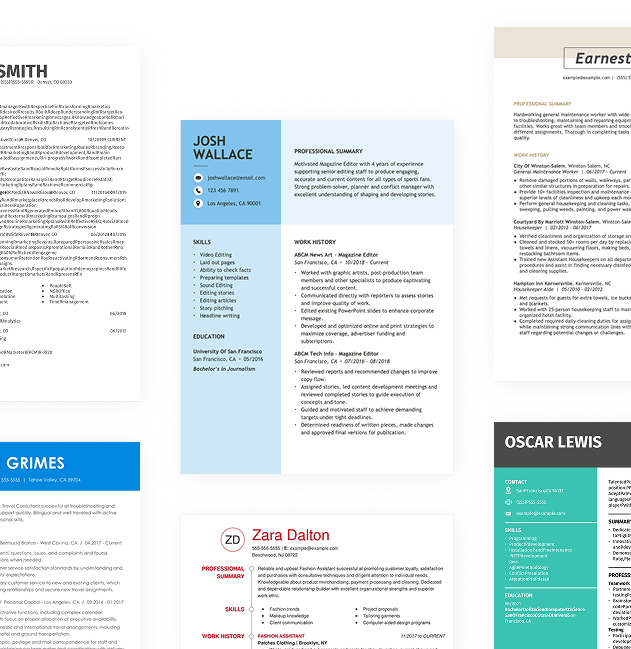
Build a custom resume in minutes with our professional templates and expert tips.
More Resources


By Gabriela Barcenas | CPRW, Career Writer

By Gabriela Barcenas | CPRW, Career Writer


By Natalia Merced | CPRW, Career Writer